Top videos

In this clip Dr Israr Ahmed discusses Quranic virtues, emphasizing kindness and charity as essential traits of righteousness. He stresses that genuine goodness entails empathy and generosity, prioritizing others' rights over personal devotion. The Quran underscores selfless giving and sincere concern for pleasing Allah above individual worship.

In this clip Dr Israr Ahmed explains that if you're in a position of authority, like being the head of a family, it's your duty to guide others to do good and avoid evil. These two responsibilities are equally important and must always be done together. Ignoring one while focusing only on the other is not true to Islam. The Quran stresses this balance, and it's a key part of living a proper Islamic life.

In this clip Dr Israr Ahmed explains how Islam ended the constant fighting among the Arabs during the time of ignorance. The Arabs, who were always at war over small disputes, became brothers through Allah's guidance and the teachings of the Quran. The Prophet Muhammad (SAW) helped unite them, turning enemies into close companions, and brought peace and unity where there was once division and conflict.

In this clip Dr Israr Ahmed talks about being thankful and why it's important. He says if you're not thankful, you might hide good things and become selfish. Being thankful comes from feeling it in your heart, saying it out loud, and doing good things in return. He quotes a verse from the Quran to show what happens when you're thankful or not.

Dr. Israr Ahmed explains that true poverty isn't just about lacking wealth, but also about neglecting the rights of parents, siblings, and others. Such neglect can lead to loss of good deeds and ultimately, punishment in Hell.

In 1985, Dr. Israr Ahmed organized a six-day event discussing a religious vision derived from the Quran with 100 scholars. Among them, Maulana Waheed-ul-Deen Khan remained silent when questioned about the importance of peace versus war, simply replying, "No Comments" in English. This exchange highlighted differing perspectives on conflict resolution within the religious community.

In this clip Dr Israr Ahmed explains that on the Day of Judgment, everyone will be asked about five things: how they spent their life, used their youth, acted on their knowledge, managed their wealth, and performed good deeds. More resources and knowledge mean stricter accountability.

In this clip Dr Israr Ahmed says elections are not haram and help solve public issues, but they are not the best way to establish Islamic governance (Iqamat-e-Deen). Striving for Iqamat-e-Deen is a duty, but achieving it is not guaranteed. He also critiques Jamaat-e-Islami for relying too much on politics and not focusing enough on a deeper struggle for this goal.
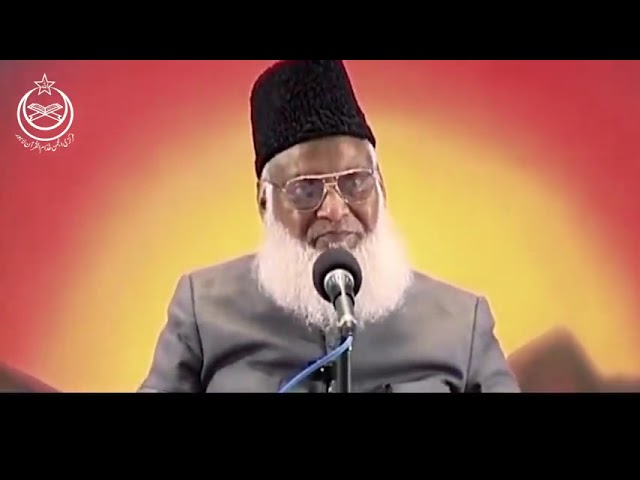
The clip explains Dr. Israr Ahmed's view on Prophet Muhammad's last sermon, stressing its relevance for all people, not just Arabs. He talks about Muslims' duty to share the message globally and the challenges they face. Dr. Israr Ahmed mentions how the sermon uses repetition for emphasis and reflects on the Prophet's struggles. He encourages Muslims to follow Islamic principles and spread Islam worldwide.

In this clip Dr Israr Ahmed explains the concept of overall and specific superiority. Prophet Muhammad ﷺ is the greatest of all prophets, but some, like Musa (AS), Isa (AS), and Ibrahim (AS), had unique qualities. Musa (AS) spoke directly to Allah, Isa (AS) performed unmatched miracles, and Ibrahim (AS) was Allah’s close friend and leader for humanity. Among the Sahaba, Hazrat Abu Bakr Siddiq (RA) holds the highest rank, but others had specific strengths. This shows the balance of general greatness and individual distinctions in Islam.

In this clip, Dr Israr Ahmed tells the story of Prophet Ibrahim's sacrifice. Allah turned the fire meant for Ibrahim into a garden. Ibrahim left his home, faced a major test at 100, and was commanded to sacrifice his son, Ishmael, in a dream. Ishmael agreed, showing great faith. This story teaches about trials in life and the importance of faith.

In this clip, Dr Israr Ahmed recounted Prophet Muhammad's sacrifice of 100 camels during Eid ul Adha, as instructed in the Quran. This happened during his farewell pilgrimage, attended by a crowd of 140,000 Muslims. Prophet Muhammad personally sacrificed 63 camels, while Hazrat Ali brought the remaining 37 from Yemen. Despite skepticism from some, believers accept this event as authentic, demonstrating the Prophet's devotion to Allah and his teachings.

In this clip Dr Israr Ahmed stresses trusting in Allah for sustenance through "taqwah" or God-consciousness. True taqwah involves following Allah's path, leading to unexpected blessings. Although challenging, trusting in Allah strengthens faith, and helping others brings divine support.

In this clip Dr Israr Ahmed explains that Allah knows everything about us, including our actions and thoughts. True obedience means following all of Allah's commands, not just some. If we selectively obey based on our desires, we are actually following our own self. Genuine obedience requires full submission to Allah. If we make a mistake, we should immediately repent, and Allah will accept sincere repentance.

In this clip, Dr.Israr Ahmed talks about reaching out to young people and non-Muslims with the message of Islam. He emphasizes understanding their beliefs first and correcting any misconceptions. Then, he suggests introducing Islamic teachings like prayer and fasting after addressing their concerns. Dr. Israr Ahmed highlights the transformative power of faith in reshaping behavior and thoughts.

In this clip Dr Israr Ahmed explains that changing the Qibla (direction of prayer) was a test for Muslims, causing confusion and mockery from the Jews. They questioned the Prophet's credibility because of the change, making new Muslims worry their previous prayers were invalid. This event, discussed in Surah Al-Baqarah, emphasized that God is everywhere, and the Qibla change marked the beginning of a new Muslim identity.

In this clip Dr Israr Ahmed encourages maintaining hope in Allah's love and mercy while explaining the meaning of Surah Al-Infitar. He advises prioritizing the afterlife over worldly pursuits and warns against being deceived by Satan. Dr. Israr Ahmed underscores the concept of divine justice and accountability on the Day of Judgment.

In this clip Dr Israr Ahmed explains that people form new groups when they feel existing ones don’t meet their goals. He doesn’t consider other groups un-Islamic but thinks they may not fully meet today’s needs. He went through different groups before starting Tanzeem-e-Islami. He advises choosing a group that feels right, committing to it, and staying open to better paths if they appear.

In this clip Dr Israr Ahmed explains that giving three divorces in one sitting is valid but considered sinful. Hazrat Umar (RA) enforced this rule to discourage its misuse but also punished those who practiced it. The preferred method is to give one talaq at a time, allowing for reconciliation during the iddah period. Three divorces at once finalize the separation, leaving no room for remarriage unless the woman marries and divorces another man naturally.

In this video, Dr. Israr Ahmed talks about how he spent his life serving Islam and what he did for it. He also discusses the importance of the caliphate and making changes in religion to keep it relevant. Dr. Ahmed shares a message about his experiences in the Islamic organization, speaking in a simple and understandable way.