Najbolji videi

In this clip Israr Ahmed explains why we share sacrificial meat and how to do it. He says it should be divided into three parts: for ourselves, loved ones, and those in need. He also highlights the importance of sharing during Hajj and mentions how even big animals like camels have a purpose in Allah's plan.

Dada Ki Wirasat Mein Potay Ka Hissa | یتیم پوتے کا وراثت میں حصہ کیوں نہیں؟ | Dr Israr Ahmed Officia
In this clip Dr Israr Ahmed explains why an orphaned grandson doesn’t get inheritance directly from his grandfather. If a man has a living son, the inheritance goes to that son. The grandson only inherits if there are no living children. The grandfather can leave up to one-third of his estate to the grandson through a will or gift. This is part of Islamic inheritance law.

In this clip, Dr. Israr Ahmed discusses the equality of men and women in Islam. He explains that, in terms of human dignity, respect, and moral and spiritual status, men and women are equal. Both can reach high spiritual ranks. However, he notes that there are differences in roles and responsibilities. While men and women are equal in their value and capability to achieve spiritual heights, their specific duties and functions may differ according to Islamic teachings.

In this clip Dr Israr Ahmed narrates a story about Hazrat Maaz bin Jabal (RA), who asked the Prophet Muhammad (PBUH) which deed would ensure his entry into Jannah (paradise). The Prophet, appreciating his concern for the afterlife, guided him. Hazrat Maaz was a wise and trusted companion, known for making decisions based on the Quran, the Prophet’s teachings, and his own judgment. This story shows the companions' deep focus on the afterlife.

In this clip Dr Israr Ahmed discusses a Hadith about Hazrat Ali (RA), highlighting that people had extreme views about him. Some loved him so much they saw him as divine, while others hated him, called him a disbeliever, and even killed him. This contrasts with the Prophet Muhammad (SAW), who was protected from such extremes. The way people invoke Hazrat Ali's name for help, unlike the Prophet's, reflects this situation.
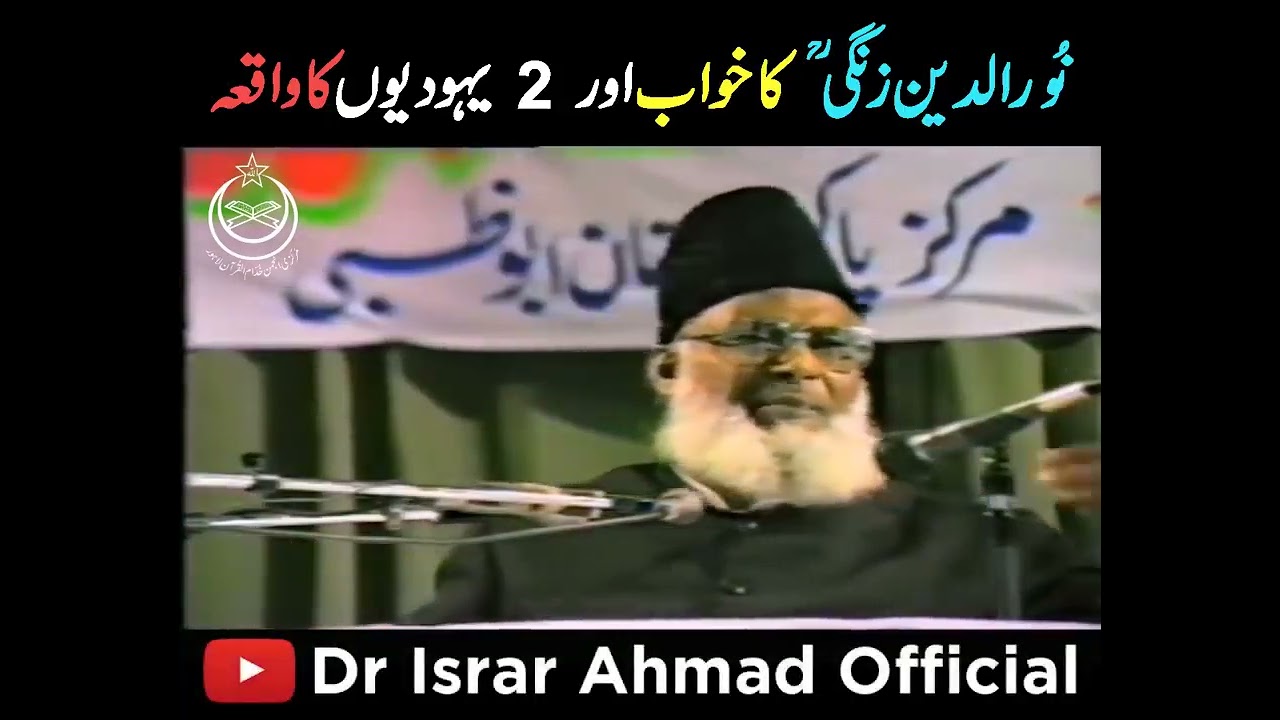
In this clip, Dr Israr Ahmed discusses a dream where two Jews tried to take Prophet Muhammad's body. It also explains two types of hypocrisy: intentional and unintentional. In the story, these Jews pretended to be Muslims, but the Prophet saw through their disguise. Later, they were caught trying to dig a tunnel to his grave. This highlights how even those who pretend to be devout can have harmful intentions.

In this clip Dr Israr Ahmed explains that in Islam, parents, especially mothers, have a very high status. The Quran commands kindness and respect towards them, particularly in old age. Mothers are highly honored, with paradise said to be under their feet. Family life emphasizes love between spouses, respect for parents, and fairness among siblings.

In this clip Dr Israr Ahmed talks about improving relations between Pakistan and India, noting progress towards friendship. He mentions that historical tensions were influenced by British policies and past rivalries.Dr Israr Ahmed believes that as animosity fades, there is hope for resolving issues like Kashmir and achieving strong relations similar to those between Canada and the U.S.

is clip ma dr israr Ahmed punishment of zinah in islam aur islam mein zina ki saza kya hai byaan kar rahy hain quran aur hadith ki roshni ma byaan kar rahy hain lakin dono ma surah ahzab ki ayat number 35 imaan ki haqeeqat aur islam ki kafyat k bary ma zinah karni wali ourat ho ya zinah karny wala mard ho her aik ko in ma se 100 100 kodhy mary jaye aur tumahin allah k is deen k mamly ma na rook dy koi shy unk upper mahrbani k rasty se ye allah ka deen ha allah ki sharyat ha ye allah ki had ha aur is had ijrah ma kisi ki hamdardi kisi k sath tumhara taluq tumhari dil ki narmi tumhari shafqat ye kahi adhy na ajaye ager tum imaan rakhty ho allah per aur yum-e-akhirat per ye jo had ha wo ha zani zania jo gair shaadi shuda houn is k lye 100 kodhy jo had ha ye quran ma aya ha zani aur zania ager shaadi shuda hain tu us ki had quran ma nahi ha lakin wo sunnat-e-rasool SAW se sabit ha aur shrtay islami ki jo sources hain us ki aik bunyad ha allah ki kitab aur dosri independent quran majeed se azaad ho kar aik mustaqil bunyad ha rasool SAW radam ka jo hukam ha wo sunnat se ha jesa k ma apko bata chuka houn houn ye us qaidy kulia k tahat ha k sabiqa sharyat ma shryat musni ma baz ahkam wo thy k jin ki nafi nahi aye ha aur huzoor SAW ny jin ko jo ka tuh is ummat k lye nabi jari rakha ha un ma se 2 hukam buhaat aham hain aik qatly murtad ka hukam ha aur dosry zania jo shaadi shuda ho us k sansar kar jany ka hukam ha jan unko saza di jarahi ho us waqt wo dhaky aur mujood rahy kuch log ahly imaan ma se yani k public ma se haoun

In this clip Dr Israr Ahmad explained that if a husband stops his wife from caring for her elderly parents, she should try to convince him respectfully. If the husband is strict and won't allow it, divorce is an option in Islam. Divorce isn't something bad in Islam, but a way out if the marriage can't work peacefully. In many cultures, divorce is looked down upon, but Islam allows it when needed for a better outcome.
In this clip Dr Israr Ahmed explains that a man should balance the rights of both his wife and mother, especially when conflicts happen. He advises spending time with parents and showing them love, as neglect can hurt them. It's important not to focus only on one's wife and children, but also care for elderly parents, as they often feel lonely and ignored.

In this clip Dr Israr Ahmed outlines three types of patience: obeying religious commands despite difficulties, resisting temptations, and enduring hardships as tests from Allah. It involves following rules, resisting temptations, and staying strong in tough times, all part of Allah's plan.

In this video, Dr. Israr Ahmed discusses two different prayers for the witr prayer, one from the Hanafi sect and the other from the Ahl-e-Hadith sect.

In this clip Dr Israr Ahmed explains that Prophet Muhammad (PBUH) took the pledge (bay'ah) in Medina as a ruler, focusing on governance and laws. In Mecca, there was no formal pledge, as the community was still forming, and it was more about faith. He emphasizes that formalities should have real meaning, not just be done as rituals.

In this clip Dr Israr Ahmed forecasts Imam Mehdi's arrival amid turmoil after a leader's death. Despite hiding, a man from Madina will become leader in Makkah. An army sent against him will fail. People will support him, and he'll rule for seven years, guided by Prophet Muhammad's (SAW) teachings. Dr. Israr's anticipation is based on Quranic signs, indicating it will happen soon.

In this clip Dr. Israr Ahmed says Sehri (early morning meal) is a special blessing during Ramadan. It helps us grow spiritually and earns us rewards. Don't miss Sehri, just like you wouldn't miss Iftar (breaking of the fast). Take your time, and remember, Allah makes things easy for us."

Gautam Buddha Story in Urdu Hindi | Life Of Gautam Buddha | Zindgi Ki Asal Haqeeqat By Dr Israr Ahme
In this clip Dr Israr Ahmad discusses Gautam Buddha's life and the essence of suffering. Buddha, once a prince, left his palace to understand human pain. He believed suffering is inherent in life and preached the importance of understanding it for true salvation. According to him, everyone will be held accountable for their actions.

"Innah Lillahi Wa Inna Ilahi Rajiun." This clip is about Dr. Israr Ahmed's death and funeral prayer. He passed away on April 14, 2010, and was buried in a certain place. May Allah grant him the highest place in Jannah, Ameen.

In this clip, Dr Israr Ahmed is telling about different concepts of Man about God. Different forms of Shirk.

Rise Of Islam | ALLAH Ka Wada | Promises Of ALLAH in Quran | Dr Israr Ahmed Powerful Reminder For Um
In this clip Dr Israr Ahmed says that Allah promised the rise of Islam, but Muslims today aren't making enough effort or showing enough faith. He points out that during Prophet Muhammad's (SAW) time, Allah's promises were quickly fulfilled. If Muslims today have true faith and take action, they will see these promises come true as well.