Top videos

In this video, Dr. Israr Ahmed tells the story of Hazrat Hunzala feeling like a hypocrite, but Hazrat Abu Bakr assures him it's not hypocrisy. They consult the Prophet (SAW), who explains that Hunzala's feeling is a sign of strong faith. If it persists, angels will greet him in the streets.

Shab e Meraj Ka Waqia Full Bayan By Dr Israr Ahmed شب معراج کا مکمل واقعہ 2
In this clip Dr Israr Ahmed talks about "Shahadat" in the Quran. It's about being present and witnessing. Prophets (SAW) show God's religion through their words and actions. People should follow their example. On Judgment Day, their testimony will help or harm them based on how they lived by the Quran. Believers should stand for justice and be true witnesses for Allah.

In this clip, Dr Israr Ahmed highlights the sacredness of Hajj and Qurbani, emphasizing their ties to specific rituals and places like Mecca and Mina. He underscores the universal significance of Qurbani and the enduring essence of Hajj, despite geographical constraints. His discourse illuminates these acts' importance within Islam, drawing from Quranic teachings and historical context.

In this clip Dr Israr Ahmed talks about the essence of true goodness and patience, using stories from the battles of Ahzab and Tabuk. He emphasizes the patience endured by the companions during tough times, like the blockade of Banu Hashim and the scarcity of resources in Tabuk. He highlights the selflessness and sacrifice of the companions, who endured hunger and hardships for the sake of truth.
In this clip Dr Israr Ahmed explains that the veil (pardah) in Islam has roots in pre-Islamic Arabian culture, where women covered their bodies but not always their heads or faces. Islam refined this practice into a religious requirement. He stresses that hijab is based on the traditions of the Prophet Muhammad (SAW) and is essential to Islamic culture, and these traditions must be followed for spiritual growth.

In this clip Dr Israr Ahmed describes Islam as submission to Allah's will. Ita'at involves obeying Allah with love and sincerity. Taqwa is about avoiding sins and staying within the boundaries set by Allah. These three elements together form Ibadah, which is the act of worshiping Allah. This understanding of worship has been emphasized by all prophets.

In this clip Dr Israr Ahmed explains that the Arabic word "Mola" has dual meanings: it can refer to a helper, supporter, or ally, as well as a master, leader, or someone in authority. For example, a freed slave could still be called "Mola" of their former owner. He emphasizes that using this word for humans in either context is valid and that some people unnecessarily create confusion over its usage.

Tauba K 3 Ajeeb Waqiyat | توبہ کے 3 عجیب واقعات | Life Changing Bayan | Dr Israr Ahmed Emotional

In this clip Dr Israr Ahmed explains that while many religious texts claim to be divine, only the Quran has been preserved in its original form, which even non-Muslims acknowledge. Other scriptures, like the Torah and Bible, have been changed or lost over time, according to their own followers. Dr. Israr Ahmed also mentions that translating the Quran is difficult because translations may not fully capture its original meaning.
In this clip, Dr Israr Ahmed explains that Prophet Muhammad's (SAW) main goal was to establish Allah's religion and uphold sincerity in dealings with Him and His Messenger. He didn't seek personal power or possessions but focused on spreading Allah's message. Muhammad (SAW) embodied the best of humanity and aimed to establish Allah's religion through his own efforts.

Shahadat ka Matlab Kia | Dr Israr Ahmed Official 2

In this clip Dr Israr Ahmed explains four key principles from Surah Al-Asr: faith, good deeds, promoting truth, and promoting patience. He says these should be balanced. Even very pious acts are ineffective without truth and patience. He urges Muslims to be active and face challenges, not just focus on spiritual retreats. He prays for people to truly embody these principles.

Valentine's Day | Dr Israr Ahmed Very Emotional Bayan | Reality Behind Valentine's Day
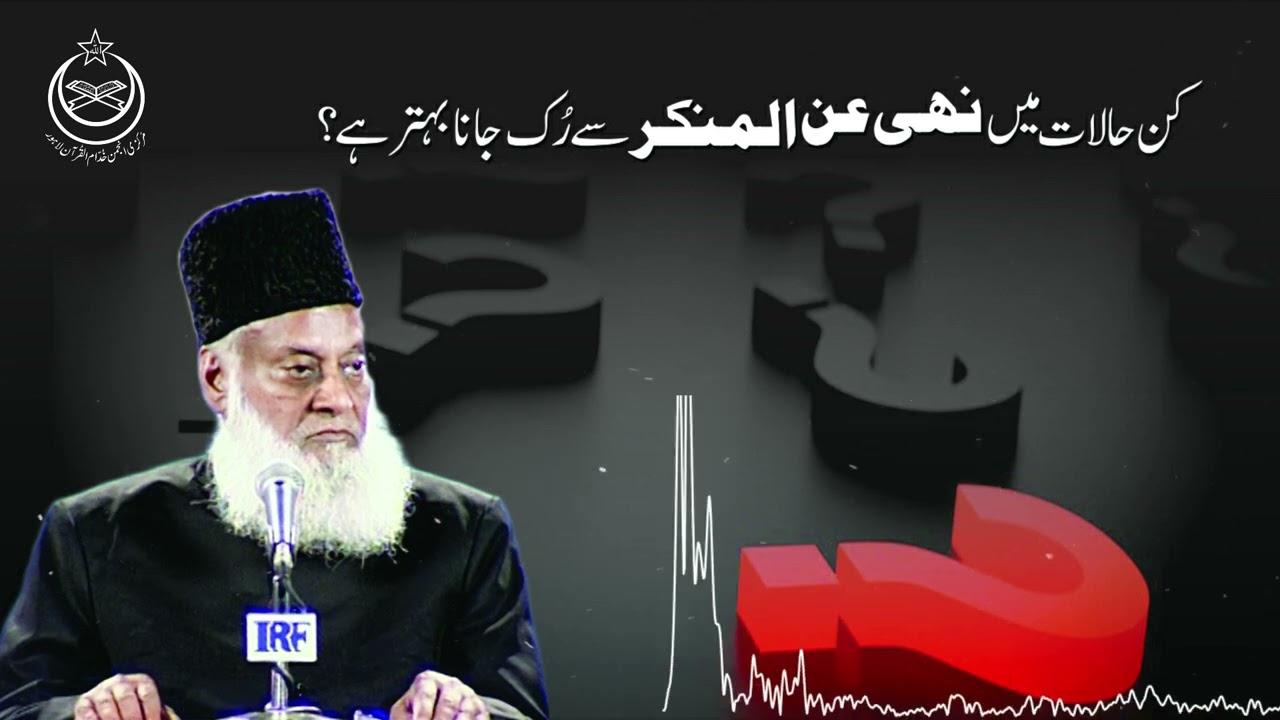
In this clip Dr Israr Ahmed explains that stopping wrongdoing should only be done when there's a chance to make a positive change. If confronting it could cause harm or conflict, it's better to avoid it. He stresses the importance of focusing on personal improvement rather than trying to fix everything. The outcome is ultimately in Allah’s hands. The key is to act wisely, without creating unnecessary problems.


In this clip Dr Israr Ahmed explains that Islam is based on both the Quran and the Sunnah (teachings of Prophet Muhammad SAW). The Quran provides guidance, but it is the Sunnah that explains how to put that guidance into practice, such as how to perform prayers. Both are necessary to establish Islam as a complete way of life, including its social, political, and economic systems. The purpose of Prophet Muhammad's mission was to implement and make this complete system of life, known as Deen-e-Haq, supreme over all other systems.
In this clip Dr Israr Ahmed explains how to succeed by keeping things simple with the Quran's clear guidance. He says even though the Quran is deep, its early parts are easy to understand and give good advice. He mentions Surah Asr, which talks about faith, doing good, and helping each other as the keys to success.

Dr Israr Ahmed Life Changing Bayan | Who is Momin | Momin Ki Nishaniyan | Momin Ki Pehchan

In this clip Dr Israr Ahmed discusses why there are differences in Islamic practices despite following the same Quran and Prophet's teachings. He explains that these differences are based on various interpretations and should not cause division. Practices like prayer rituals may vary, but they all have valid evidence. Muslims should respect these differences and focus on unity.