Top videos

In this clip Dr Israr Ahmed explains that many Muslims focus on prayers and fasting but often ignore honesty and fairness in their daily lives, especially in business. He criticizes how people engage in wrong practices like lying and using interest while following religious rituals. He urges Muslims not to accept or support the current unfair system and instead work to bring an Islamic system based on justice and truth.

In the clip, Dr Israr Ahmed emphasizes the importance of unwavering faith in Allah and the futility of fearing anything besides Him. Believers find solace in knowing that Allah is their protector and guardian, and nothing can harm them without His permission. He underscores the power of faith in Allah's sovereignty, which brings peace even in unseen circumstances.

In this clip Dr Israr Ahmed explains that humans cannot fully grasp Allah’s limitless attributes because our understanding is limited. Believing in multiple realities or partners to Allah is wrong. Allah’s existence and qualities, like His power and knowledge, are beyond our comprehension. Worldly comparisons cannot capture their true nature. Only Allah’s attributes are infinite and absolute.

Umar Bin Abdul Aziz رحمة الله عليه Ki Khilafat Banu Umayya بنو اُمیہ History By Dr Israr Ahmed

In this clip, Dr. Israr Ahmed explains how people view success and poverty differently. Some think their blessings come from God when they face challenges, while others blame God for their troubles. He says our possessions are tests from God, and facing difficulties is part of the test too. Dr. Israr Ahmed emphasizes that true respect comes from enduring tough times with patience and faith, not just from having money.

In this clip Dr Israr Ahmed explains that in an Islamic government, opposition is allowed if it follows Shariah. The caliphate isn’t a one-party system but lets people choose between different programs. Parties must stay true to their promises. In a presidential system, decisions are based on honesty, not party influence. Islamic governance balances religion with modern needs.
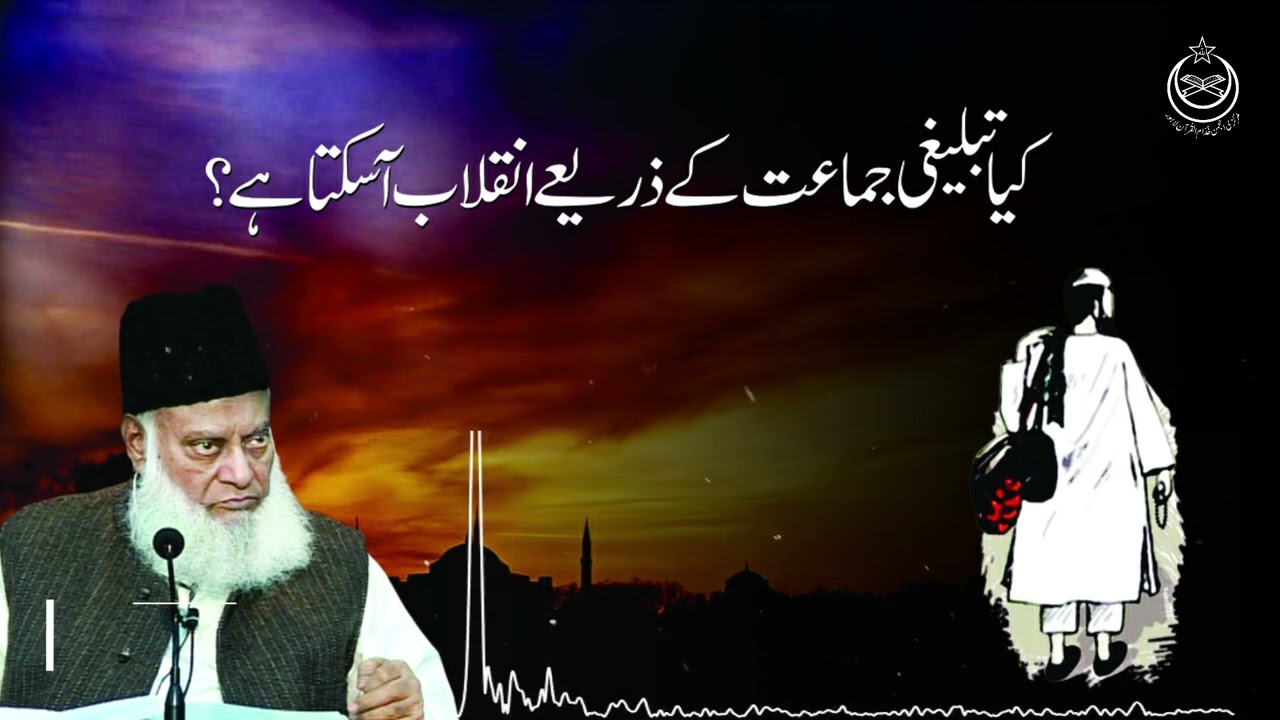
In this clip Dr Israr Ahmed explains that while Tablighi Jamaat focuses on spreading religion and strengthening faith, it is not a political movement. However, their work can prepare people for change by increasing religious awareness. He shares an example from 1977 where a Tablighi member showed great courage in a political movement. Dr. Israr Ahmed believes real revolution needs both faith and active struggle against injustice.

In this clip Dr Israr Ahmed explains that all prophets shared the same religion, but their laws varied. Muslims follow the laws of Prophet Muhammad (SAW). He highlights the importance of understanding the Prophet's methods (Manhaj) for reform. By studying the Prophet's life (Seerah), we can learn how to implement change step by step. This approach is essential for the community's improvement today.

In this clip Dr Israr Ahmed explains that Europe's progress was influenced by principles from the Quran, especially the focus on observation and logic. He notes that Islamic teachings on scientific inquiry inspired European scholars, who studied in universities in Muslim Spain, helping to spark the Renaissance and the growth of science in Europe.
Dr. Israr Ahmed discusses the connection between faith and good deeds, highlighting legal faith versus true faith, and their significance according to the Quran.

In this clip, Dr. Israr Ahmed discusses the benefits of holding fear and piety for Allah. He explains that by nurturing these qualities, our hearts guide us towards what's right and wrong. Trusting our hearts' judgments and seeking forgiveness from Allah, who is Most Gracious, ensures our spiritual growth.
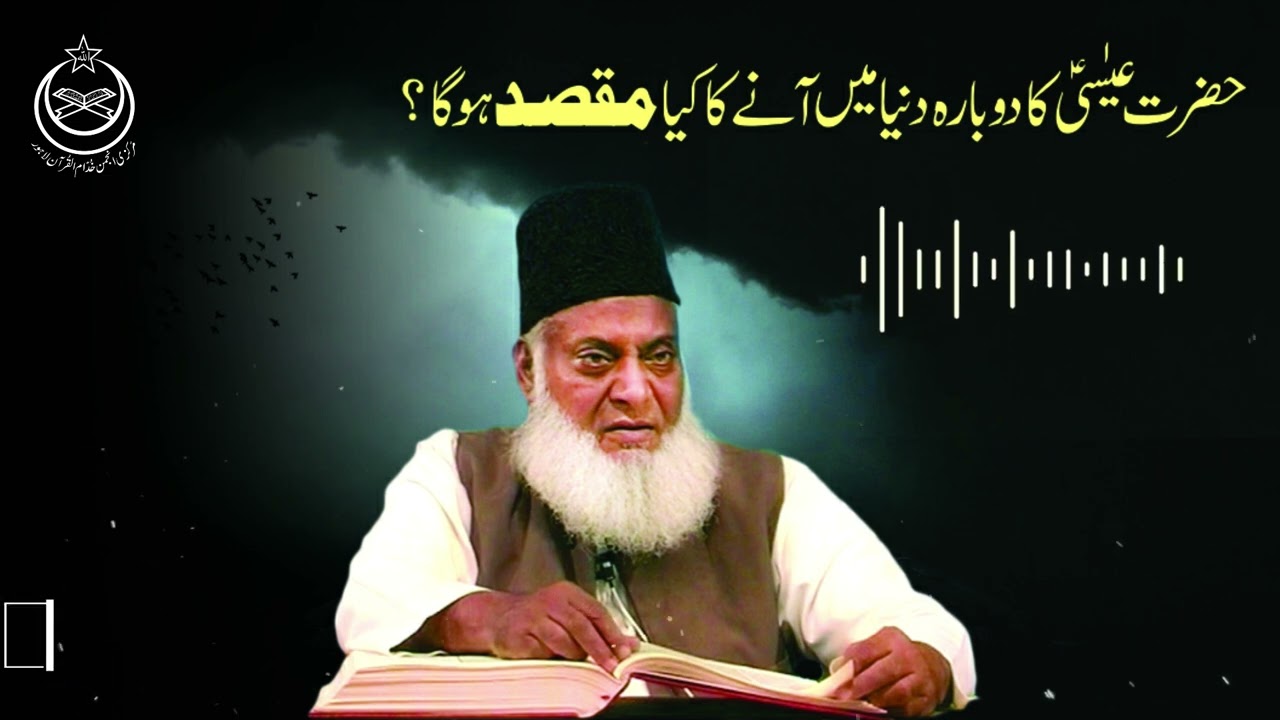
In this clip Dr Israr Ahmed says that when Hazrat Isa (AS) returns, he will join Muslims in prayer, showing respect for the Prophet Muhammad's (PBUH) followers. His main purpose will be to defeat those who opposed him, especially those with powerful weapons. Allah will give him special abilities so that his presence alone will weaken and defeat his enemies, helping to end falsehood and oppression.

Quaid e Aazam, Allama Iqbal aur nazriya pakistan | Dr Israr Ahmed Official

In this clip Dr Israr Ahmed explains that humans have two types of intellect: one from the mind (aql-e-haywani) and one from the heart (aql-e-ruhani). The soul influences our actions, leading us towards good (nafs-e-mutmaina) or bad (nafs-e-ammara). The heart reflects the soul’s light but can become clouded by distractions. When the heart follows spiritual guidance, it finds peace; when it follows worldly desires, it leads to destruction.
The Day of Judgement | Eye Opening Bayan | Surah Qiyamah with Urdu Translation | Dr Israr Ahmed Baya
The Day of Judgement | Eye Opening Bayan | Surah Qiyamah with Urdu Translation | Dr Israr Ahmed Bayan

In this clip Dr Israr Ahmed explains that when you speak the full truth, it will always face resistance. He gives an example of telling kids not to play cricket in the street due to potential harm, and how this can cause resentment. He emphasizes that true righteousness involves promoting Allah's commands, which often leads to opposition, especially if it challenges existing beliefs or systems.

In this clip Dr Israr Ahmed explains that Hazrat Isa (Jesus) will definitely return, as confirmed by reliable hadiths. He will live, marry, and pass away, being buried next to the Prophet Muhammad (PBUH). While Imam Mahdi is not mentioned in the Quran, authentic hadiths say he will come to bring justice to the Arab world. These beliefs are widely accepted in Islamic teachings by both Sunnis and Shias.

In this clip Dr Israr Ahmed explains that all religions and philosophies share basic moral values like honesty, keeping promises, helping others, and respecting parents. These values are universally recognized as fundamental.

In this clip Dr Israr Ahmed explains that true worship (Ibadat) is when we deeply love Allah and fully obey His commands. This is the purpose of our creation, as taught in the Quran. All prophets, including Prophet Muhammad (SAW), preached this message: worship and obey Allah alone. True worship involves making Allah the most important part of our lives and following His guidance sincerely. Without this, our lives lack real purpose.

In this clip Dr Israr Ahmed talks about how the Quran mentions instant heavenly rewards using the term "nuzul" in Arabic. He compares it to serving guests right away, saying in paradise, amazing delights will be ready instantly. These blessings are only for believers and are too great for us to understand. Dr Israr Ahmed says real happiness comes from these gifts, not from worldly things.