Top videos
Dr. Israr Ahmed talks about having true faith in Allah and His Messenger (S.A.W). He says it's not enough to just pray or read the Quran; we must sincerely believe in our hearts and follow Allah's guidance. He warns against pretending to be faithful while holding resentment inside.

In this clip, Dr. Israr Ahmed explains how ego can be destructive and cites examples from the Quran to emphasize the importance of humility. He mentions that walking with humility and moderation is favored by Allah, while arrogance and extravagance are disliked. He highlights the importance of choosing a middle path in all circumstances, avoiding both extreme frugality and wastefulness.

In this clip, Dr. Israr Ahmed discusses the greatness of Prophet Muhammad (peace be upon him), emphasizing his status as a prophet and messenger. He shares anecdotes showcasing the Prophet's humility and simplicity, as well as his care for his daughter, Fatima. Dr. Israr highlights the incomparable nature of praising the Prophet and compares it to recognizing the expertise of a qualified doctor.

In this clip, Dr Israr Ahmed explains why it's crucial to follow both Allah and Prophet Muhammad (PBUH). Allah's commands are absolute, while obeying the Prophet (PBUH) involves following his teachings and actions. Understanding this relationship is vital for practicing Islam effectively. Dr. Israr Ahmed emphasizes studying the Prophet's life to learn how to worship and behave.

Jinnat ki Haqiqat
In this video, Dr. Israr Ahmed says that according to the Quran, believers should always answer when Allah and His Messenger call them, even if it might lead to death. Martyrs are seen as spiritually alive, even if others don't see it that way.

In this clip Dr Israr Ahmed suggests to someone battling with sin to strengthen their faith by delving into the Quran, learning its Arabic, and reading it directly. He advises seeking forgiveness for past wrongs, committing to stop sinning, and asking forgiveness from those harmed. He assures that Allah forgives sincere repentance and cautions against persisting in sin, urging ongoing repentance and trust in Allah's mercy.

In this clip, Dr. Israr Ahmed explains Allah's promise to give Muslims global leadership, strength in their religion, and peace instead of fear. Muslims must pray, give zakat, and follow Prophet Muhammad (PBUH). Opponents will not succeed and face severe consequences. This promise was made during a fearful time in Madina, showing Allah's support for Muslims.

In this clip, Dr. Israr Ahmed explains that Pakistan faces divine punishment for breaking promises to Allah. He highlights the moral decline and divisions within the country based on ethnicity. Dr. Israr Ahmed stresses the need for a strong military and alliances, especially with China, to defend against external threats. He also emphasizes fixing internal moral and ethical issues to strengthen Pakistan.

In this clip Dr Israr Ahmed explains that ignoring evil can lead to Allah's punishment. He shares a story where a pious man was punished along with a sinful town because he did not try to stop the wrongdoing around him. This teaches us that it's not enough to be good ourselves; we must also take action against evil in our society.

In this clip Dr Israr Ahmed explains that Islam requires stopping major sins. Scholars and Sufis should prevent wrongdoings, like lying and corruption. If one can't stop a sin physically, they should speak out against it or at least dislike it in their heart. The Prophet Muhammad’s companions made important decisions based on the situation, like sending armies to uphold justice.

In this clip Dr Israr Ahmed explains that Prophet Muhammad (SAW) emphasized the importance of following the true teachings of Islam without adding or changing anything. Over time, some people strayed from these teachings by creating their own practices. True believers are those who stay committed to the original teachings and struggle against these changes. Success in faith is for those who remain on the right path.

In this clip Dr Israr Ahmed explains that during Friday sermons, the Prophet Muhammad (SAW) would recite parts of the Quran to remind people of their purpose in life and to strengthen their faith. He often recited Surah Al-A'la and Surah Al-Ghashiyah because they focus on reminding believers of their duties to Allah. The main goal of the Friday sermon is to help people remember their purpose and encourage them to live their lives for Allah.

In this clip Dr Israr Ahmed highlights the importance of "Walima" in Islam, which is the wedding feast. It's a key tradition meant to celebrate the marriage, even though the bride's family might feel emotional as she leaves. Islam encourages holding a Walima, even if it's simple, and invites everyone, including those less fortunate. This event shows gratitude and celebrates the marriage properly.

In this clip, Dr. Israr Ahmed discusses Allama Iqbal's focus on ideological movements for Muslims. He emphasizes that Iqbal believed in creating a strong foundation based on Islamic teachings and Sufi thought. Dr. Israr highlights Iqbal's efforts to establish a political party and an organization to guide the Muslim community toward a better future.

In this clip Dr Israr Ahmed views the Malakand region in Pakistan as significant for the resurgence of Islam, based on a Hadith about Khurasan being the starting point of a powerful movement. He connects this to Syed Ahmed Shaheed’s past efforts in the area, despite some challenges. The sacrifices of the martyrs, he believes, have left a lasting spiritual impact. Malakand, as part of historical Khurasan, holds key importance for future Islamic efforts.
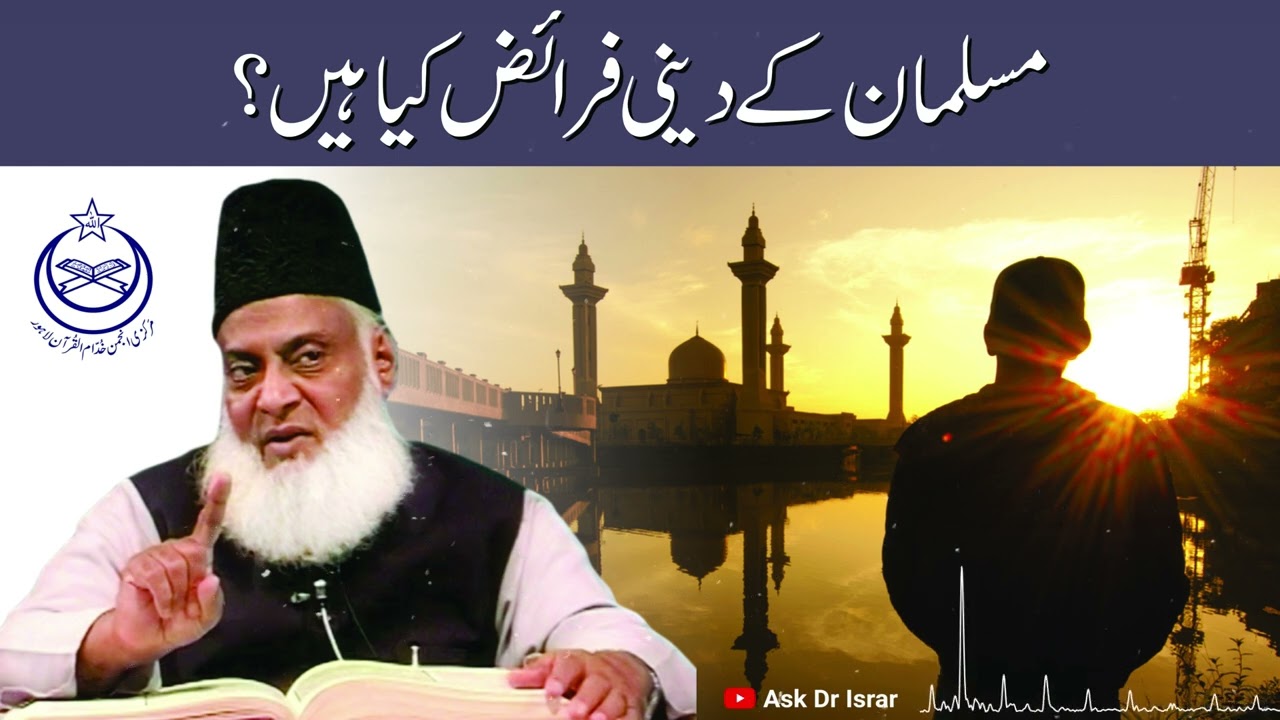
In this clip Dr Israr Ahmed highlights the main duties of Muslims, urging them to strengthen their faith through the Quran and follow Islamic values. He advises against practices like interest and bribery, encourages building a community that invites others to Islam through Friday prayers, and stresses the importance of choosing honest leaders to promote Islamic teachings.
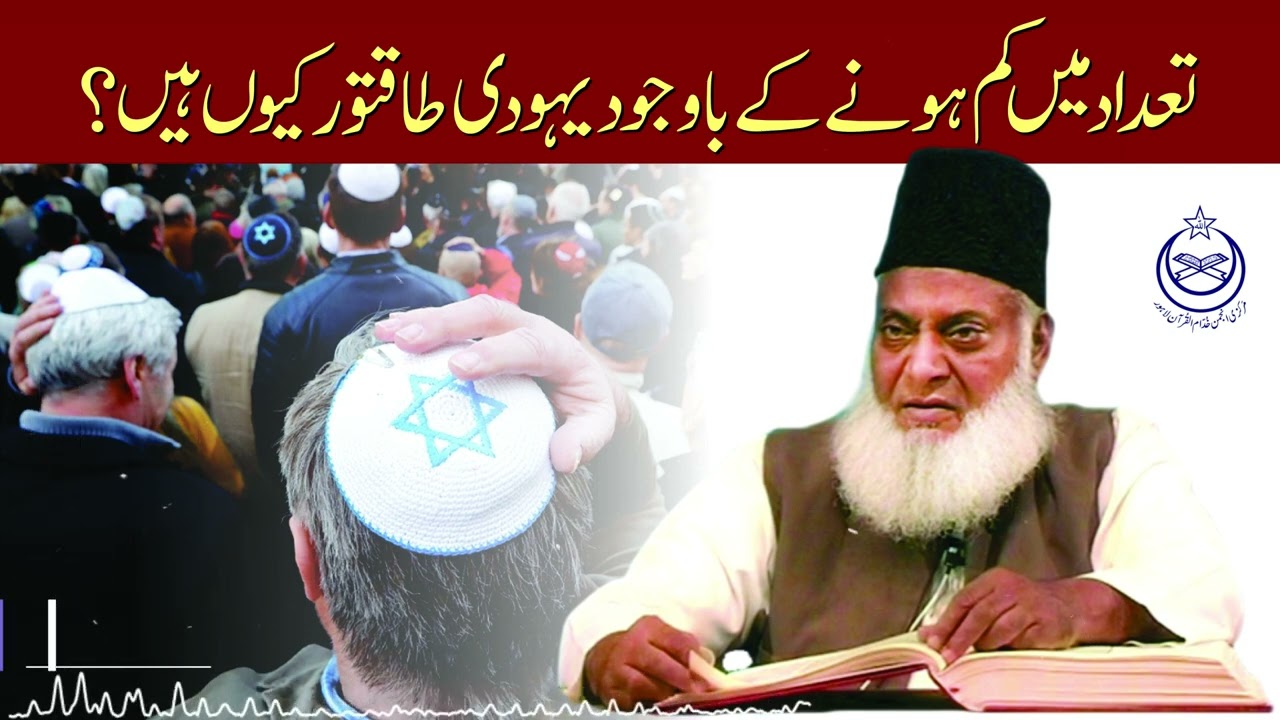
In this clip Dr Israr Ahmed explains why Jews are powerful despite being fewer in number than Muslims, who have the Quran and Sunnah. He says Jews are smart, organized, and work together well. Being a minority makes them active and focused, while larger groups can become passive. Jews have a strong identity and nationalism, allowing them to recover from setbacks. In comparison, Muslims are diverse, which can make it harder for them to unite.

In this clip Dr Israr Ahmed explain that Allama Iqbal believed that the core of Western success is its focus on practical knowledge and science. He emphasized that ideas should be based on knowledge, not just imagination. This use of science and technology has given the West power in the world. He also noted that earlier civilizations, including Islamic ones, made similar advancements in the past.

In this clip Dr Israr Ahmed explains that the mission to establish Islam will take several generations. He emphasizes that true Islamic training comes from being part of a movement, not formal education like schools or madrasas. He traces a chain of Islamic thinkers, including Iqbal, Maulana Azad, and Maulana Maududi, and says he has learned from their work and teachings.