Top videos

In the clip, Dr. Israr Ahmed talks about two kinds of love: love for Allah and love for worldly things. He warns about the consequences for those who prioritize the love of worldly things over the love of Allah

Dua | Dr Israr Ahmed Emotional Bayan | ALLAH Per Yaqeen | Never Ever Lose Hope in the Mercy of Allah
In the video, Dr. Israr Ahmed says: Trusting Allah means less work, while relying on others requires more effort. Asking only from Allah ensures blessings without disappointment, as long as you obey His commands and have faith.

In this clip, Dr. Israr Ahmed explains why Allah sends trials and difficulties to humans and how Islam provides solutions for all sorrows. He says that having faith brings peace and guidance from Allah, and those who endure challenges without complaint are successful. Patience leads to spiritual growth and purification from sins.

Dr. Israr Ahmed discusses his disappointment with the political leadership's failure to implement Islamic principles in Pakistan over the past 40 years, despite his efforts since 1974. He reflects on his attempts to advocate for Islamic governance and shares instances of disillusionment, including the adoption of secular laws instead of Islamic ones.

In this clip, Dr Israr Ahmed recounts the Battle of Badr, highlighting Prophet Muhammad's (PBUH) choice to confront the Quraish army over pursuing their caravan. Despite advice to the contrary, the Prophet's decision led to victory, showcasing the triumph of truth over falsehood. Hazrat Abu Bakr's unwavering faith and the Prophet's profound prayer underscored their commitment to righteousness.

In this clip, Dr Israr Ahmed explores Khilafat-e-Salasah, a pivotal era in Islamic history. Rebellion during the Prophet's time led to battles, and the martyrdom of Khulafah-e-Rashideen followed. This cycle of revolution and counter-revolution saw opponents converted, as in Mecca's conquest. Hazrat Abu Bakr's legacy and Hazrat Umar's role in the Persian Empire's downfall are significant. Rome and Persia's legacies, in Surah Ar-Rum, symbolize historical shifts.

In this clip, Dr Israr Ahmed explained that during Hazrat Umar's time, Prophet Muhammad entrusted Muslims with spreading and practicing Islam. This duty included establishing the religion and calling people to it. After the caliphate era, it became the responsibility of each individual Muslim to uphold these duties until the caliphate system is reestablished.

In this clip, Dr Israr Ahmed discusses Prophet Muhammad (PBUH) and his companions' sacrifices and dedication to spreading Islam. They abandoned worldly pursuits, endured hardships, and remained steadfast in their commitment despite facing immense challenges, ultimately receiving great rewards from Allah for their efforts.

Huzoor ﷺ Ki Ankhon Mein Ansoo | Heart Touching Bayan | Huzoor ﷺ Ki Umat Se Mohabbat | Dr Israr Ahmed
In this clip, Dr Israr Ahmed explains Prophet Muhammad's love for his followers, focusing on a verse from Surah Al-Ahzab. He highlights the importance of martyrdom and recounts an incident involving the Prophet and Hazrat Abdullah Ibn-e-Masood to emphasize the significance of verbal testimony and sincerity in faith.

In this clip Dr Israr Ahmed discusses working for Islam with a focus on trusting in Allah and perseverance. He stresses the significance of prayer, contentment, and relying on Allah's will. Though hard work is crucial, outcomes are ultimately up to Allah. Despite setbacks, one should persist in their duties and trust in Allah's guidance for success.

In this clip Dr Israr Ahmed outlines Islam with two facets: "religion" and "way of life." The term "mazhab" is absent in the Quran, applied to sects like Hanafi, Maliki, etc. True religion aligns with Allah's law, Sharia. Those diverging are deemed misguided.

Dr Israr Ahmed Full Bayan On Iqamat E Deen | ibadat kya hai | Dr Israr Ahmed Official

In this clip Dr Israr Ahmed outlines the essential obligations in Islam, stressing the importance of faith, obedience to Allah and His messenger, and fulfilling duties such as prayer, charity, fasting, and pilgrimage. He advises believers to uphold justice, migrate from unsupportive environments, and strive for righteousness.
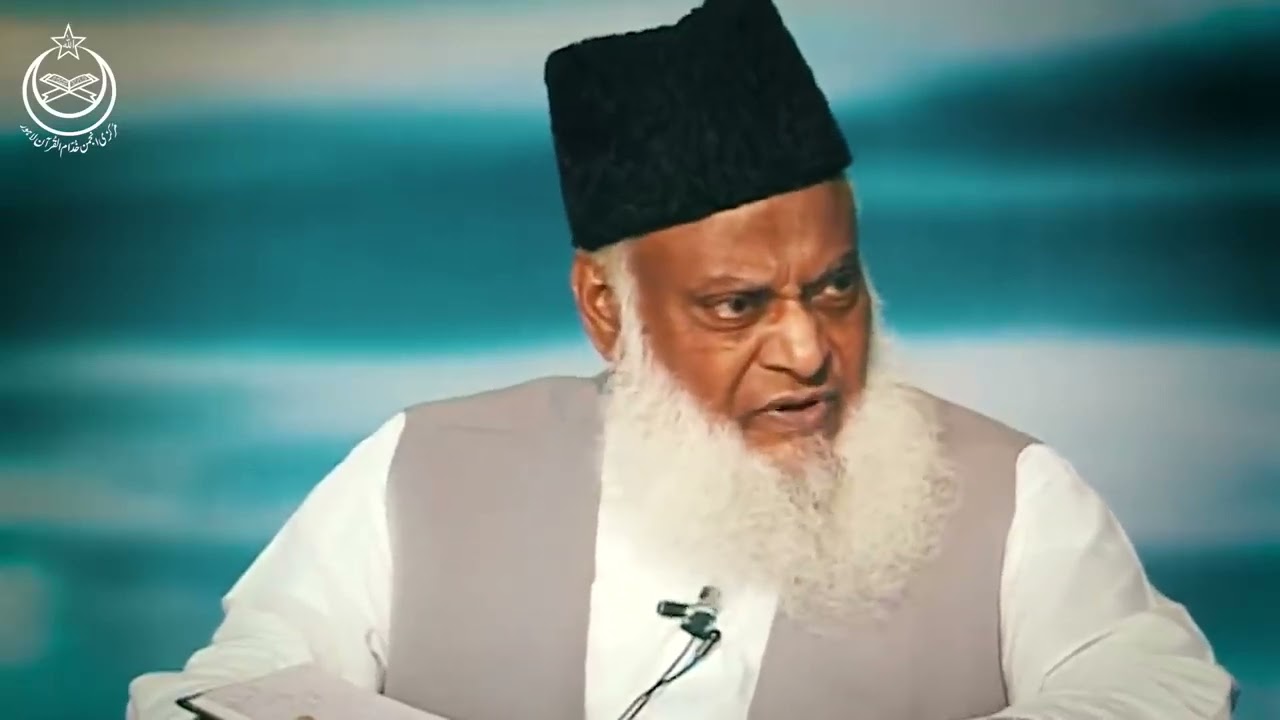
In this clip Dr Israr Ahmed discusses self-control and managing desires (nafs). He warns against treating desires as gods, as it leads to wrongdoing. He compares idolizing desires to associating partners with Allah, highlighting its seriousness. Dr. Israr Ahmed questions the accountability of those prioritizing desires on Judgment Day, despite their knowledge.

In this clip Dr Israr Ahmed talks about avoiding interest-based systems like banks and suggests partnerships based on fairness instead. He says until interest systems are gone, there can't be alternatives. He warns against even indirect involvement with interest and urges changing the system.

In this clip Dr Israr Ahmed discusses a conversation between Hazrat Abu Bakr (RA) and his son, He emphasizing the importance of prioritizing loyalty to God over family ties when defending faith. Abdul Rehman understands its implications, particularly in battle.
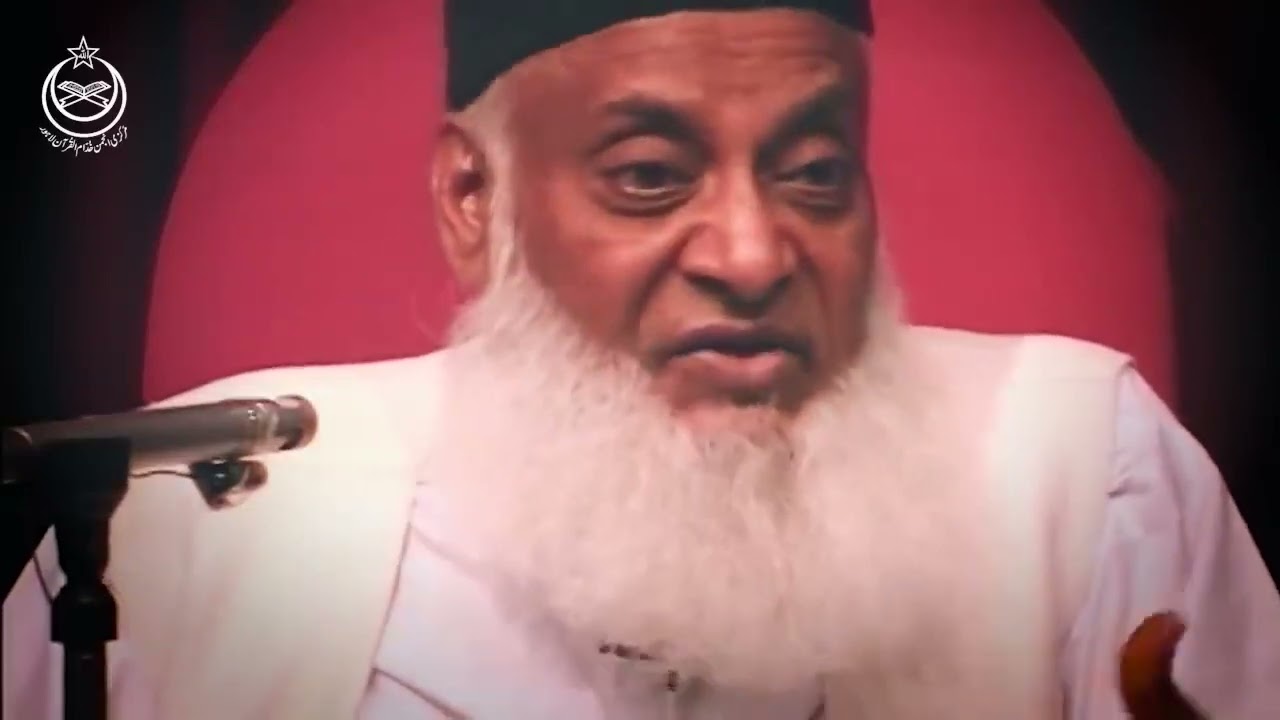
Hazrat Khadija Tul Kubra (R A) Ki Wafat غم کا سال | Rula Dene Wala Bayan | 10 Ramadan | Dr Israr Ahm
Hazrat Khadija Tul Kubra (R A) Ki Wafat غم کا سال | Rula Dene Wala Bayan | 10 Ramadan | Dr Israr Ahmed

Surah e KAHAF Complete By Dr Israr Ahmed | Ashab e Kahf Ka Waqia | Fitna e DAJJAL Kya Hai
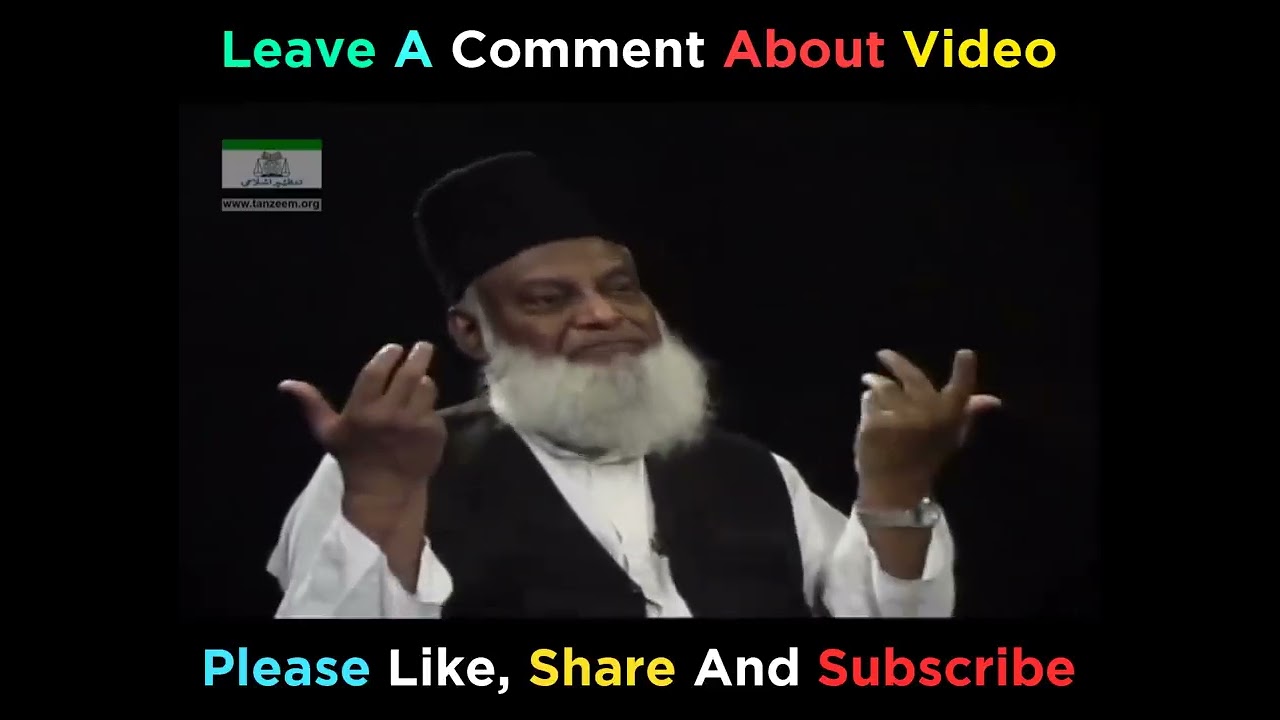
In this clip Dr Israr Ahmed explains that the veil (pardah) in Islam has roots in pre-Islamic Arabian culture, where women covered their bodies but not always their heads or faces. Islam refined this practice into a religious requirement. He stresses that hijab is based on the traditions of the Prophet Muhammad (SAW) and is essential to Islamic culture, and these traditions must be followed for spiritual growth.

In the video Dr Israr Ahmed talks about why Dr. Zakir Naik doesn't come to Pakistan and answers questions about speaking on sensitive topics and political invitations. He says directly quoting Prophet Muhammad (PBUH) can be delicate and relates it to historical context. He clarifies he has no political influence or wealth to attract politicians. Regarding Dr. Zakir Naik's hesitation, it's due to uncertainty with Indian government clearance and potential issues with Pakistani authorities.