Los mejores videos

Prevention of Sexual Violence جنسی تشدد کے واقعات کی روک تھام کیسے ؟ Dr Israr Ahmed R A

In this clip Dr Israr Ahmed explains that true success isn't based on worldly achievements but on sincere faith and following Islamic principles. Many people say they believe in the afterlife, yet their actions show they prioritize worldly gains. They seek material success, sometimes even risking their lives. Real success comes from fulfilling four conditions mentioned in the Quran.

In this clip Dr Israr Ahmed explains the significance of time and human existence in the Quran. He discusses "Asr," which means time that passes quickly, and "Dahr," which means the vast expanse of time and space. He notes that humans started as insignificant drops of water. The Quran swears by "Asr" to highlight how quickly time passes and that as we age, our remaining time decreases.

In this clip Dr Israr Ahmed explains that the Quran was preserved by Prophet Muhammad (SAW) through memorization and recitation as instructed by God. The written compilation of the Quran into a book was done later by Hazrat Abu Bakr and Hazrat Usman (RA). The initial preservation was through the Prophet, and the misunderstanding that Hazrat Usman (RA) compiled the Quran is incorrect.

In this clip Dr Israr Ahmed explains the style of Prophet Muhammad's Friday khutbahs. The Prophet delivered two short khutbahs, with a brief pause in between. He would read from the Quran and give advice in a concise manner. The khutbahs were not lengthy but were emotionally powerful and engaging. Despite the khutbahs being in Arabic, they were meant to be impactful and clear, with the Prophet's delivery being intense and passionate.

In this clip Dr Israr Ahmed explains that there's a difference between government and state. While Muslims may hold power, Islamic law isn’t enforced today. In the past, Islamic laws were applied, but now people understand that they can be loyal to the state while seeking to change the government. This can be done through elections or peaceful protests, as long as no harm or violence is caused.

In this clip Dr Israr Ahmed explains that collective repentance (ijtamai tauba) involves individuals sincerely repenting and removing haram from their lives. Despite societal restrictions, people can still follow Islamic teachings like avoiding interest and indecency. He emphasizes the power of sincere prayer and repentance to influence destiny. If enough people repent and work for Islam, they can bring meaningful change.

In this clip Dr Israr Ahmed explains that even though Muslims are many and have resources like oil, they still face humiliation. Their blood is being shed in places like Palestine and Kashmir, but it seems worthless. For over 50 years, Muslims have been oppressed and haven't fought back. This weakness and fear are why they continue to face disrespect around the world.

In this clip Dr Israr Ahmad explained that if thoughts or doubts go against faith, they are likely whispers from Shiatan. Intellect can guide you, but it’s the love of God that leads you to the right path. For Muslims, the Quran and Sunnah are the standards. If a thought opposes them, ignore it, recite "La Hawla wa La Quwwata," and don't dwell on it. Shiatan can plant doubts, but it's your choice to accept or reject them.
In this clip Dr Israr Ahmed discusses the guidelines for creative and research work. He says organizations can help by offering platforms like Quranic academies and courses. He encourages motivated individuals to join Quran colleges because teaching aligns well with studying subjects like Islamic studies and philosophy. Working in education provides more opportunities for personal and professional growth.
In this clip Dr Israr Ahmed outlines two essential steps for establishing an Islamic state in Pakistan. On an individual level, people must stop engaging in sinful activities and fulfill their religious obligations. This personal reform is crucial for any real change. On a national level, the country's constitution, which currently includes both Islamic and non-Islamic elements, must be revised to align fully with Islamic principles. Only then can true progress be made towards an Islamic state.
In this clip Dr Israr Ahmed explains that fighting for Allah’s sake (qital fisabilillah) can only happen under a true Islamic government or movement, which we don’t have right now. However, if attacked, defending ourselves is allowed and those who die are martyrs. He also says that peaceful efforts to spread Islam should continue, and the fight for freedom in Kashmir is justified.

In this clip Dr Israr Ahmed explains whether making pictures is haram in Islam. Drawing pictures by hand of living beings is clearly forbidden in Islamic teachings. With the invention of cameras, scholars debated if photography falls under the same rule. Some say it’s allowed for things like education, passports, or criminal identification. While some scholars accept it for necessary purposes, most discourage it, especially for general use.

In this clip Dr Israr Ahmed talks about how leaders need to mix kindness and strictness. Being gentle helps encourage members, but being too harsh can make them feel discouraged. Leaders should understand when to be tough and when to be caring to keep order. This balance is important for good leadership and keeping everyone motivated.

In this clip Dr Israr Ahmed discusses why there are differences in Islamic practices despite following the same Quran and Prophet's teachings. He explains that these differences are based on various interpretations and should not cause division. Practices like prayer rituals may vary, but they all have valid evidence. Muslims should respect these differences and focus on unity.
In this clip Dr Israr Ahmed explains that Islam’s economic system is based on two models: Shirakat (shared work and investment) and Mudarabat (one invests, the other works). Islam opposes feudalism and considers all conquered land as communal property. He critiques modern capitalist systems for concentrating wealth and power in a few hands. These systems, influenced by Western and Jewish ideas, are un-Islamic. Dr. Israr emphasizes that true economic reform requires a complete revolution, not gradual changes.

In this clip Dr Israr Ahmed talks about whether it’s better to implement Islamic law gradually or all at once. He says gradual implementation, like the Prophet Muhammad (PBUH) did, is better than forcing people to rebel. He also points out that today, we already have the complete religion, so any difficulties we face are much lighter compared to the struggles faced by the early Muslims.

In this clip Dr Israr Ahmed explains that Masjid-e-Aqsa was built 40 years after the Kaaba, likely by Prophet Ibrahim (AS). It was later rebuilt by Prophet Sulayman (AS) as Haikal-e-Sulaymani. Over time, it was destroyed and rebuilt several times, with the Romans demolishing it in 70 CE. By the time of Prophet Muhammad’s (PBUH) Miraj, it was in ruins, though some remains may have existed.

In this clip Dr Israr Ahmed highlights that establishing an Islamic government faces global opposition, as seen in Afghanistan's downfall due to strategic mistakes and poor decisions. He stresses self-correction, reliance on Allah, and enduring trials as necessary for success, drawing lessons from historical events where internal flaws led to defeat. True victory, he explains, comes through persistence, discipline, and adherence to divine guidance.
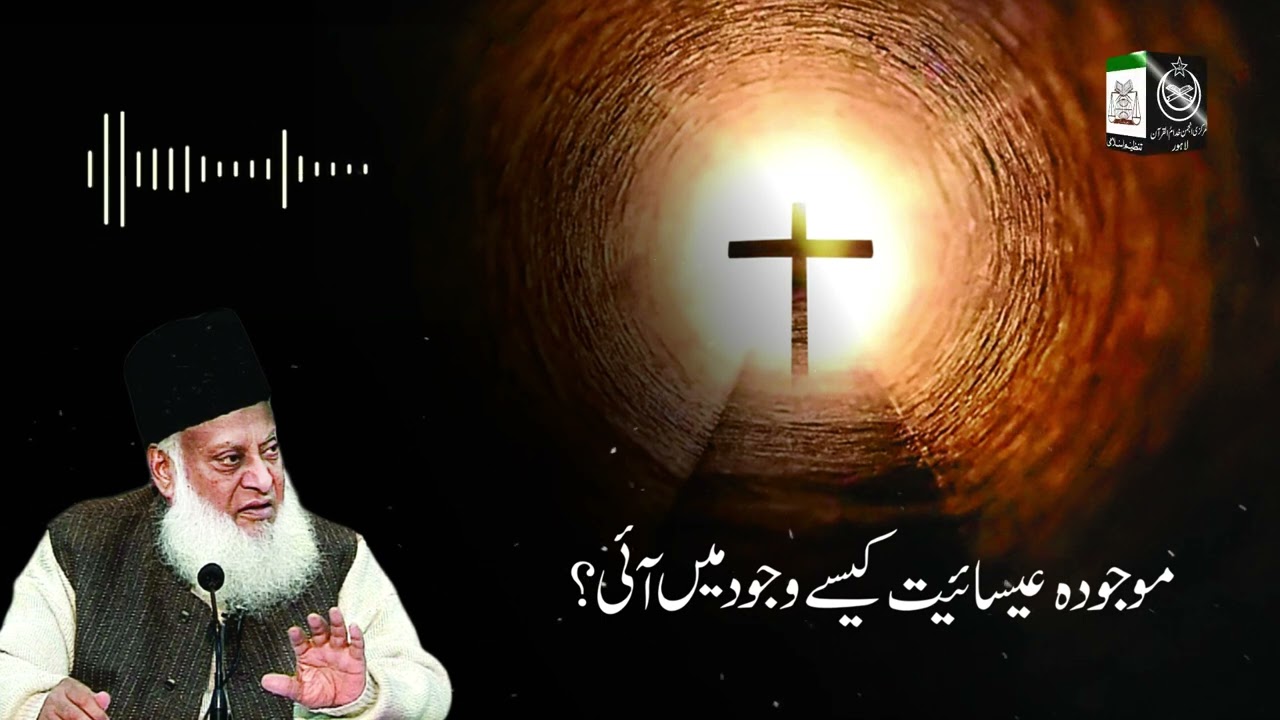
In this clip Dr Israr Ahmed explains that modern Christianity is fundamentally different from the teachings of Hazrat Is (AS), who came to affirm Hazrat Musa's Shari’ah and guide Bani Israel. Saint Paul drastically altered this by introducing the Trinity, abolishing Shari’ah, and transforming Christianity into a universal religion, contrary to Isa's mission. As a result, today's Christianity reflects Paul's innovations rather than the original monotheistic message of Hazrat Isa AS.