Top videos

In the video Dr Israr Ahmed discusses the original purpose of Pakistan's creation and references Allama Iqbal's vision. Iqbal envisioned an independent Muslim state in the northeast of India, which Muhammad Ali Jinnah later pursued. Dr Israr Ahmed emphasizes that Pakistan's foundation should be based on Islamic principles, not just on ethnicity, language, or nationalism. He stresses the importance of reviving Islamic values to fulfill Pakistan's true purpose, as envisioned by its founders.

Prevention of Sexual Violence جنسی تشدد کے واقعات کی روک تھام کیسے ؟ Dr Israr Ahmed R A

Dr. Israr Ahmed discusses how both sinners and innocents may face consequences in the Quran. Allah promises protection for those who promote good and deter evil, but severe punishment awaits those who persist in immorality and indecency.

In this clip Dr Israr Ahmed emphasizes that Islam isn't just a religion; it's a complete lifestyle. He urges Muslims to uphold core beliefs like prayer and fasting, and to preserve social traditions such as marriage and modesty. Criticizing the trend of adopting foreign laws, he warns against losing sight of Islamic principles, which he believes are essential to the faith.
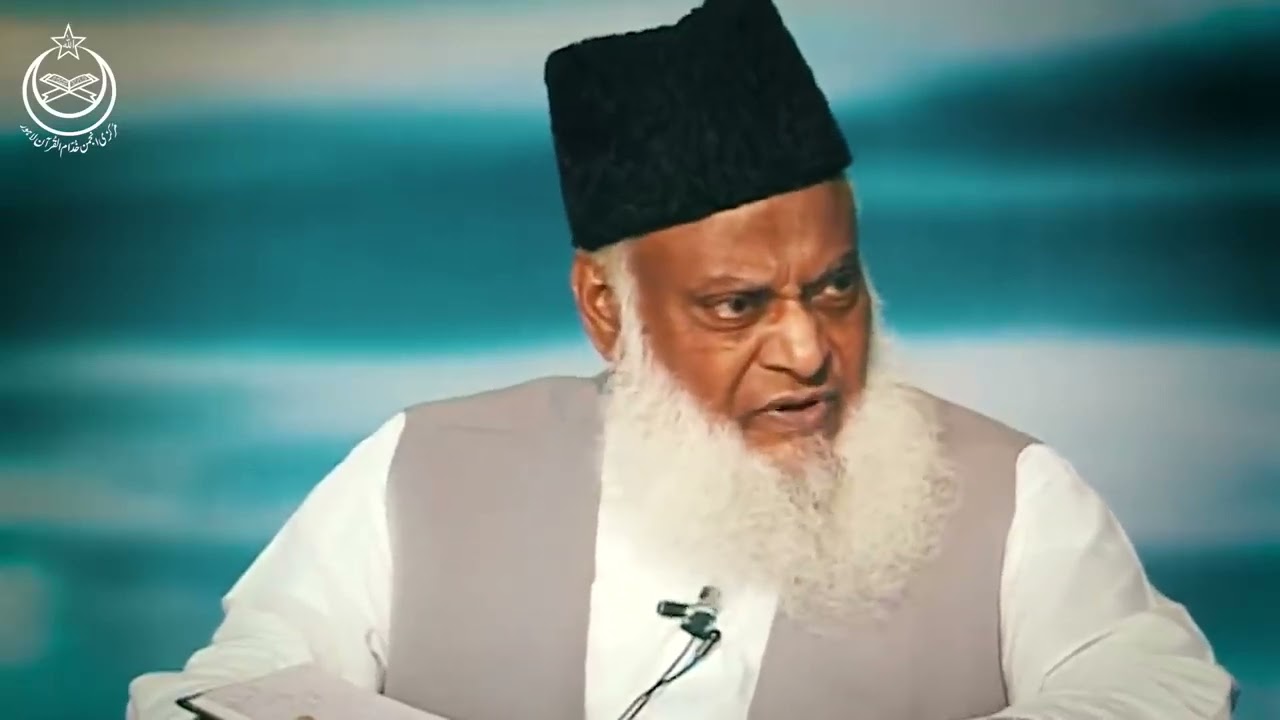
In this clip Dr Israr Ahmed discusses self-control and managing desires (nafs). He warns against treating desires as gods, as it leads to wrongdoing. He compares idolizing desires to associating partners with Allah, highlighting its seriousness. Dr. Israr Ahmed questions the accountability of those prioritizing desires on Judgment Day, despite their knowledge.

In this clip Dr Israr Ahmed explains that true believers are afraid of being hypocrites, while hypocrites don’t worry about it. The Prophet Muhammad (SAW) said that only true believers fear hypocrisy. He tells a story about a Sahabi, Hazrat Hanzala (RA), who was worried that he was becoming a hypocrite because he felt less spiritual when he wasn't with the Prophet (SAW). The Prophet (SAW) assured him that it's normal for faith to rise and fall, and this doesn't mean he is a hypocrite.

In this clip Dr Israr Ahmed explains that Hadiths were already being shared and recorded during the Rashidun Caliphate, even before they were compiled 300 years later. Scholars like Imam Bukhari carefully gathered authentic Hadiths, separating them from false ones. Abu Huraira RA, who spent the most time with the Prophet (PBUH), narrated the most Hadiths.
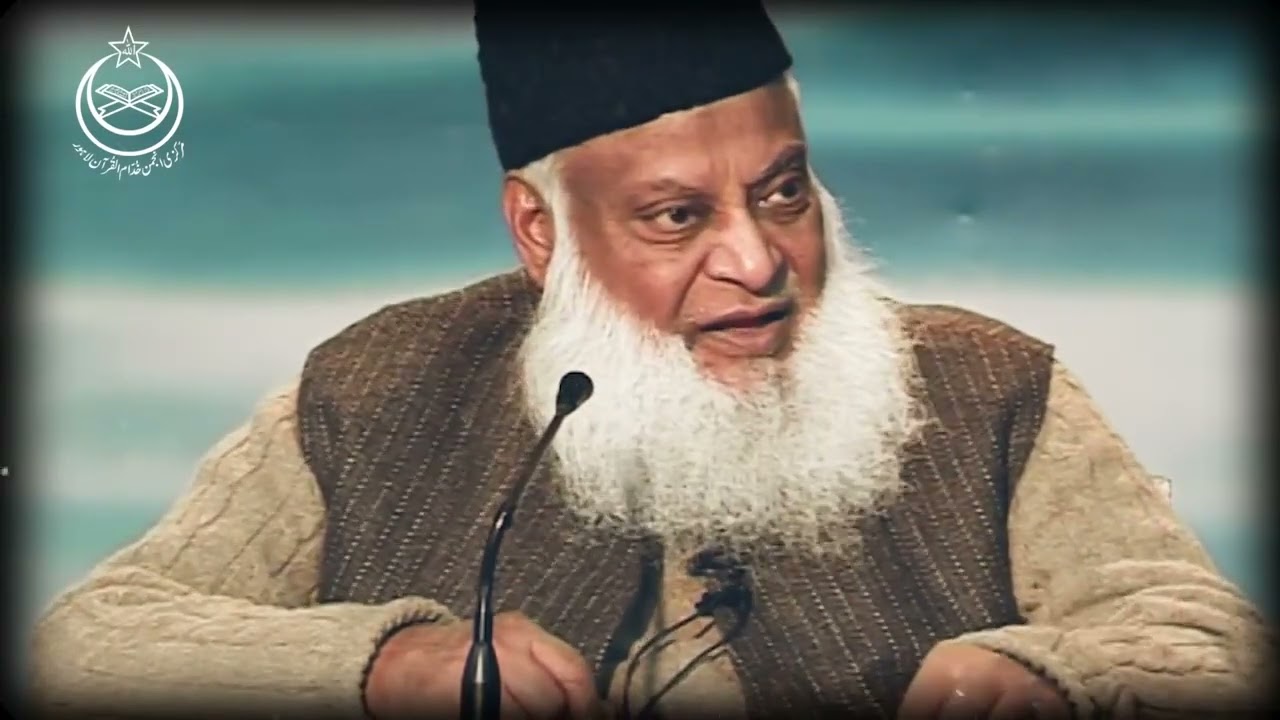
In this clip Dr Israr Ahmed talks about life, saying it's short and tricky. He says we should care more about what happens after we die. Dr Israr Ahmed warns us not to waste time on worldly things. Instead, he says we should remember Allah often. He believes that remembering Allah will bring us good things later.

In this clip Dr Israr Ahmed advises Muslims living in non-Islamic systems to focus on personal faith and small, meaningful actions. He explains that while you can't change the entire system on your own, you should still strive to bring about positive change. Living simply and dedicating your efforts to improving society can serve as a way to seek forgiveness from Allah. Your struggle, even if small, is valuable and recognized by Allah as an important effort.

In this clip Dr Israr Ahmed explains that while it’s natural to feel love for one’s homeland, Islam discourages extreme nationalism. He warns against making the country the main focus of identity, which could lead to justifying wrong actions for its pride. Instead, he emphasizes a balanced approach, where love for country shouldn’t override moral and religious values.
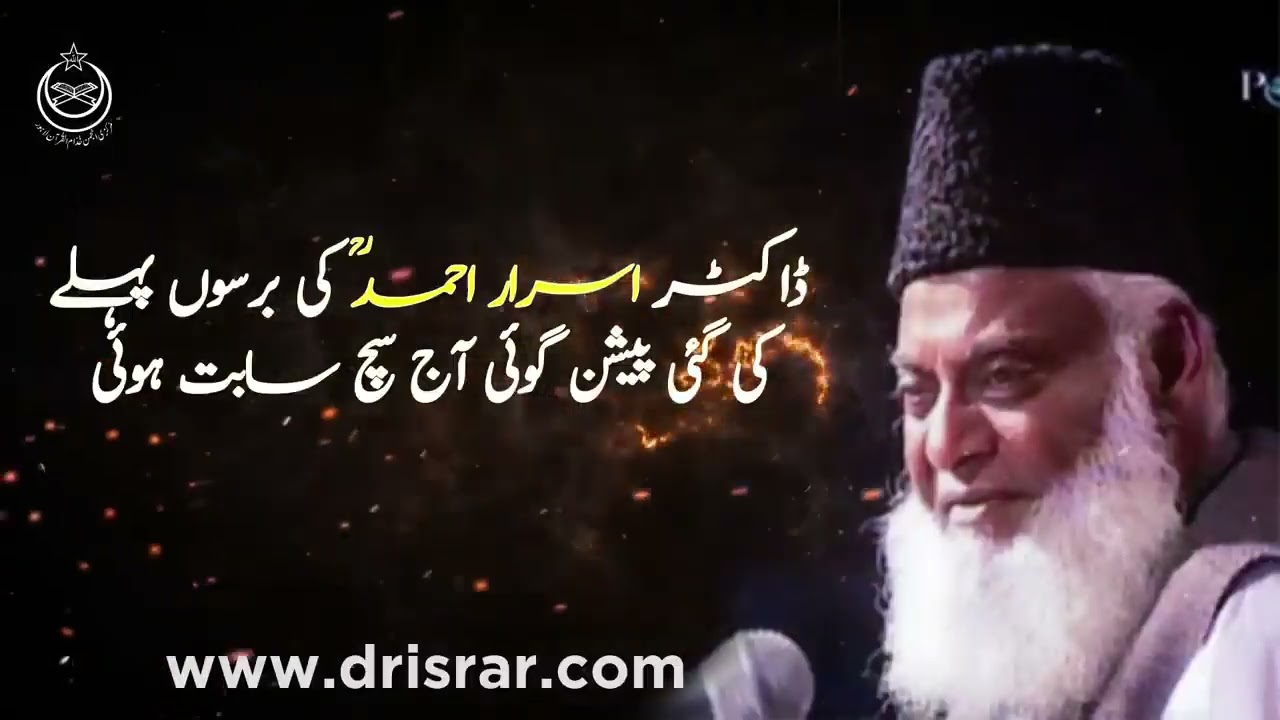
In the video Dr Israr Ahmed criticizes Pakistani politicians for lacking a true connection with Allah and being overly influenced by American policies. He claims that leaders like Benazir Bhutto and Nawaz Sharif, along with other institutions, have compromised their values, and that the real conflict is with Islam itself.

In this clip Dr Israr Ahmed is discussing successful people who have emphasized that all humans are at a loss except those who have faith and do good deeds, advise truth and patience to others. He stresses that true success is not measured by wealth, power, or fame, but by righteous actions, truthfulness, and patience. He argues that these qualities are essential for true success, regardless of worldly achievements or possessions.

In this clip Dr Israr Ahmed explains that if you're in a position of authority, like being the head of a family, it's your duty to guide others to do good and avoid evil. These two responsibilities are equally important and must always be done together. Ignoring one while focusing only on the other is not true to Islam. The Quran stresses this balance, and it's a key part of living a proper Islamic life.

In this clip Dr Israr Ahmed talks about keeping promises, especially to God. He shares a story about a loyal companion of Prophet Muhammad (PBUH) who always kept his word. Dr Israr Ahmed stresses that fulfilling promises is crucial in religion. In prayers, Muslims promise to worship and seek help only from God. Those who break promises lack faith and integrity.

In this clip Dr Israr Ahmed shares a poignant speech about the final test of patience and recounts the inspiring story of Musab bin Umair (RA). Despite facing persecution and torture from the Quraysh elite, Musab remained steadfast in his faith, symbolizing the resilience of early Muslims in the face of adversity. His story highlights the transformative power of Islam and the sacrifices made by early believers.

Dr Israr Ahmed explaining Shirk Fil Itat | شرک فی الاطاعت کیا ہے؟ | Types Of Shirk By Dr Israr Ahmed
In this clip Dr Israr Ahmed explains "shirk fil itat," associating partners with Allah in obedience. He clarifies that while respecting parents is important, ultimate obedience belongs solely to Allah. Any obedience conflicting with Allah's commands is considered shirk, He emphasizing that obedience is reserved for Allah alone.

In this clip Dr Israr Ahmed explains that hand-drawn pictures and statues are clearly forbidden in Islam, based on Hadith. The invention of the camera led to scholarly debate, with most agreeing that photography, involving no manual creation, is permissible. Some Indian scholars initially opposed it but allowed its use for identification and legal purposes. Extending this reasoning, Dr. Israr permits videos for religious education, as videos are moving images, not static pictures.

In this video Dr Israr Ahmed explains and emphasizes the fleeting nature of time with examples and references from different walks of life.

In this clip Dr Israr Ahmed explains that all religions and philosophies share basic moral values like honesty, keeping promises, helping others, and respecting parents. These values are universally recognized as fundamental.

In this clip Dr Israr Ahmed explains that Khilafat is a system where governance is based on Allah’s commands and the Prophet’s (PBUH) teachings, ensuring divine authority remains supreme. Unlike democracy, where people’s will dominates, Khilafat prioritizes Quran and Sunnah. However, democratic elements like majority opinion and consultation can be included, as long as they stay within Islamic limits. The Khalifa is responsible for ensuring all decisions align with divine guidance, making Khilafat a balanced system of authority under Allah’s sovereignty.