Top videos

In this clip Dr Israr Ahmed says a true believer trusts in Allah and the Prophet Muhammad (PBUH) without doubt. Genuine faith shows in actions like prayer and jihad. While rituals matter, true faith goes deeper. It's a blessing that Allah guides us, and our actions reflect our faith. Allah sees all.

In this clip Dr Israr Ahmed explains that the key to Muslim unity is understanding the Quran. He highlights that even when Muslims faced difficulties, Allah guided them out of those troubles. Similarly, Allah continues to guide and clarify the message of the Quran to help people find the right path.

In this clip Dr Israr Ahmad explains that being a servant of Allah means complete obedience at all times, not just part-time like an employee. He compares it to how slaves in the past were fully controlled by their masters. Similarly, we must fully submit to Allah in everything we do, as this is the key message of the Quran and the teachings of Prophet Muhammad (SAW).

In this clip Dr Israr Ahmed highlights that seeking knowledge is a duty for all, whether religious or not. He stresses that religious obligations like prayer, fasting, and spreading Islam are mandatory for everyone. While some flexibility may apply depending on individual circumstances, these duties should be followed. He encourages continuous learning from childhood to death.

In this clip Dr Israr Ahmed outlines that after joining Tanzeem-e-Islami, members should align their lives with Islamic teachings, attend group sessions for growth, and invite others to join, helping the organization expand. They are also encouraged to peacefully stand against wrong actions in society, aiming to build enough strength for a positive impact.

In this clip Dr Israr Ahmed emphasizes adapting the Prophetic method (Nabvi Tareeqa) for establishing Deen through ijtihad. He notes that modern centralized governments and powerful armies make direct confrontation impractical. Instead, he advocates peaceful strategies like civil disobedience to achieve Islamic goals. This approach balances practicality with adherence to Islamic principles. The ultimate aim is to establish Deen in a way suited to today’s realities.

Dr. Israr Ahmed emphasizes the importance of faith in the Hereafter, stating it as the cornerstone of belief. He explains that belief in the Day of Judgment influences actions, and lack of it can lead to sinful behavior. Additionally, he discusses the five aspects of faith given by Allah for accountability in this life and the Hereafter.

In this clip Dr Israr Ahmed stresses the significance of Zakat, Sadqa, and Khairat, underscoring genuine compassion and assistance to those in need. He emphasizes prioritizing aid to family and the deserving while cautioning against arrogance and neglecting the duty to help others.

Dr. Israr Ahmed discusses the decline of Muslims post the Rightly Guided Caliphs, citing the fall of Baghdad in 1298 as a turning point. He highlights the loss of Arab leadership, the rise of Indian empires, and Europe's expansion halted in Vienna. The abolition of the Caliphate in 1924 marked the end of Muslim resistance. Dr. Israr stresses the need for Muslims to strengthen their faith by returning to the Quran for guidance.
In this clip Dr Israr Ahmed teaches that a wise person isn't afraid to face Allah. They control their desires, earn money honestly, and take care of their family. This is true wisdom for this life and the next.

In this clip Dr. Israr Ahmed explains Ramadan fasting as a means to develop self-control and piety. By controlling our desires for 30 days, we learn to prioritize our spiritual growth, avoid sin, and become more empathetic. Fasting helps us recognize our weaknesses, grow in self-awareness, and deepen our faith. Through this practice, we emerge stronger, wiser, and more compassionate.

In this clip Dr Israr Ahmed explains four key principles from Surah Al-Asr: faith, good deeds, promoting truth, and promoting patience. He says these should be balanced. Even very pious acts are ineffective without truth and patience. He urges Muslims to be active and face challenges, not just focus on spiritual retreats. He prays for people to truly embody these principles.

In this clip Dr Israr Ahmed explains that while humans want to see results from their efforts, we should work for Allah's pleasure. He highlights that people have a spiritual side that seeks higher values and a physical side that wants rewards. True faith means continuing to work even when we don’t see immediate results, as focusing only on outcomes can lead to losing motivation.

In this clip, Dr Israr Ahmed discusses three promises from Allah, emphasizing unwavering faith and hope, and the significance of Jihad in the Quran. He underscores Allah's assurances of establishing Khilafah and the inevitable victory of Islam. Ultimately, he highlights the triumph of truth and the eventual embrace of worshiping Allah in peace.

Surah Al Mulk With Urdu Translation Full | Qabar Ke Azab Se Bachanay Wali Surah | Dr Israr Ahmed

In this clip Dr Israr Ahmed explains that Surah Baqarah is placed at the start of the Quran because, in the early days of Islam, faith came first, followed by rules. Now, people are born as Muslims, so the focus is on practicing Islamic laws, and faith grows stronger with time and understanding. The wisdom behind this order is known best by Allah.

In this clip Dr Israr Ahmed explains that the "qalb" (heart) in the Quran refers to both the physical heart and the spiritual heart (the soul). While the physical heart pumps blood, the spiritual heart is where a person's true essence lies. When the Quran says people's hearts are blind, it means their souls are blind, not their eyes. Humans have two aspects: the physical (senses like sight and taste) and the spiritual (connected to the soul and processed by the heart).

In this clip Dr Israr Ahmed explains that if a husband forbids hijab and threatens divorce, a wife must prioritize Allah’s command. If leaving the marriage causes harm, especially to children, she may tolerate the situation to maintain family stability. However, if separation is simple and without complications, she should leave to follow her faith. Each decision should consider personal circumstances and consequences.
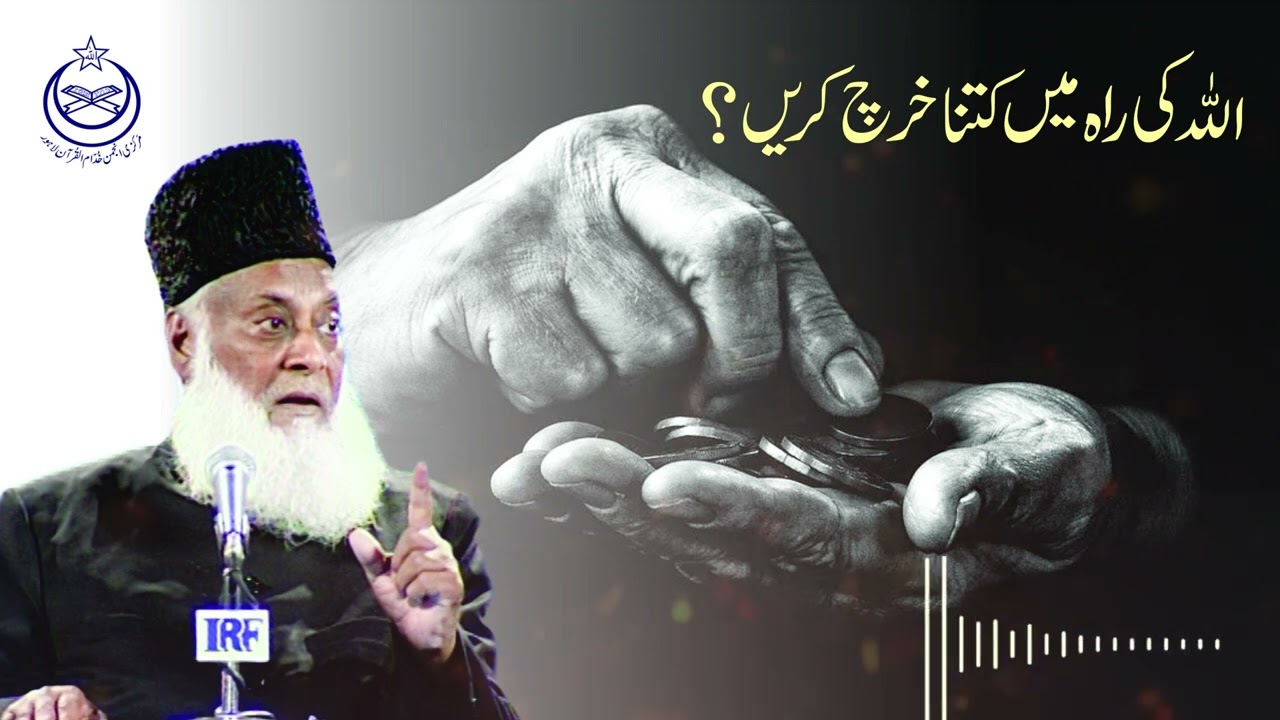
In this clip Dr Israr Ahmed explains that Islam has two systems of giving: one mandatory, like zakat, and the other voluntary based on personal faith. Zakat is required when wealth surpasses a certain limit, but beyond that, believers are encouraged to reduce their needs and give extra in the path of Allah. This voluntary giving depends on one's belief in the greater rewards of the Hereafter.

In this clip Dr Israr Ahmed highlights six important rights Muslims have over each other according to Hadith. These include greeting with "Salam", shaking hands, giving advice kindly, accepting invitations, visiting the sick, and attending funerals. It's all about showing respect and treating others as you would want to be treated.