Top videos

In this clip Dr Israr Ahmed advises on dealing with depression and anxiety, finding solace in the Quran. He compares the hardened heart to stones, urging to soften it with Quranic teachings. He emphasizes addressing spiritual diseases like worldly desires and materialism for inner peace.

In this clip Dr Israr Ahmed discusses whether Friday sermons (khutbah) can be given in Urdu, as most people don't understand Arabic. He believes the khutbah should be in a language that people can understand to spread religious knowledge. While Arabic is traditional, delivering it in Urdu can help more people grasp the message. He also emphasizes the importance of educating people to understand Arabic in the future.


In this clip Dr Israr Ahmed says real success isn't just about being rich or powerful. It's about believing in the right things, doing good, being patient, and seeking truth. Without these, even successful-looking people might feel empty. Success comes from faith, goodness, patience, and truth, not just money or status.

Hazrat Ali (R A) Ki Shan | Quotes of Hazrat Ali | Bravery Of Hazrat Ali | Biography Of Hazrat Ali

In this clip Dr Israr Ahmed explains that Zikr is remembering Allah, with the Quran being the best way to do this. Other forms, like saying “La ilaha illallah,” are good but not as powerful as the Quran. He also mentions that Prophet Muhammad (PBUH) praised the faith of future believers who would trust the Quran without seeing him. In simple terms, while all ways of remembering Allah are valuable, the Quran is the most important.

In this video, Dr. Israr Ahmed explains how Surah Ad-Duha can help when you're feeling stressed or sad. He says reciting this Surah reminds us that tough times don't last forever, and better days are ahead. It's like a message of hope and comfort from Allah, assuring us that He's always there for us. This Surah acts as a remedy for emotional and spiritual distress, offering hope and assurance of Allah's support and blessings.

Dr. Israr Ahmed recounts the story of Hazrat Yusuf (A.S). When Yusuf told his father, Yaqub (A.S), about his dream, Yaqub warned him not to share it with his brothers, knowing they'd become jealous. Yusuf's step-brothers threw him into a well, but a passing caravan rescued him, intending to sell him for profit.

In this clip Dr Israr Ahmed addresses the tension between reason and faith, advising to reject misleading thoughts as whispers of Shaitan and seek refuge in Allah. He emphasizes the importance of aligning reason with divine guidance from the Quran and Sunnah to avoid straying from the path of true guidance.

In this clip Dr Israr Ahmed explains that educational reform is important for a religious change, but it’s just the beginning. First, people’s thinking and ideas need to change. Then, they can come together to create power and change the system. Education, preaching, and moral training help in this process. The real challenge is to take action, write, and contribute, even when it’s difficult.
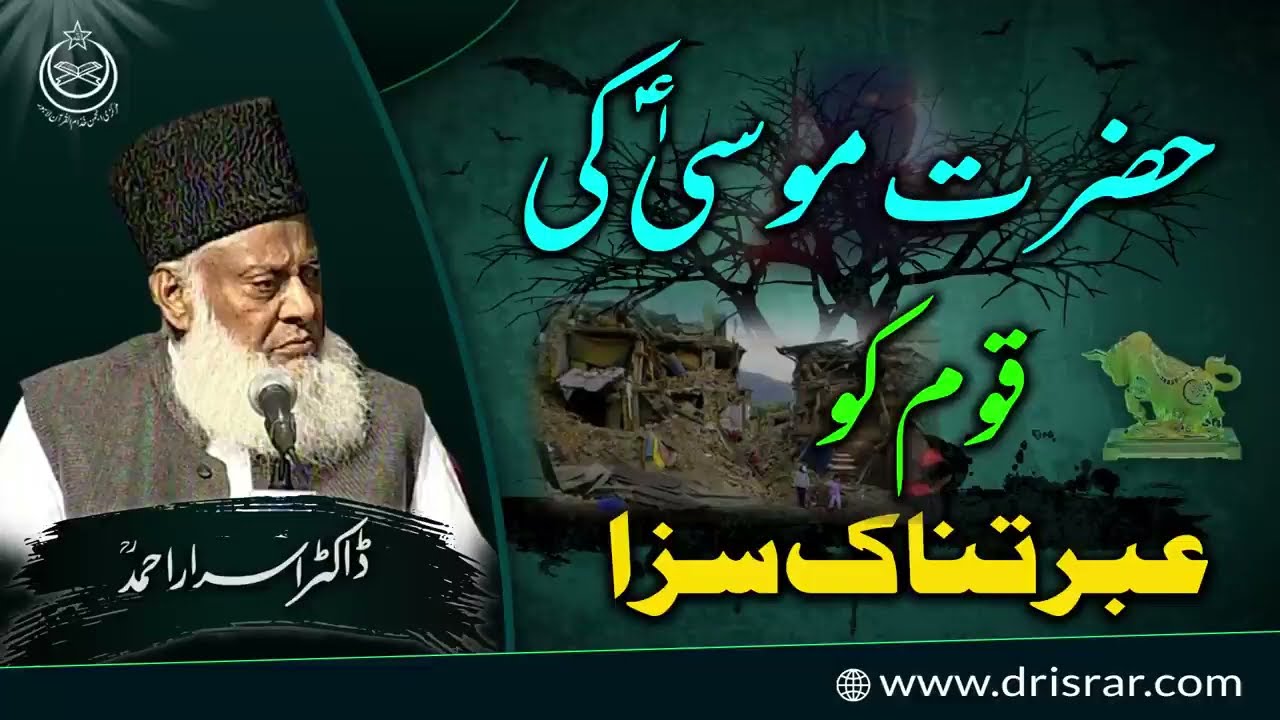
Dr. Israr Ahmed discusses the story of Hazrat Musa meeting Allah on Mount Sinai. While he was away, some followers strayed because of Samri's influence. Upon his return, Musa punished the wrongdoers. It's a significant event where many Jews were slain by their own kin. Musa pleaded for Allah's mercy, but Allah stated His mercy is for those who believe in and follow His Messenger.

Reality & Facts About Jinnat Jinnat Ki Asal Haqeeqat Kya Hai Dr Israr Ahmed Bayan About Jinnat

Latest Technology + Western Civilization مغربی تہزیب Dr Israr Ahmed Official
In this clip Dr Israr Ahmed explains that a "wali" (friend of Allah) is defined by strong faith and love for Allah, rather than a formal title. This deep connection involves trust in Allah and acceptance of His will. True believers who embody these qualities are loved and protected by Allah. In essence, if you have faith and love for Allah, you become His wali.
In this clip Dr Israr Ahmed warns Muslims of secularism's dangers, urging adherence to Islamic principles. He highlights its impact on moral values and family structures. Advocating resistance to secular ideologies, he stresses faith preservation. Dr. Israr Ahmed emphasizes traditional family values and the sanctity of marriage.

In this clip, Dr. Israr Ahmed emphasizes a Quranic command: Muslims must intervene to stop evil around them to avoid being implicated in sin and facing punishment. Only those who actively prevent wrongdoing will be spared from its consequences

In this clip, Dr Israr Ahmed explains why it's crucial to follow both Allah and Prophet Muhammad (PBUH). Allah's commands are absolute, while obeying the Prophet (PBUH) involves following his teachings and actions. Understanding this relationship is vital for practicing Islam effectively. Dr. Israr Ahmed emphasizes studying the Prophet's life to learn how to worship and behave.

Hazrat Umar Farooq Ki Shahadat Ka Waqia | 1st Muharram | Biography Of Hazrat Umar By Dr Israr Ahmed

Dr. Israr Ahmed talks about how the start of life is crucial. He says the Quran shows evidence for or against us. It reflects God's mercy, like a big sea. Following the Quran brings light and mercy. Those who understand and follow it feel enlightened and blessed, while those who read without understanding miss out.