Top videos
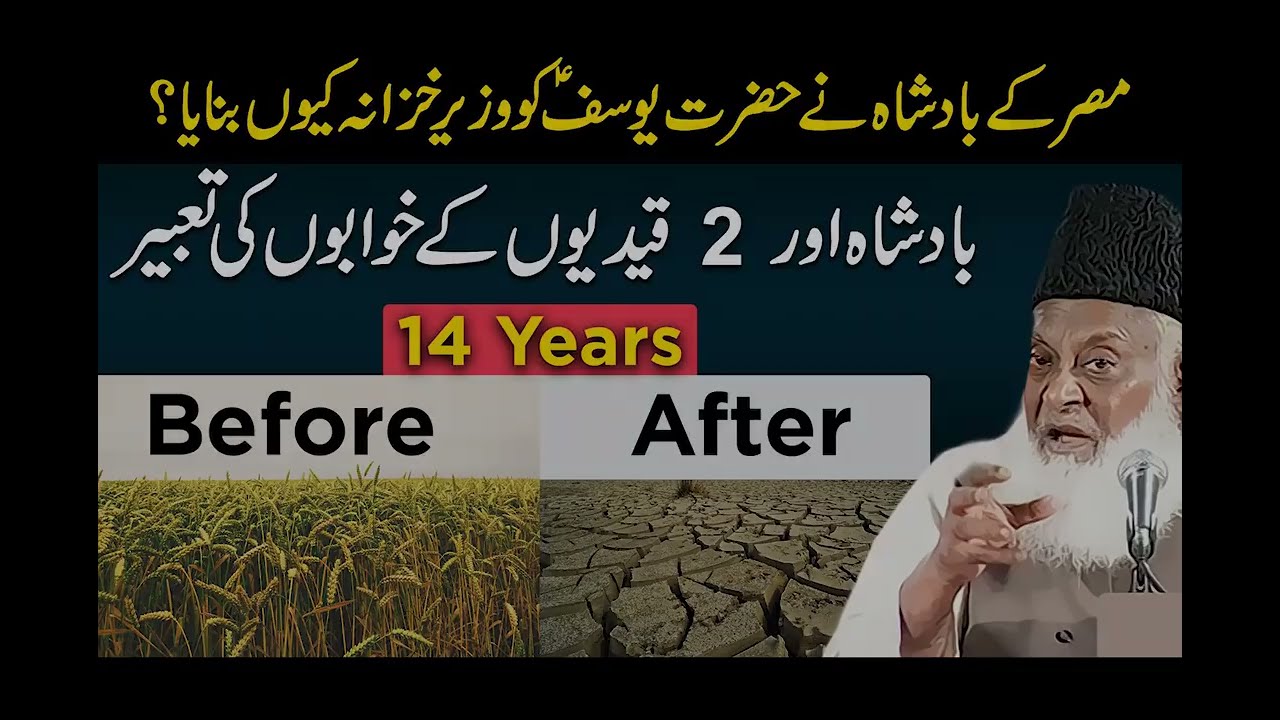
In this video, Dr. Israr Ahmed discusses why the Egyptian king appointed Hazrat Yusaf (A.S) as Finance Minister and explains Yusaf's (A.S) interpretations of dreams for the king and two prisoners. Yusaf (A.S) impresses the king with his intelligence, leading the king to keep him out of prison.

In this clip, Dr Israr Ahmed briefly covers Hazrat Umar's (AS) life, including his biography, caliphate era, justice, and martyrdom. He notes the significance of 25th Zulhijjah, Hzrat Umar's (AS) assassination day, and his prayer for strength during Hajj. Hazrat Umar's (AS) role as a diplomat and warrior, his conversion to Islam, and his qualities of bravery and intellect are highlighted, along with his eventual recognition by Prophet Muhammad (PBUH).
In this clip Dr Israr Ahmed talks about Hazrat Umar Farooq's (RA) view on feudalism, stressing that Umar aimed for fair wealth distribution, not inherited estates. He promotes investment over hoarding money, condemning interest as usury. Dr Israr Ahmed advocates for entrepreneurship, collective investment, and opposes usury's link to economic dominance, aligning with Islamic principles.

In the video Dr Israr Ahmed's message to Muslims and Pakistani leaders is about returning to true Islamic values. He criticizes the focus on wealth and power instead of justice and accountability. He points out that Muslims in other countries are more devoted and stresses the need for a fair society where leaders can be questioned. He believes that if Muslims sincerely repent and reform, they can regain Allah's favor and achieve greatness.

In this clip Dr Israr Ahmed discusses the importance of Surah Rahman, which the Prophet Muhammad (PBUH) called the "Bride of the Quran" for its beauty. He shares that Allah loves to listen to the Quran and praises beautiful recitation. The names "Rahman" and "Raheem" highlight Allah's immense and continuous mercy. The key takeaway is the significance of reciting the Quran thoughtfully and appreciating Allah's mercy.

Dr Israr Ahmed Full Bayan On Iqamat E Deen | ibadat kya hai | Dr Israr Ahmed Official

In this clip Dr Israr Ahmed talks about Hazrat Imam Hussain's (R.A) bravery in Karbala, showing how he stood up for what's right, even when it was hard. He teaches us to fight for justice and be ready to give up everything for it. Hazrat Imam Hussain's (R.A) sacrifice reminds us to stay strong and stay true to what we believe in, no matter what.

In this video, Dr. Israr Ahmed talks about the importance of fasting and being pious in Islam. He also discusses the significance of earning halal sustenance versus haram, and offers advice on how to ensure our prayers are accepted by Allah.
The Day of Judgement | Eye Opening Bayan | Surah Qiyamah with Urdu Translation | Dr Israr Ahmed Baya
The Day of Judgement | Eye Opening Bayan | Surah Qiyamah with Urdu Translation | Dr Israr Ahmed Bayan

In this clip Dr Israr Ahmed explains that Allah forgives all sins if a person sincerely repents, except for shirk (associating partners with Allah). Lesser sins done unintentionally can be forgiven if one repents sincerely. Deliberate sins require genuine repentance for Allah's forgiveness.

In this clip Dr Israr Ahmed teaches that regular remembrance of Allah (zikr) is crucial for spiritual well-being. A spiritual guide can help diagnose and treat spiritual issues like a doctor does for physical health. Consistent zikr, including prayers and Quran recitation, strengthens the heart and prevents spiritual weaknesses. This practice guards against hypocrisy and negative influences.

In this clip, Dr. Israr Ahmed teaches that everything in the universe reflects Allah's presence, as mentioned in the Quran. He highlights that Allah's signs are abundant, visible in every aspect of creation. Dr. Ahmed urges us to contemplate these signs in both the heavens and the earth, emphasizing their significance in recognizing Allah's greatness.

In this clip, Dr Israr Ahmed recounts the Battle of Badr, highlighting Prophet Muhammad's (PBUH) choice to confront the Quraish army over pursuing their caravan. Despite advice to the contrary, the Prophet's decision led to victory, showcasing the triumph of truth over falsehood. Hazrat Abu Bakr's unwavering faith and the Prophet's profound prayer underscored their commitment to righteousness.

Very Important Message Of Huzoor ﷺ For Ummah | Quran Ki Azmat By Dr Israr Ahmed Beautiful Short Clip
In the clip, Dr. Israr Ahmed highlights the importance of Prophet Muhammad's message and the greatness of the Quran. He emphasizes human potential for expression but notes the neglect of responsibilities. Understanding and practicing Quranic teachings are crucial for genuine success. He laments Muslims' failure to propagate the Quran's message, resulting in a loss of global respect.

In this clip Dr Israr Ahmed shares the heartbreaking story of Imam Hussain's martyrdom in Karbala. Imam Hussain (RA) was betrayed by the people of Kufa, despite their earlier invitations. He and 72 of his followers, including 20 from his family, were martyred. This happened 50 years after Prophet Muhammad's (S.A.W) passing.
In this clip Dr Israr Ahmed talks about "Shahadat" in the Quran. It's about being present and witnessing. Prophets (SAW) show God's religion through their words and actions. People should follow their example. On Judgment Day, their testimony will help or harm them based on how they lived by the Quran. Believers should stand for justice and be true witnesses for Allah.

In this clip Dr Israr Ahmed explains that striving for the establishment of Islam (Iqamat-e-Deen) is a personal duty for every Muslim. However, its success depends on Allah's will and people's acceptance. He emphasizes that we must continue our efforts without being discouraged by the results, as outcomes are in Allah's control. Dr. Israr also advises against criticizing other religious groups for their methods.

In this clip, Dr. Israr Ahmed highlights the importance of Nawafil prayers in an Islamic state, allowing believers to draw closer to Allah. He underscores the opportunity for spiritual advancement within such a system and shares Hazrat Abu Bakar's advice on prioritizing the establishment of an Islamic framework if it's lacking.
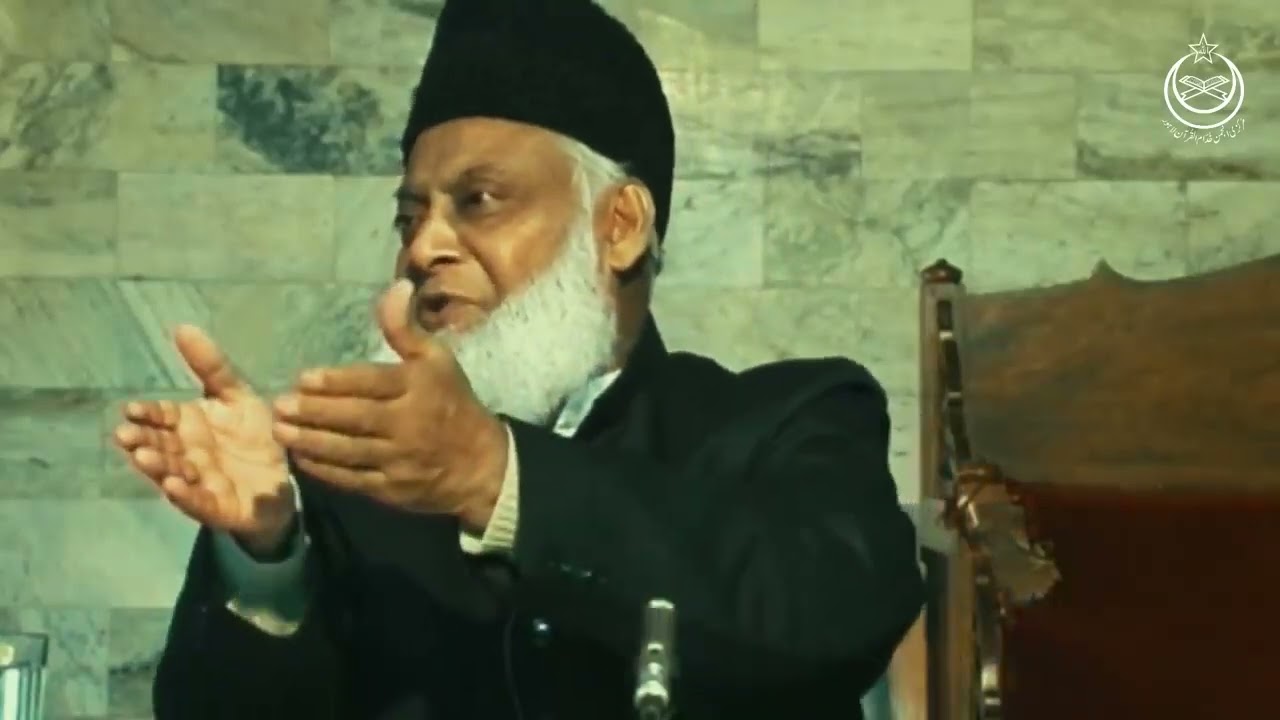
In this clip Dr Israr Ahmed talks about unfair wedding traditions and says we should stop putting pressure on the bride's family. He believes marriage should be fair and both partners should share responsibilities. He thinks dowry shouldn't be seen as buying someone. Keeping weddings simple is better, according to him, and it matches Islamic beliefs.

DUTY OF A TRUE MUSLIM 15