Top videos

In this clip Dr Israr Ahmed stresses trusting in Allah for sustenance through "taqwah" or God-consciousness. True taqwah involves following Allah's path, leading to unexpected blessings. Although challenging, trusting in Allah strengthens faith, and helping others brings divine support.

In this clip Dr Israr Ahmed explains that the Prophet Muhammad's (PBUH) mission was to strengthen faith, not seek political power. He outlines a three-step process: building faith, educating with Quran and Hadith, and uniting people to fight evil and promote good. He emphasizes the need to follow this gradual approach for meaningful change. Skipping steps would lead to failure.
In this video, Dr. Israr Ahmed talks about loving Prophet Muhammad more than anything else, even more than family. He says this love is important for growing spiritually and having a good society. Dr. Israr Ahmed tells a story about Hazrat Umar loving the Prophet very much. He also says it's crucial to follow the Prophet's teachings for society to be strong and peaceful.

In this video Dr Israr Ahmed narrates the importance of qasam and the why as a principle Allah takes qasam. He also explains what 'Zamana' is and the fleeting nature of time.

Nazriya e Pakistan Allama Iqbalؒ Vs Quide e Azamؒ Dr Israr Ahmed Official

In this clip Dr Israr Ahmed explains that true remembrance of Allah (zikr) is keeping Allah in your heart. The best zikr is reciting the Quran and performing prayers. He shares how Fatima (RA) used to recite the Quran while doing chores. Other forms of zikr include daily duas (supplications) for various activities. Consistent zikr keeps the heart connected to Allah and protects against negative influences and hypocrisy.
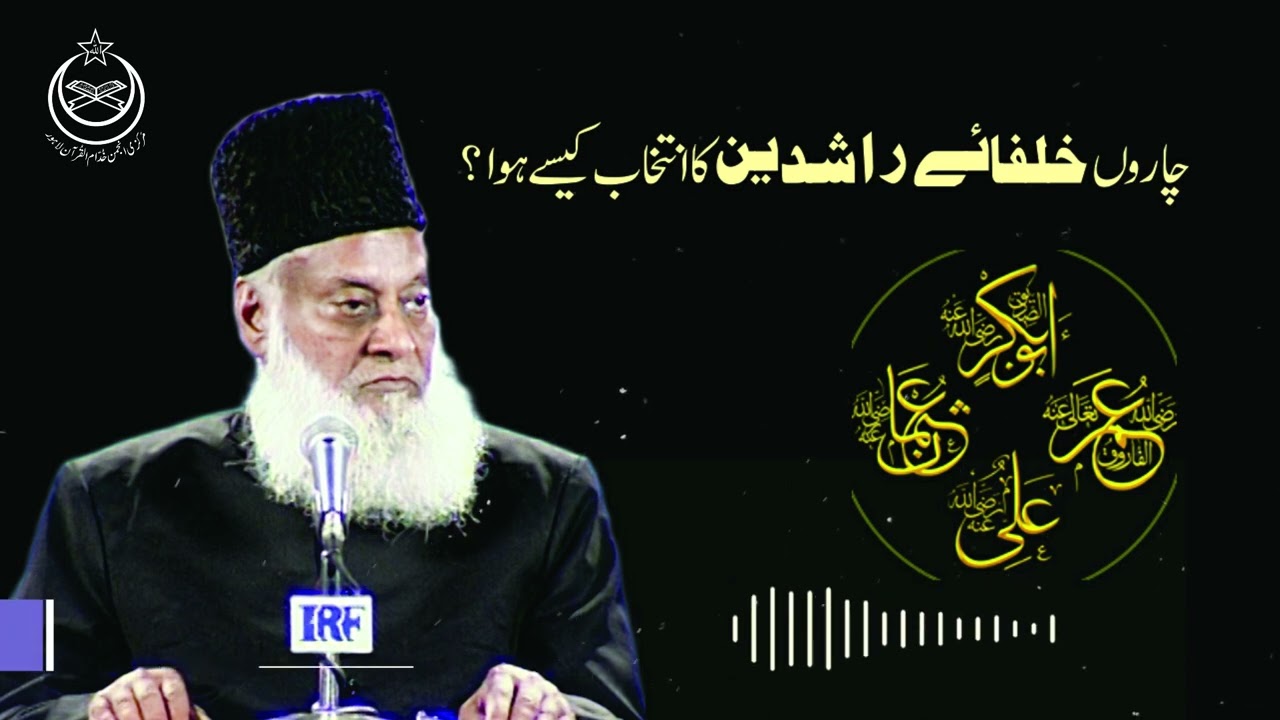
In this clip Dr Israr Ahmed explains that the first four caliphs were chosen by consultation and mutual agreement among companions, not by claiming power themselves. This consultative process is what makes their rule (Khilafat-e-Rashida) unique and different from later rulers like Hazrat Muawiyah, who gained power through other means.

The clip is about Dr. Israr Ahmed explaining heaven and hell using Surah Ghashiya. He talks about judgment day, where sinful people face punishment, but those who endured hardships will find comfort in beautiful surroundings as a sign of Allah's mercy. He stresses the importance of Quranic verses in understanding Allah's creation and urges listeners to follow the path of early Muslims.

In this clip Dr Israr Ahmad talks about "sadaqa jariyah," which means giving in a way that keeps helping even after you're gone. It could be building mosques, teaching about religion, doing missionary work, or giving water. He says raising good children is a big way to keep doing good, even after you've passed away.
In this clip, Dr. Israr Ahmed discusses the Quranic concept of Jihad, where those who struggle in Allah's cause endure hardships with the hope of one day facing Allah. However, he highlights the devil's whispers, casting doubt on this eventual meeting. The Quran reassures believers that those who long to meet Allah will be rewarded for their sacrifices.

In this clip Dr Israr Ahmed explains how Islam ended the constant fighting among the Arabs during the time of ignorance. The Arabs, who were always at war over small disputes, became brothers through Allah's guidance and the teachings of the Quran. The Prophet Muhammad (SAW) helped unite them, turning enemies into close companions, and brought peace and unity where there was once division and conflict.

In this clip Dr Israr Ahmed says real success isn't just about money or power. It's about believing in the right things, doing good, staying strong, and being patient. Success isn't only for rich or powerful people. Even those with nothing, like Abu Zerzifari, can be successful through faith and doing what's right.

In this clip Dr Israr Ahmed explains how marriages in Islam should be done, suggesting announcing them publicly and holding them in mosques. He wonders why these customs are often ignored and stresses their importance, using the marriage of Fatima al-Zahra as an example. Dr Israr Ahmed encourages following the Prophet's (SAW) teachings for respect and honor in marriage.

In this clip, Dr. Israr Ahmed clarifies that Allah is the Necessary Existence, always existing, while all other beings, including humans, are contingent and incidental. He distinguishes between the eternal existence of Allah and the dependent existence of everything else
In this clip Dr Israr Ahmed is explaining that Islam is not a religion but it is complete code of life and a system. He also explained the difference between Religion and Deen. Islam does not consist of few ritulous like namaz, roza and few social customs but it corners spheres of life.

In this clip Dr Israr Ahmed argues that Pakistan’s foundation and stability rely on Islam, as it wasn’t built on race, language, or ethnicity. Unlike other nations, Pakistan has no single unifying language or ethnic identity. For true stability, a shared national identity is needed, and Islam is the only unifying factor that aligns with Pakistan’s original purpose.

In this poignant clip, Dr. Israr Ahmed shares insights on who earns Allah's assistance and how to attain it. He vividly recounts the encounter between Prophet Muhammad (peace be upon him) and Abu Jahl in Makkah, imparting timeless lessons in a concise and compelling manner.

In this clip Dr Israr Ahmed outlines the essential obligations in Islam, stressing the importance of faith, obedience to Allah and His messenger, and fulfilling duties such as prayer, charity, fasting, and pilgrimage. He advises believers to uphold justice, migrate from unsupportive environments, and strive for righteousness.

In this clip, Dr. Israr Ahmed discusses the true meaning of success. He says it's not just about money, fame, or power, but about having faith, doing good deeds, being patient, and standing up for what's right. Success isn't about material things like wealth or property, but about being a good person and doing the right things. Dr. Israr Ahmed emphasizes that success comes from spiritual values, not just worldly achievements.

In this clip, Dr Israr Ahmed is explaining that "Laylatul Qadr is a powerful night in Islam, better than a thousand months, filled with blessings, forgiveness, and mercy. Muslims pray fervently during the last ten days of Ramadan to seek its rewards, as its exact date is hidden, making it a time of great spiritual significance."