Top videos

In this clip Dr Israr Ahmed emphasizes the importance of patience (sabr) in practicing Allah’s religion. Promoting truth often leads to opposition and resentment from powerful figures. True patience includes enduring hardships, such as praying in the cold or fasting in summer, and resisting temptations, as shown by Prophet Yusuf. It also involves handling persecution while striving to uphold faith, similar to the early Muslims in Mecca.

Huzoor ﷺ Ki Ankhon Mein Ansoo | Heart Touching Bayan | Huzoor ﷺ Ki Umat Se Mohabbat | Dr Israr Ahmed
In this clip, Dr Israr Ahmed explains Prophet Muhammad's love for his followers, focusing on a verse from Surah Al-Ahzab. He highlights the importance of martyrdom and recounts an incident involving the Prophet and Hazrat Abdullah Ibn-e-Masood to emphasize the significance of verbal testimony and sincerity in faith.

In this clip Dr Israr Ahmed says the best people are those who learn and teach the Quran. The Quran, even after 1400 years, has answers to all problems. We must study it deeply. Prophet Muhammad (PBUH) delivered Allah's message, and Hazrat Umar noted that nations rise or fall based on their adherence to the Quran. Muslims succeed by following its teachings.

Dua | Dr Israr Ahmed Emotional Bayan | ALLAH Per Yaqeen | Never Ever Lose Hope in the Mercy of Allah
In the video, Dr. Israr Ahmed says: Trusting Allah means less work, while relying on others requires more effort. Asking only from Allah ensures blessings without disappointment, as long as you obey His commands and have faith.

In the video Dr Israr Ahmed talks about the need for Islamic principles in Pakistan. He suggests two approaches: striving for an Islamic government and uniting religious groups for political influence. He emphasizes closing legal loopholes contradicting Islamic values and rejecting morally corrupt leaders. Dr Israr Ahmed urges personal transformation and upholding Islamic teachings to enact positive change.

In this clip Dr Israr Ahmad explained that if thoughts or doubts go against faith, they are likely whispers from Shiatan. Intellect can guide you, but it’s the love of God that leads you to the right path. For Muslims, the Quran and Sunnah are the standards. If a thought opposes them, ignore it, recite "La Hawla wa La Quwwata," and don't dwell on it. Shiatan can plant doubts, but it's your choice to accept or reject them.

Dr. Israr Ahmed discusses collective punishment for nations' sins, citing Quranic teachings. He warns of impending retribution, impacting both sinners and innocents, and touches on Azab-e-Akbar.

The video features Dr. Israr Ahmed discussing the responsibilities of Muslims towards their faith. He emphasizes the importance of standing firm in one's beliefs even if the whole world turns against them. Dr. Ahmed highlights historical events to illustrate how steadfastness led to significant victories in Islam's early days. He concludes by urging Muslims to have unwavering trust in Allah and to remain grateful for His blessings.

Dr Israr Ahmed Very Important Message For UMMAH | Iqamat e Deen | Ki Ahmiyat | اقامتِ دین

In this clip Dr Israr Ahmed explaining that there are different forms of shirk in every age. Today's biggest Shirk is Matter.

In this clip Dr Israr Ahmed explains that asking for help directly from the Prophet (PBUH) or others, believing they have power from the unseen, is shirk (wrong). However, saying "Ya Rasool Allah" in poetry or metaphorically is not shirk. Help should always be asked from Allah, who may send help through angels or people, but we should pray only to Him for anything beyond normal, physical assistance.

In this clip Dr Israr Ahmed explains that Islam’s foundation is about following core principles, but extremism ("bunyad parasti") is not part of Islam. He says that while Muslims should stay firm on their beliefs, they shouldn’t be labeled as extremists. The term "fundamentalism" was first used to criticize Jews and Christians who resisted changes to their religion, and now it’s used against different religious groups, not just Muslims.

In this clip, Dr. Israr Ahmad highlights that Muslims face punishment in this world due to their deviation from Islamic teachings, not practicing what Islam demands. He emphasizes that until Muslims establish a model Muslim state and adhere to Islam's principles, the punishment will persist.
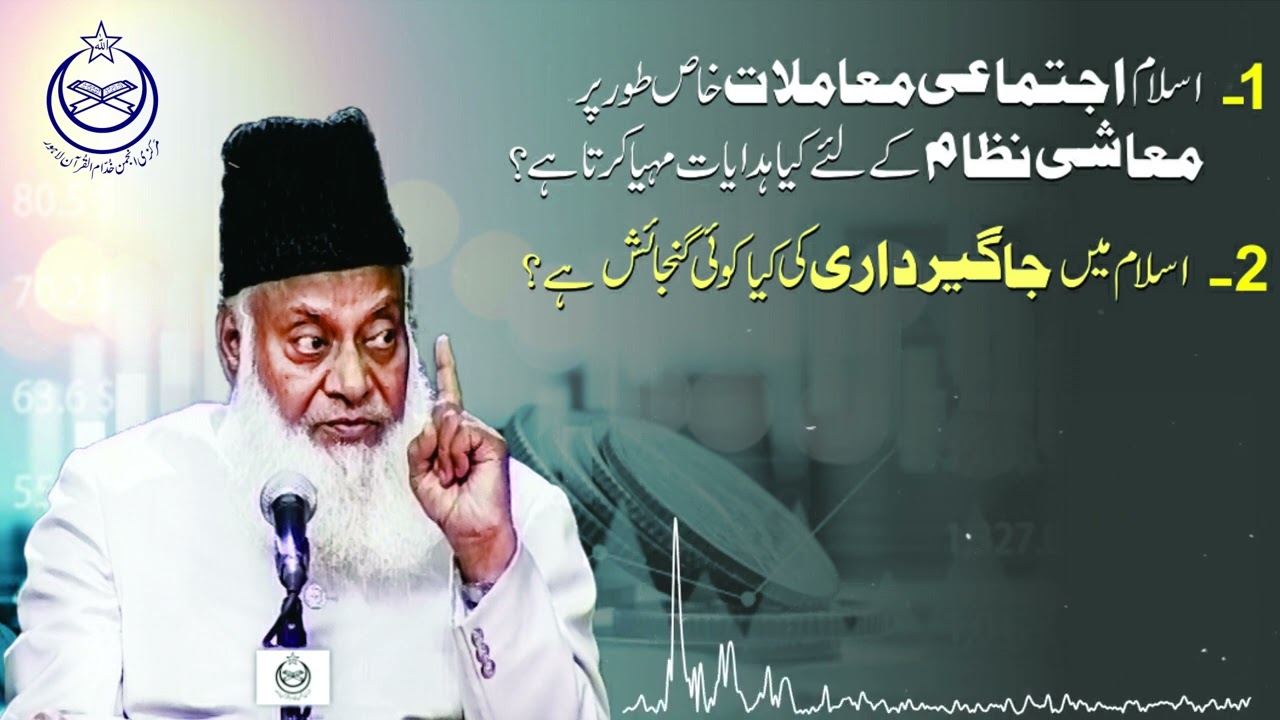
In this clip Dr Israr Ahmed explains that Islam’s economic system is based on two models: Shirakat (shared work and investment) and Mudarabat (one invests, the other works). Islam opposes feudalism and considers all conquered land as communal property. He critiques modern capitalist systems for concentrating wealth and power in a few hands. These systems, influenced by Western and Jewish ideas, are un-Islamic. Dr. Israr emphasizes that true economic reform requires a complete revolution, not gradual changes.
In this video, Dr. Israr Ahmed discusses the significance of prayer (namaz) in Islam and explains its proper method and the power of dua (supplication). He emphasizes that prayer is a direct way to connect with Allah and assures that sincere requests are always met with Allah's love and mercy.

In this clip Dr Israr Ahmed explains the principles of the state of Madina and condemns interest (sood) as a major sin in Islam. He compares it to committing adultery with one's mother and emphasizes the importance of avoiding it to escape Allah's punishment. In Madina, zakat was collected from businesses as a form of charity.

In this clip, Dr. Israr Ahmed says that before the Day of Judgment, Islam will spread worldwide, completing Prophet Muhammad's (PBUH) mission. He quotes Iqbal, saying the work of spreading Islam is ongoing. Islam succeeded in Arabia and now must spread globally. He assures this will definitely happen.

In this clip Dr Israr Ahmed outlines the basic pillars of Islam: prayers and fasting for all, and additional duties like Hajj for those who can afford it. He stresses the significance of these pillars in preserving the essence of Islam, clarifying the concept of jihad as distinct and often misunderstood. Understanding and upholding these pillars is crucial for maintaining the core of Islam.
Dr Israr Ahmed Very Emotional Clip About Ulma E Soo | Asman Ke Niche Badtreen Log | Eye Opening Clip
In this clip Dr Israr Ahmed is explaining about warns against religious figures prioritizing wealth over their spiritual responsibilities. It mentions Prophet Muhammad's prophecy about a time when Islam's true teachings will fade, with opulent mosques lacking guidance and corrupt scholars leading. It criticizes those who hoard wealth instead of using it for religious purposes, with a warning of harsh punishment in the afterlife for such behavior.
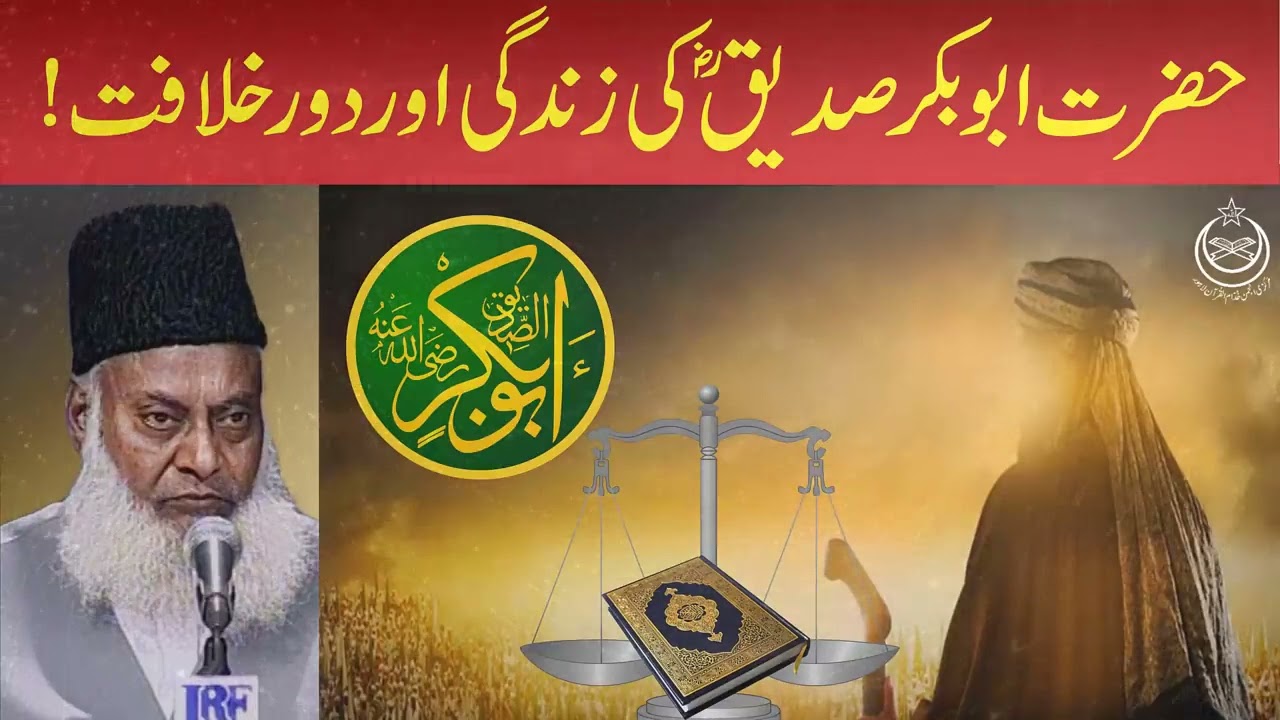
In this clip Dr Israr Ahmed discusses the time of Hazrat Abu Bakr's caliphate, where people longed to escape accountability before Allah. With no central government in Arabia, taxation was absent, and society was divided into tribes. Some embraced Islam, while others rebelled after the Prophet's passing, leading to a tumultuous period.