Los mejores videos

In this clip Dr Israr Ahmed explains that internal Muslim conflicts stem from neglecting the Quran and focusing on disagreements. Sheikh-ul-Hind Maulana Mahmood Hasan highlighted the need to revive Quranic education and unity. He noted that conflicts arise when Muslims drift away from the Quran, using Maulana Madni's dedication to memorizing and reciting the Quran as an example of true commitment.

In this clip, he mentioned about the routine of three sahaba (R.A) who decided to do different Ibadaat extraordinarily. The Prophet (S.A.W) did not like this type of extremist attitude in Ibadat. He also explaind about retribution and forgiveness.

In this clip, Dr. Israr Ahmed explains that for Allah to accept our actions, we need to truly love Him and the Prophet. Simply following religious rules isn’t enough; we must feel genuine love in our hearts. If we pray or make dua without this love, our efforts may not be accepted. He encourages people to understand their feelings and strengthen their love for Allah while continuing to practice their faith. True devotion is about sincere love, not just actions.

In the clip, Dr. Israr Ahmed talks about the story of Hazrat Jibraeel (A.S) and discusses the concepts of Islam and Imaan, their importance, requirements in this world and the hereafter, and the difference between believers of Imaan and believers of Islam.

In this clip, Dr. Israr Ahmed explains that Allah's help is for those who support His religion. He mentions that true helpers are those who follow the Quran and the teachings of Prophet Muhammad (SAW), and he prays for us to be among them.
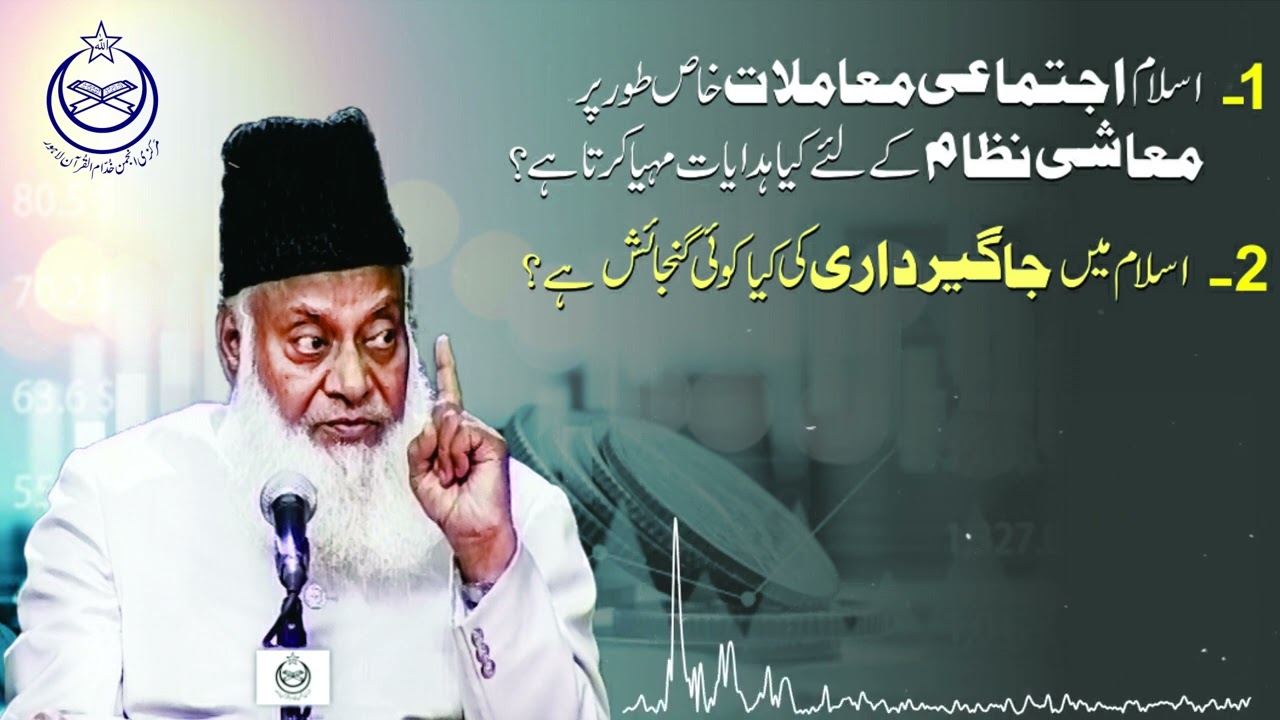
In this clip Dr Israr Ahmed explains that Islam’s economic system is based on two models: Shirakat (shared work and investment) and Mudarabat (one invests, the other works). Islam opposes feudalism and considers all conquered land as communal property. He critiques modern capitalist systems for concentrating wealth and power in a few hands. These systems, influenced by Western and Jewish ideas, are un-Islamic. Dr. Israr emphasizes that true economic reform requires a complete revolution, not gradual changes.

In this clip Dr Israr Ahmed says that Pakistanis' failure to uphold Allah's law after gaining independence has led to hypocrisy, affecting future generations. He explains that, like the Israelites in the Quran, later generations are responsible for following the same wrong path. He urges youth to dedicate themselves to their religious rights, just as they do for worldly causes.

In this clip Dr Israr Ahmed explains that making collective dua after every prayer is not a regular Sunnah, though it is mentioned occasionally. He emphasizes focusing on understanding the Quran and spreading Islamic teachings. He also discusses the importance of keeping a beard as a Sunnah, highlighting that it requires no effort or cost, yet many neglect it to follow worldly trends, which he considers a significant disregard for the Prophet’s (PBUH) teachings.

In this clip Dr Israr Ahmed stresses gratitude to Allah for His guidance, emphasizing it's all by His grace. He highlights stages of guidance: initiation, progression, and reaching the destination. Gratitude, he says, means recognizing all abilities are from Allah, shunning arrogance. He urges adhering to Allah's path, focusing on responsibilities without pride.

In this clip Dr Israr Ahmed emphasizes that Pakistan was founded on the basis of Islam, not merely to solve economic problems. He argues that Islamic identity united Muslims, as they lacked other common factors like race or language. For example, Bengali and Punjabi Muslims shared only their faith. He believes Pakistan’s unity and survival rely on Islam as its core foundation.

In this clip Dr Israr Ahmed explains that in the Quran, spending in the way of Allah despite loving one's wealth is emphasized. It is not about giving out of love for Allah, but rather giving despite the love for wealth. Wealth and possessions are naturally beloved to humans, but true sacrifice is spending in the way of Allah against this love. This act of spending despite loving wealth is a form of striving and self-discipline in Islam.

Reality & Facts About Jinnat Jinnat Ki Asal Haqeeqat Kya Hai Dr Israr Ahmed Bayan About Jinnat

In this clip Dr Israr Ahmed discusses a Hadith about Hazrat Ali (RA), highlighting that people had extreme views about him. Some loved him so much they saw him as divine, while others hated him, called him a disbeliever, and even killed him. This contrasts with the Prophet Muhammad (SAW), who was protected from such extremes. The way people invoke Hazrat Ali's name for help, unlike the Prophet's, reflects this situation.
In a video, Dr. Israr Ahmed explains Surah Al-Ikhlas from the Quran. He discusses its translation and meaning, highlighting its importance. This short chapter emphasizes that Allah is one, unique, and has no equal. Allah has no parents or children and is self-sufficient. This surah is a powerful statement of monotheism in Islam.
In this clip Dr Israr Ahmed is explaining that Islam is not a religion but it is complete code of life and a system. He also explained the difference between Religion and Deen. Islam does not consist of few ritulous like namaz, roza and few social customs but it corners spheres of life.

In this clip Dr Israr Ahmed highlights the Quran's greatness and importance, explaining its role in guiding justice and leading to paradise. He discusses how the Quran brought a major revolution through Prophet Muhammad (SAW), transforming societies and beliefs. The Quran should be widely shared to awaken people's innate goodness and establish a system of social justice, which is the primary mission of Islam.
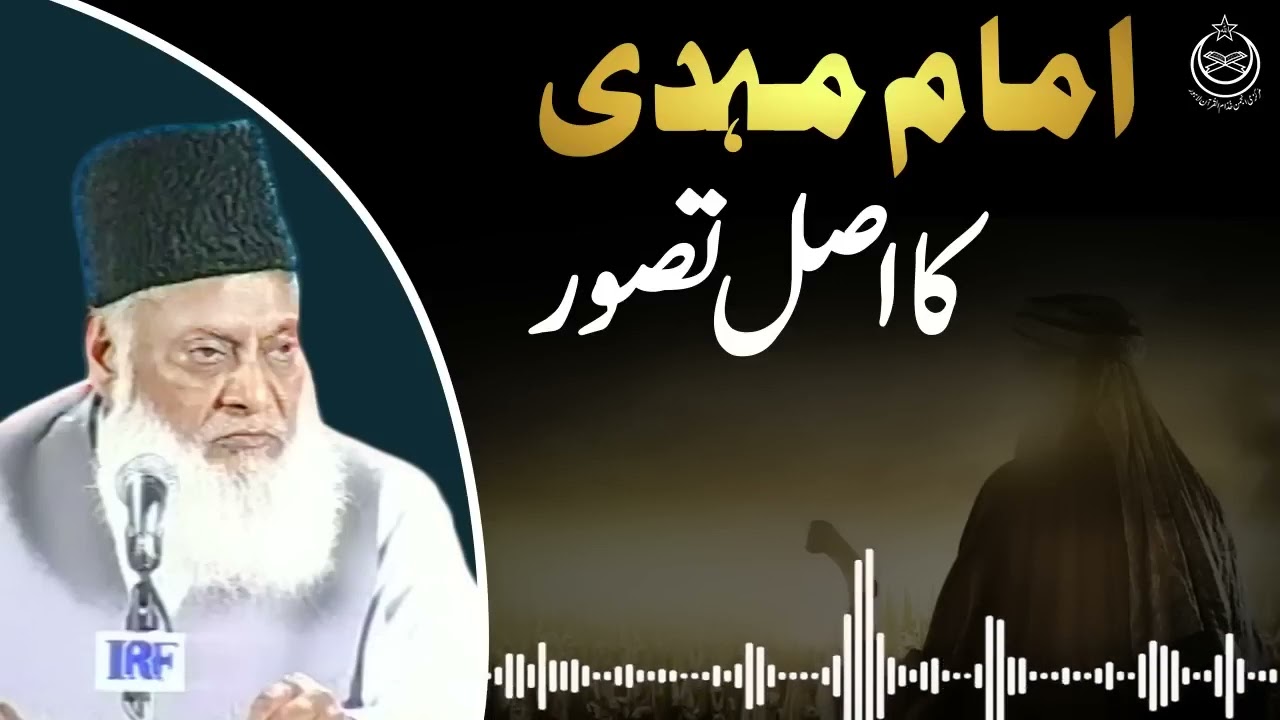
Imam Mahdi Kab Aayenge End Of Time Qayamat Ki Nishaniyan Dr Israr Ahmed Official

In this clip Dr Israr Ahmed explains that Tasawwuf silsilas like Qadriya and Chishtiya were developed to help people connect with Allah through practices like zikr and chilla. These methods emerged when direct guidance was difficult. Each silsila follows its founder’s teachings, aiming for spiritual growth. Although not from the Sunnah, these practices guide individuals toward closeness to Allah.

Zina Se Bacho | Life Changing Bayan | زنا کے قریب بھی نہ پھٹکو | Dr Israr Ahmed Emoitional Bayan
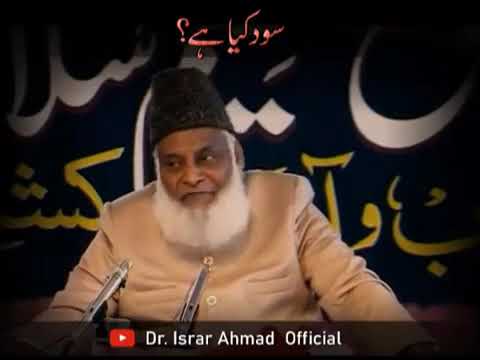
In this clip Dr Israr Ahmed discusses the harmful effects of interest, or 'sood', particularly in the context of IMF and World Bank loans. Interest, according to him, leads to economic exploitation and concentration of wealth in the hands of a few. He highlights how interest-based banking systems, controlled by a minority, perpetuate inequality and undermine democracy.