Top videos

In this clip Dr Israr Ahmed describes shirk as the act of worshiping or obeying anyone or anything other than Allah. Shirk in worship means directing worship to others besides Allah, while shirk in obedience occurs when you follow others in ways that contradict Allah's commands. It’s important to follow others only if it aligns with Allah’s guidance, and not let personal desires override divine rules, as doing so is considered a serious error.

In this clip Dr Israr Ahmed explains that interest (riba) is a grave sin and deeply ingrained in modern economic systems, making it challenging to avoid entirely. Islam forbids any involvement in riba, whether earning, paying, or facilitating it, as it corrupts both individuals and society. While necessity may offer some leniency, passively accepting or supporting this system is not permissible. He emphasizes that Muslims must actively seek lawful alternatives, minimize reliance on riba, and work towards reforming the system to align with Islamic principles.

In this clip Dr Israr Ahmed says that truly loving Prophet Muhammad (SAW) means following his teachings in all parts of life, not just saying we love him. He explains that after the Prophet began receiving revelations, he focused completely on spreading Islam and fighting against injustice. Dr. Israr emphasizes that to really love the Prophet, we must also work to bring justice and follow his example in everything we do. Just saying we love the Prophet isn't enough if we don't live by his teachings.

In this clip Dr Israr Ahmed explains that Pakistan, created in the name of Islam, failed to become an Islamic model due to moral decline, corruption, and hypocrisy. He says these problems won't be solved by political changes or anti-corruption efforts until we repent and improve our morals. Only a respected Islamic scholar can lead the way for real change through full implementation of Islamic principles.

In this clip, Dr Israr Ahmed is talking about what happens after death in Islam, especially regarding Prophet Muhammad's status in his grave. Some believe he's spiritually alive, while others disagree. Different scholars emphasize life after death, causing disagreements among groups. The speaker emphasizes following the Prophet's teachings and trusting in Allah.

In this clip Dr Israr Ahmed talks about how leaders need to mix kindness and strictness. Being gentle helps encourage members, but being too harsh can make them feel discouraged. Leaders should understand when to be tough and when to be caring to keep order. This balance is important for good leadership and keeping everyone motivated.

In this clip Dr Israr Ahmed explains that true love for the Prophet Muhammad (SAW) is shown by fully following his teachings and obeying Allah. Simply claiming to love the Prophet isn’t enough; it must be backed by action. On the Day of Judgment, some may find that their claims of love were not accepted by Allah because they didn’t truly follow the Prophet. Obeying Allah and His Messenger is essential in Islam, and sincere repentance is always accepted by Allah.

In this clip Dr Israr Ahmed discusses if commercial interest is haram in Islam. He refers to an article stating that commercial interest is not always forbidden, unlike usurious interest. He explains that profit from business involves risks, while interest seeks guaranteed profit. He encourages studying Islamic views on finance and being mindful of Western influences. He suggests reading scholars like Sheikh Abdul Mahboob Ahmad for better understanding.

In this clip Dr Israr Ahmed explains that this life is a short test, and the real, eternal life is in the hereafter. Our time on Earth is brief, and we are here to be tested. If we remember this, we won't get too attached to the world. The world is for use, not for worship. Like a traveler resting under a tree for a while before continuing the journey, this life is just a stop on the way to our final destination, the hereafter.

In this clip Dr Israr Ahmed explains that before Islam is dominant, Jihad is a personal duty (Fard-e-Ain) involving self-struggle, spreading truth, and resisting false ideas peacefully. After an Islamic state is established, Jihad becomes a collective duty (Fard-e-Kifaya), handled by the government for defense and law enforcement.


In this clip Dr Israr Ahmed explains that taqwa means avoiding sin and obeying Allah. Hazrat Umar asked Ubayy ibn Ka'b to define taqwa, and he compared it to walking carefully through a thorny path to avoid harm. This means living without falling into sin. Without taqwa, people lie, cheat, take bribes, and misuse power. Taqwa creates awareness that we will be accountable to Allah. To spread taqwa in society, it must start at home, teaching children these values.

In this clip Dr Israr Ahmed explains that Tanzeem-e-Islami doesn’t include other groups in its protests because past demonstrations were disorganized and led to chaos. He suggests future protests could be more effective if done in collaboration with other groups, but only if they are peaceful and well-organized. Tanzeem-e-Islami focuses on maintaining discipline to make their efforts more powerful.

In this clip, Dr. Israr Ahmed teaches that everything in the universe reflects Allah's presence, as mentioned in the Quran. He highlights that Allah's signs are abundant, visible in every aspect of creation. Dr. Ahmed urges us to contemplate these signs in both the heavens and the earth, emphasizing their significance in recognizing Allah's greatness.

In this video, Dr. Israr Ahmed shares how Hazrat Ibrahim (A.S) received the news of a patient son from Allah. Marrying Hazrat Hajra due to Hazrat Sarah's barrenness, they were blessed with Hazrat Ismail. The Quran depicts Hazrat Hajra's struggles raising Ismail, highlighting his patience, as seen in Hazrat Ibrahim's dream

In this clip Dr Israr Ahmed explains that Allah sent His messengers with clear guidance to help establish justice. The goal is for people to live fairly, where everyone gets their rights and fulfills their duties. Without justice, religious acts like prayer and fasting lose meaning. The main purpose of Islam is to create a system of justice, as taught in the Quran and by Prophet Muhammad (SAW).

In this clip Dr Israr Ahmed explains that Muslims in non-Islamic countries face challenges because Islamic laws aren't enforced, and interest-based systems dominate. While Muslims can pray and follow rituals, they can't establish a complete Islamic system, as the world, especially the West, resists it. There's frustration that no country fully follows Islamic law, and Muslims are only allowed to practice their religion on a personal level, not in the larger social or economic system.

In this clip Dr Israr Ahmed discusses Islam's support for farmers, laborers, and the poor, mentioning Imam Abu Hanifa's opposition to feudalism. He explains how feudalism leads to severe oppression in Pakistan, stressing the need to end it for better livelihoods. Dr. Israr Ahmed highlights Imam Abu Hanifa's stance against unfair land ownership and promotes agriculture for sustenance.
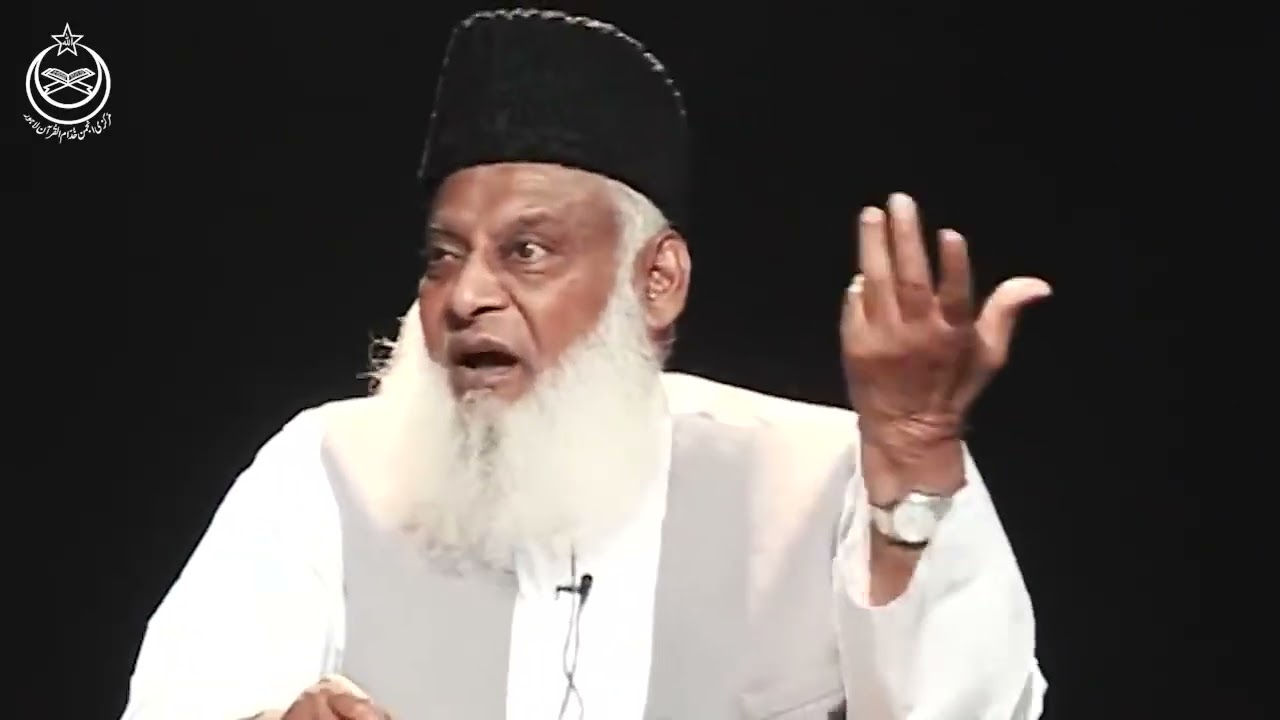
In this video, Dr. Israr Ahmed explains the true meaning and proper method of performing istikhara, emphasizing its importance. He advises entrusting matters to Allah, and if there's good in it, Allah will make it easy. Dr. Israr also discusses whether a sign in a dream at night is necessary for istikhara.

In this clip Dr Israr Ahmed explains that internal Muslim conflicts stem from neglecting the Quran and focusing on disagreements. Sheikh-ul-Hind Maulana Mahmood Hasan highlighted the need to revive Quranic education and unity. He noted that conflicts arise when Muslims drift away from the Quran, using Maulana Madni's dedication to memorizing and reciting the Quran as an example of true commitment.