トップ動画

In this clip Dr Israr Ahmad talks about "sadaqa jariyah," which means giving in a way that keeps helping even after you're gone. It could be building mosques, teaching about religion, doing missionary work, or giving water. He says raising good children is a big way to keep doing good, even after you've passed away.

In this clip Dr Israr Ahmed explains that Islam allows taking captives only during legitimate wars (Jihad), not by forcefully capturing free people, which is strictly forbidden. Prisoners of war (POWs) can be integrated into society instead of being confined to camps. Relations with such captives are permitted without marriage, but freeing and marrying them is encouraged as a noble act. Selling captives was allowed historically under strict rules but is not applicable today. Forced slavery is strictly prohibited in Islam.

In this clip Dr Israr Ahmed clarifies that Allama Iqbal, while a great thinker and poet, was not a religious figure or infallible. He acknowledges Iqbal's intellectual contributions but does not use "Rahmatullah" for him, as he wasn’t a religious authority. Similarly, he refers to his own late father as "marhoom," praying for Allah's mercy on him. Dr. Israr emphasizes the importance of distinguishing between intellectual and religious roles.

Prediction End Of Time | The Final Battle | ARMAGEDDON THE MALHAMA Great War | Dr Israr Ahmed

In this clip Dr Israr Ahmed says there are two systems: one is the government system and the other is the Jamaat system. In the Jamaat, people can join or leave freely and still be Muslims. In a government system, everyone in a region is part of that government. If there's a problem with the leadership, people can leave but remain Muslims. The Islamic state must follow the teachings of the Quran and Sunnah, with rules to ensure it stays true to Islam.

In this clip Dr Israr Ahmed explains that astrology and palmistry are discouraged in Islam, as they lead people away from trusting Allah’s guidance. While some may believe these practices hold truth, Islam prohibits relying on them. Instead, Muslims should seek guidance from the Quran and Sunnah. Focusing on hard work and faith is the correct path, rather than turning to superstitions.

This clip talks about Dr. Israr Ahmed explaining who Yazeed was in connection to Hazrat Imam Hussain and what really happened in Karbala. It mentions a hadith about a shift from caliphate to monarchy after 30 years, and how Muawiyah became powerful. Later, Yazeed was chosen as his successor, despite objections from some people. This marked a change in leadership from the time of the rightly guided caliphs.

In this clip Dr israr Ahmed explain that "Ar-Raheeq Al-Makhtoom" (The Sealed Nectar) is a widely acclaimed book on Prophet Muhammad's (PBUH) life. Recommended by Dr. Israr Ahmed, it is based on authentic narrations and avoids unverified stories. Originally in Arabic, it is now available in Urdu, published by Maktaba Salafia. The book is well-researched and highly recognized worldwide.

In this clip Dr Israr Ahmed discusses the struggles of Indian Muslims post-Babri Masjid demolition. He criticizes Pakistan for not supporting them and failing to uphold Islamic values, increasing communal tensions. He highlights the rise of Hindu fundamentalism and the ongoing suffering of Indian Muslims. Dr. Israr Ahmed stresses the need for unity and support to improve their situation.
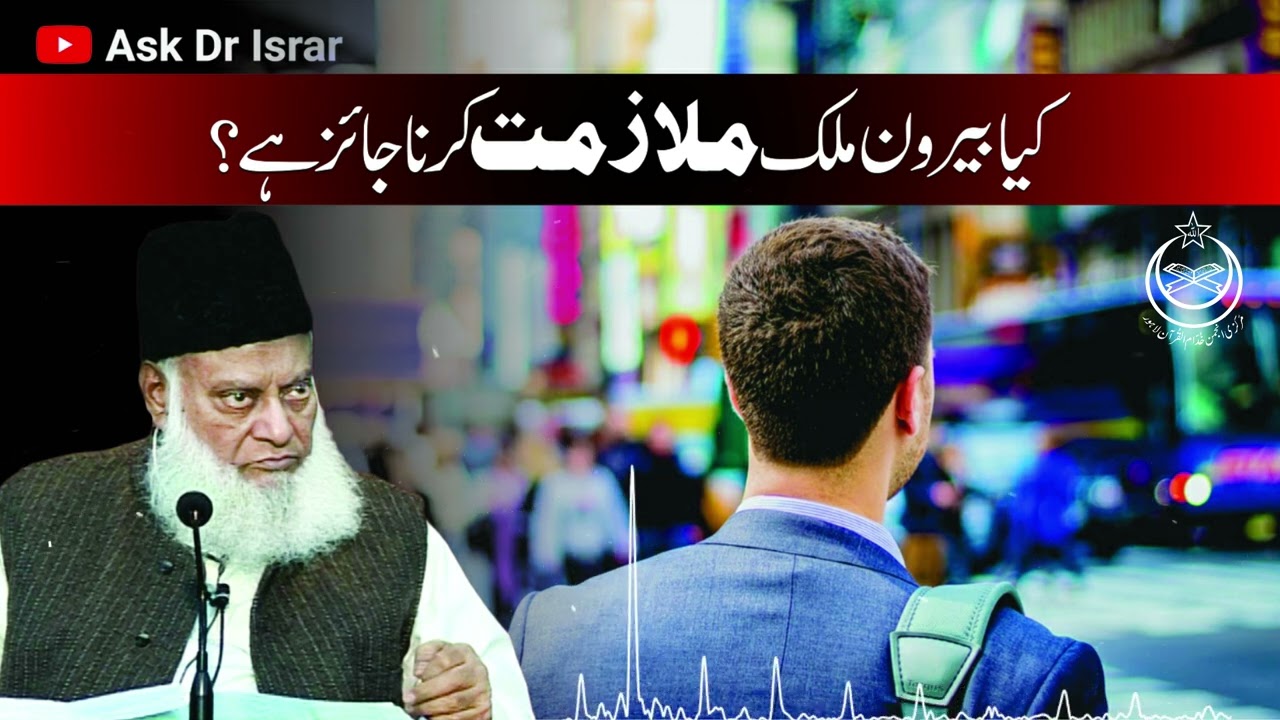
In this clip Dr Israr Ahmed believes that working abroad isn’t ideal in Islam. He says people educated in Pakistan should serve their country instead of going abroad for money. Moving away can weaken cultural values and lead to neglecting family, especially elderly parents. Serving one’s own country, he says, is more honorable.

In this clip Dr Israr Ahmed explains how Khilafat (Islamic rule) worked during the Prophet's time and how it changed later. He talks about whether the early caliph system can return and what kind of political and economic systems it would have. He also mentions a big future conflict between belief and disbelief, predicted in Islamic teachings, and refers to his speeches and a book for more details.

In this clip Dr Israr Ahmed explains Allama Iqbal's view of Prophet Muhammad (SAW) in two phases: Makkah and Madina. Iqbal highlighted differences in the Prophet’s role during these times, which some see as contradictions. However, Dr. Israr clarifies that these differences reflect the Prophet’s evolving mission. He emphasizes the importance of understanding these stages when studying Iqbal's perspective.

In this clip Dr Israr Ahmed explains that worship in Islam means loving and obeying Allah fully. If someone sins, they should quickly repent, and Allah will forgive them. Persisting in major sins, like taking interest, can lead to severe punishment. True worship combines obeying Allah and loving Him deeply. The core message of all prophets is to worship only Allah.

In this clip Dr Israr Ahmed discusses "azeem shirk," highlighting it as one of the greatest forms of shirk where human authority is elevated above Allah's. He emphasizes the importance of recognizing Allah's sovereignty and following His guidance, rather than claiming legislative power contrary to His commands.

In this clip Dr Israr Ahmed explains that the universe began with the Big Bang, leading to the creation of Adam's body after several stages. The body became complete when the soul was placed in it, starting human life. Similarly, in the womb, a baby’s body forms, and the soul is added after four months. This process continues for all human beings.

In this clip, Dr. Israr Ahmed explains that the Quran provides solutions to complex issues like political, economic, and social problems. It offers a balanced approach to addressing rights and responsibilities between men and women, and the relationship between workers and capital. He highlights that the Quran has answers to these challenges, but many people seek solutions elsewhere instead of turning to its guidance.
In this clip Dr Israr Ahmed teaches how to control desires and thoughts, emphasizing the struggle against ego-driven impulses. He highlights the importance of aligning desires with the will of Allah, considering it the greatest spiritual struggle. He warns against succumbing to societal pressures and urges viewing desires as adversaries, not allies, particularly against the influence of Satan.

In this clip Dr Israr Ahmed explains that Muslims face oppression today because they have abandoned the teachings of the Quran. He cites Hazrat Umar's saying that Allah elevates or disgraces nations based on their relationship with the Quran. Dr. Israr Ahmed also references Allama Iqbal, who pointed out that Muslims were once honored due to following the Quran but are now disgraced for neglecting it. To regain their former glory, Muslims must return to the teachings of the Quran.
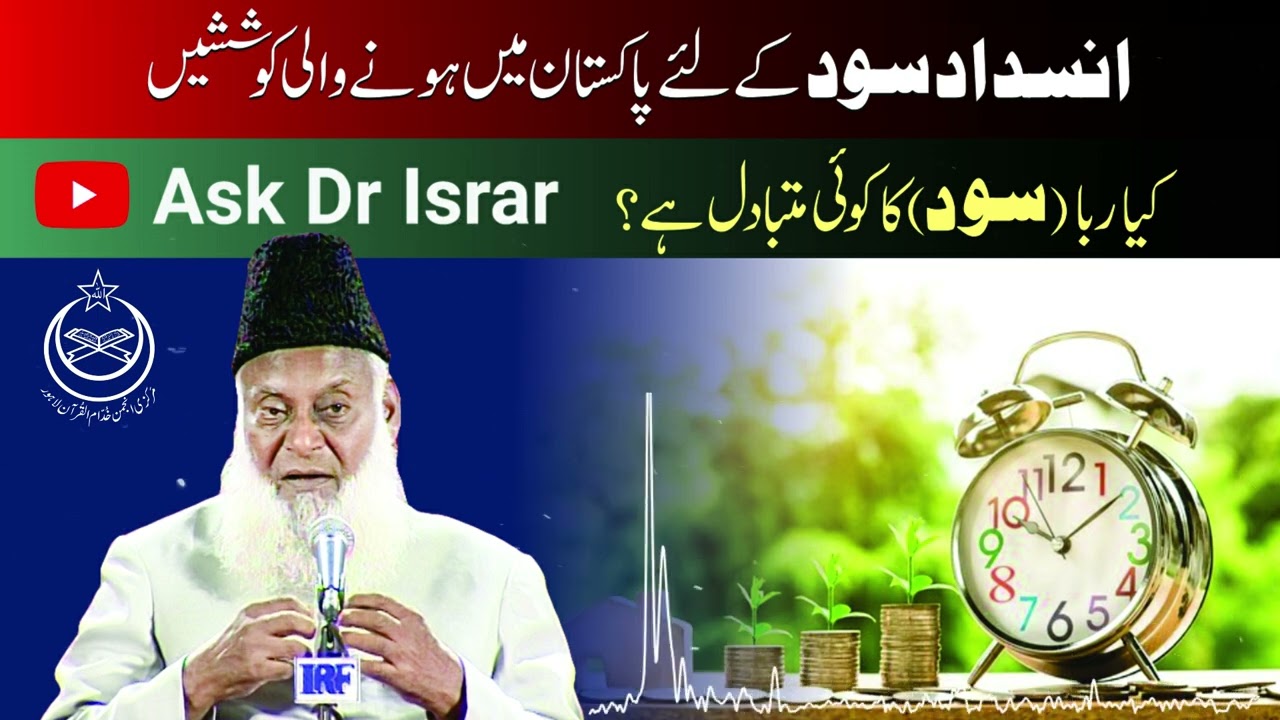

In this clip, Dr. Israr Ahmed explains that Islamic groups don’t unite for enforcing Islam because real change needs one strong leader. He says different groups can only work together when a stable leadership is in place. Efforts to unite groups like Jamaat-e-Islami and Tahreek-e-Islami didn’t succeed. He believes preaching alone isn’t enough for revolution, and sometimes confrontation is needed to challenge powerful interests in society.