Toppvideor

In this clip Dr Israr Ahmed explains that the *Sufi system* (Khanqahi) developed later and wasn't originally taught by the Prophet (PBUH). He highlights that true Islamic spirituality is about *Jihad* and spreading Islam, not just meditation or avoiding worldly comforts. After the *Khilafat-e-Rashida*, monarchy replaced it, and efforts have been made to fix this.

In this clip, Dr Israr Ahmed discusses the importance of Friday sermons, following the tradition of Prophet Muhammad. In the past, sermons were vital for education, but now many struggle to understand them. Sermons should include teachings and explanations. The Prophet's sermons were in Arabic and typically had two parts, sometimes with a brief break, later expanded to three parts by scholars.

In this clip Dr Israr Ahmed talks about how Abdullah bin Ubayy, a hypocrite, tried to cause problems between the Muhajirun (immigrants) and the Ansar (people of Medina) by insulting the Muhajirun and suggesting they be kicked out of Medina. When the Prophet Muhammad (PBUH) confronted him, Abdullah denied it, but a young companion confirmed his words. Later, a Quranic verse revealed the truth, exposing Abdullah’s hypocrisy.

In this clip, Dr. Israr Ahmed discusses whether buying items on installments is permissible in Islam. He argues that paying a higher price than the cash price is a form of interest (riba), despite some scholars allowing it. He also critiques prize bonds as a form of gambling, where winnings depend on chance. In his view, both practices involve earning interest, which he considers haram.
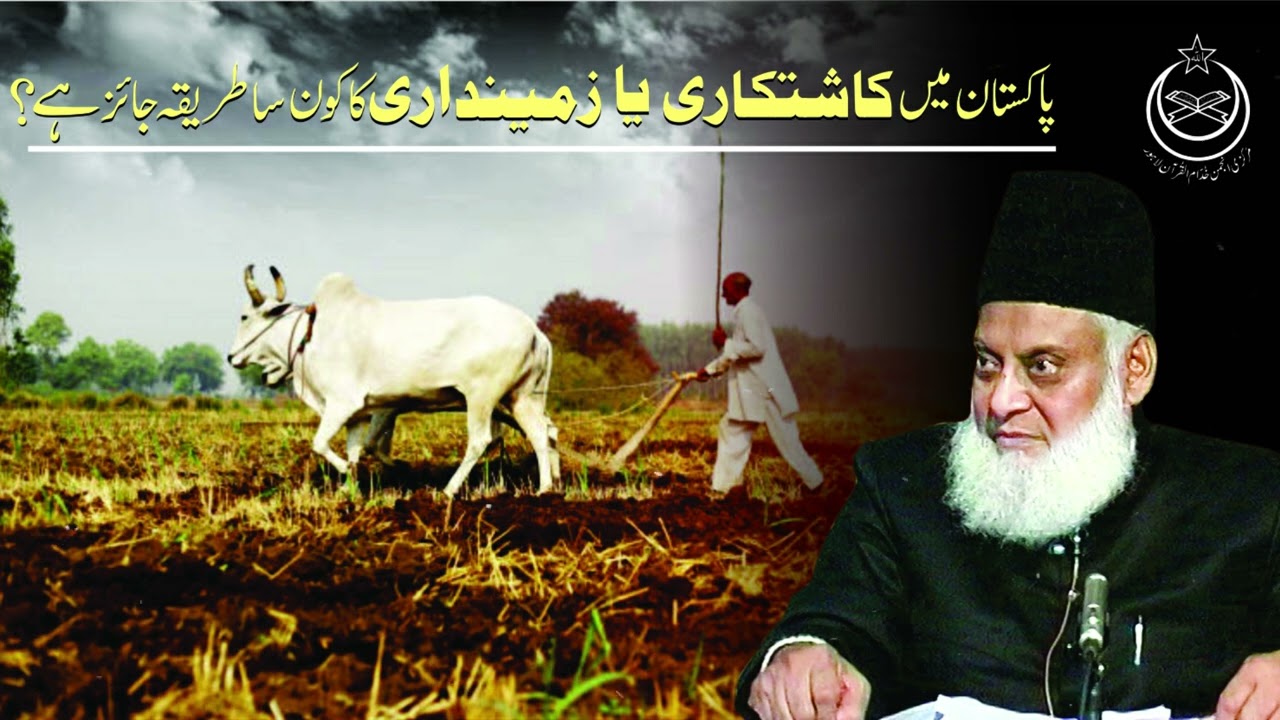
In this clip Dr Israr Ahmed says that, in Islam, land in Pakistan should belong to the state, not individuals. The government should give small portions of land to farmers, who will pay a share of their produce to the state. There should be no big landlords. He also suggests creating a council of scholars to review land laws.

In this clip Dr Israr Ahmed explains how to develop sincerity in good deeds. He advises performing acts of kindness secretly, like praying at night or giving charity without telling others. This approach helps build a habit of sincere actions. By doing good quietly, you can strengthen your intentions over time.

This video covers the life of Hazrat Umar bin Abdul Aziz, the Fifth Rightly Guided Caliph, who ruled briefly from 99 to 101 Hijri. He implemented three significant reforms in the system of governance, correcting the malpractices that by then had become commonplace practices in the Muslim world. Despite facing opposition, he made decisions based on the Quran. After embracing Caliphhood his life became an epitome of simplicity.

In this clip, Dr. Israr Ahmed talks about the importance of respecting and caring for parents in Islam. He explains that children should always show love and gratitude to their parents, even as adults. The Quran and Hadith emphasize being kind to parents, especially mothers, who have endured much for their children. Caring for elderly parents and spending time with them is seen as a form of worship and brings spiritual rewards.
In the video Dr Israr Ahmed discusses combining weddings and receptions and avoiding dowry. He believes it's okay if the groom's family pays without demanding dowry. Though stopping the dowry tradition is hard, he advises against mosque weddings. Dr. Israr Ahmed stresses the importance of simple weddings to avoid hurting those with fewer resources.
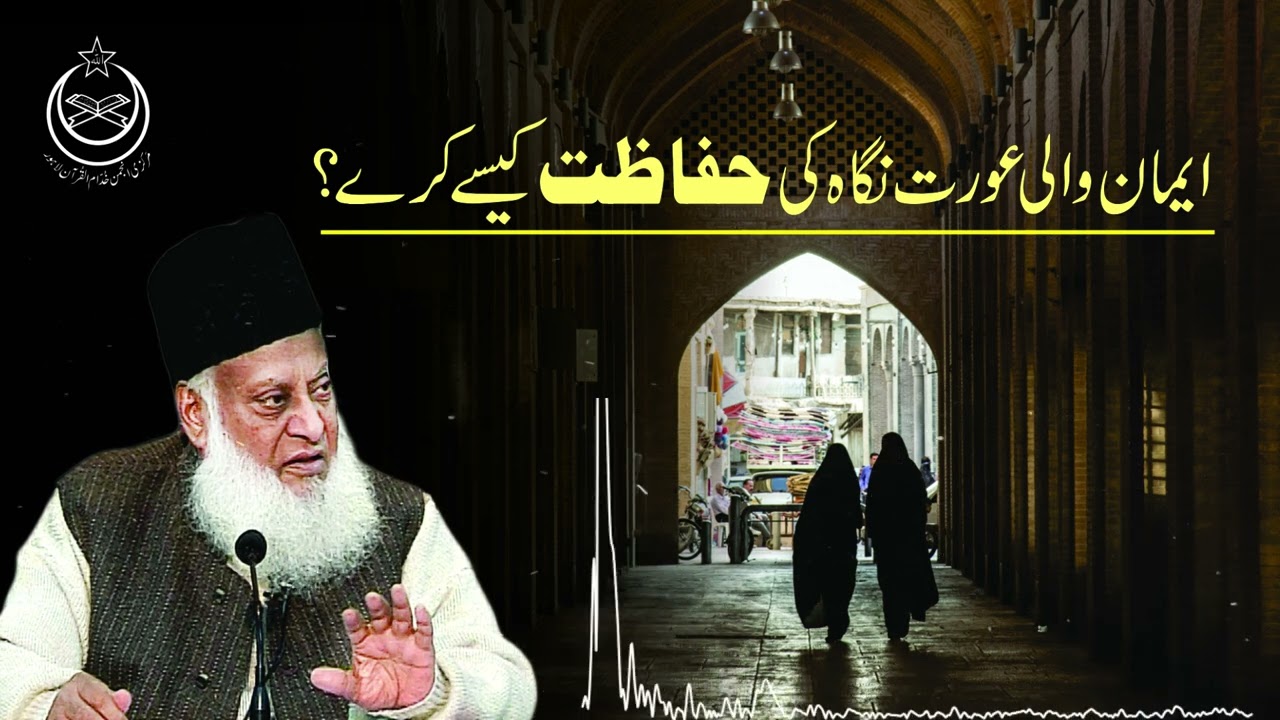
In this clip Dr Israr Ahmed explains that modesty rules in Islam are different for men and women. Women are instructed to cover themselves and also lower their gaze around men. Even if a woman wears full hijab, she still needs to be mindful of how she interacts with men. Men, on the other hand, are expected to control their desires, but the responsibility of veiling is greater on women. This difference is based on the natural instincts of both genders.

In this clip Dr Israr Ahmed predicts the destruction of Al-Aqsa Mosque and the downfall of Arabs. He criticizes Arab leaders for submitting to Israel, comparing it to the expulsion of Muslims from Spain in 1492. He warns that Al-Aqsa will be replaced by the Third Temple, weakening the Muslim world and stripping Arabs of their dignity.
In this clip Dr Israr Ahmed talks about the stages of life. He says when young a child does not know much, in the teenage years humans care about how they look. By age 30, they feel pride but as they get older, they become realistic.

In this clip Dr Israr Ahmed says until Islam is everywhere, Prophet Muhammad's job isn't done. He wants Islam to help everyone. That means sharing Islam's teachings all over the world. While some places follow Islam, it's not everywhere yet. The goal is to make sure everyone benefits from Prophet Muhammad's message.

In this clip Dr Israr Ahmed explains that the violence between Hindus and Muslims during India's partition was driven by deep-seated hatred and a desire for revenge. The British divide-and-rule policies intensified the conflict, leading to massive population transfers and brutality. This level of animosity is hard to fully understand today, especially for those born after the partition.

In this clip Israr Ahmed explains that while Islam does not forbid women from ruling, it is not ideal in the Islamic system. Women's primary role is in managing the household and raising children, not in leadership. He cites examples like Razia Sultana to show women can lead, but leadership in Islam is generally meant for men. The natural order in Islam focuses on family roles, with each gender fulfilling specific duties.

Prediction | Imam Mahdi Ki Army Kahan Se Ho Gi | Qayamat Ki Nishaniyan End Of Time By Dr Israr Ahmed
Prediction | Imam Mahdi Ki Army Kahan Se Ho Gi | Qayamat Ki Nishaniyan End Of Time By Dr Israr Ahmed

In this clip, Dr. Israr Ahmed explains that while previous prophets had temporary miracles, Prophet Muhammad's (PBUH) greatest and everlasting miracle is the Quran. Unlike other miracles that ended with the prophets, the Quran remains a living miracle and proof of his prophethood. It serves as a continuous challenge to humanity and is meant to last until the end of time. This makes it unique among all prophetic miracles.

In this clip Dr Israr Ahmed explains that Pakistan’s main obstacle to an Islamic system is personal ego, not sectarian differences. Scholars have previously united on key principles, showing that fiqhi differences aren’t a barrier. The real issue is the lack of self-discipline and commitment to practicing Islam. He stresses that self-reform and unity are essential for bringing Islamic change.

Imam Bukhari Aur Imam Abu Hanifa امام بخاریؒ اورامام ابوحنیفہؒ Dr Israr Ahmed Beautiful Bayan

In this video, Dr. Israr Ahmed shares five concise pieces of advice from Hazrat Luqman (RA) to his son: 1. Avoid associating partners with Allah. 2. Actions, no matter how small, will be rewarded. 3. Maintain regular prayer. 4. Promote good and discourage evil. 5. Practice patience always.