Top videos

In this clip Dr Israr Ahmed ne samjhaya ke Islam mein ek se zyada shaadi jaiz hai, lekin Pakistani muashra ise pasand nahi karta. Iski wajah hamara Hinduana pas-e-manzar hai, jahan ek se zyada shaadi mana thi. Arab muashray mein sab bachay barabar hote hain, magar hamare yahan "sutela" pan ka concept aa gaya hai. Islam ke mutabiq ye ghalat tasawwur hai.

In this clip Dr Israr Ahmed talks about why Qurbani is important during Eid al-Adha. He says it's not just for people who go on Hajj but for everyone. Qurbani means sacrificing animals to share with others and show devotion to Allah. He says it's something all believers should do to remember Allah's blessings and be devoted to him.
In this clip Dr. Israr Ahmed explains Surah Al-Asr, a small but powerful surah. It summarizes the Quran's message of Tawheed, the oneness of God, and Sirat-e-Mustaqeem, the straight path. This surah is crucial to our faith, and reflecting on it can guide us. Its message is enough to lead us on the right path.

In this clip Dr Israr Ahmed highlights that Allah values good deeds based on sincere intentions. True virtue lies in actions motivated by love for Allah and seeking His approval, rather than for personal gain or recognition. He stresses that deeds done with pure intentions hold true virtue, while those lacking sincerity fall short of genuine goodness, regardless of their outward appearance.
In this clip, Dr. Israr Ahmed, founder of Tanzeem-e-Islami and Anjuman Khuddam-ul-Quran, discusses major injustices. He highlights shirk (associating partners with Allah) as the greatest injustice, followed by social inequality, economic exploitation, and political oppression. He stresses the need for justice and fairness in society.

How to Live a Life | Zindagi Guzarne Ka Tarika | Establish This Deen | Dr Israr Ahmed Emotional Clip
In this clip Dr Israr Ahmed discusses living by Islamic principles and establishing faith. Despite maintaining basic rituals like prayer and fasting, the speaker faces challenges with financial matters and feels isolated. They seek guidance on navigating future crises, reflecting common struggles in adhering to Islamic teachings amid societal pressures.
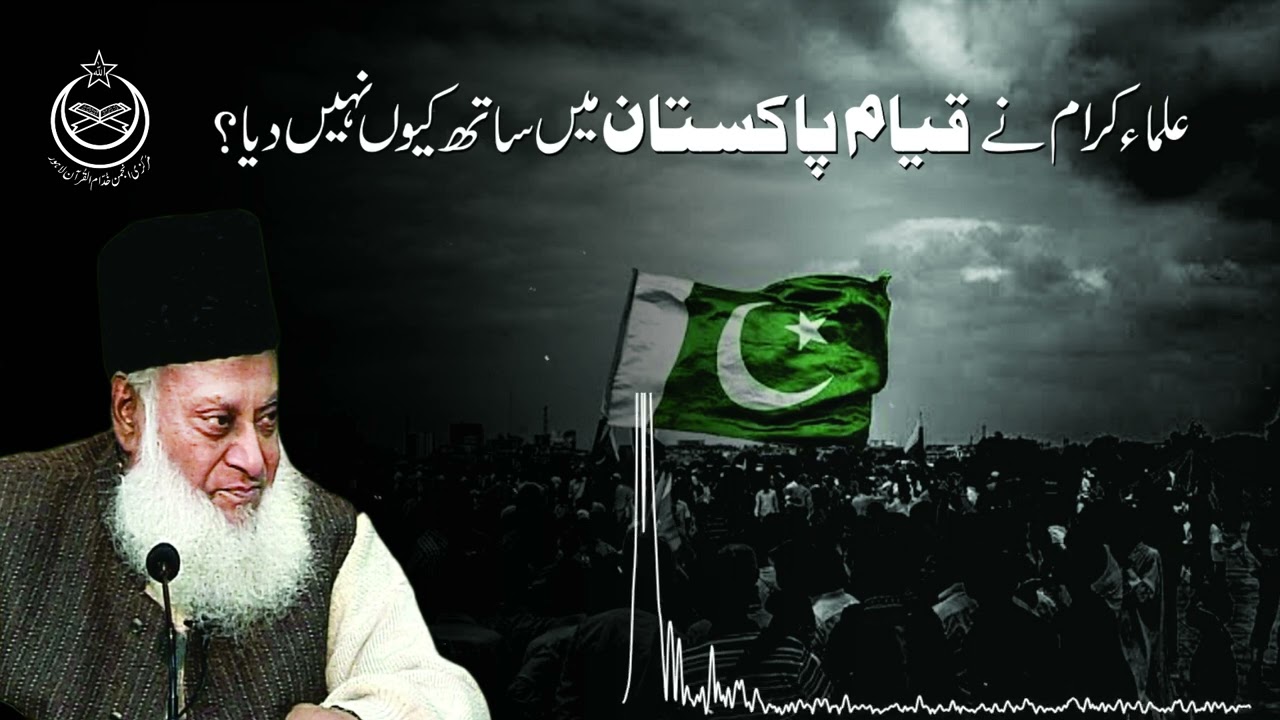
In this clip Dr Israr Ahmed discusses why many religious scholars didn’t take a leading role in Pakistan's creation, though they supported it. Some scholars, like Maulana Abdul Kalam Azad, opposed it, fearing a division among Indian Muslims. He explains that leaders misunderstood the common Muslims' feelings, who were aware of the growing Hindu-Muslim tensions. Ultimately, there was a difference of opinion, but it was based on sincere beliefs.
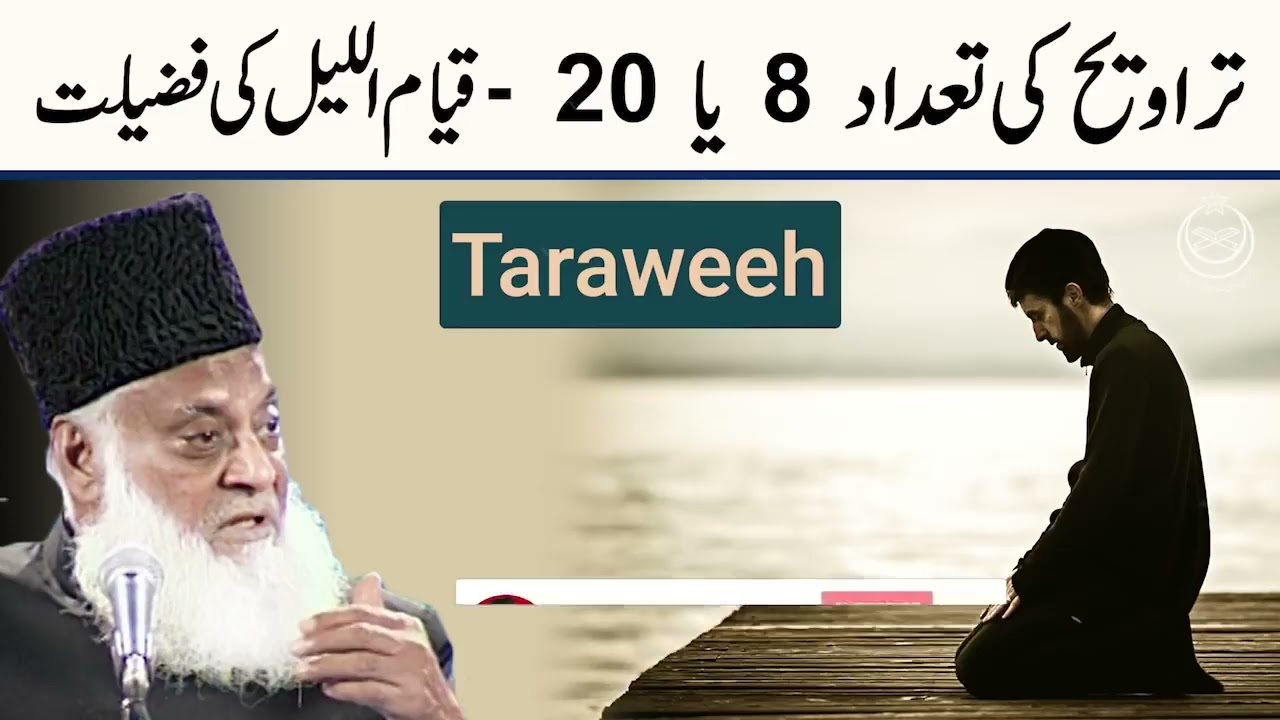
Taraweeh 8 Ya 20 | Kya Taraweeh Farz Hai | Taraweeh Tahajjud Aur Qiyam ul Layl Mein Faraq | Dr Israr
In this clip Dr Israr Ahmed discusses Taraweeh prayers in Ramadan, clarifying its significance. Taraweeh is not obligatory, but it's beneficial for spiritual growth. Waking up for 2-3 hours at night to pray and seek forgiveness is encouraged. This practice has importance in the Islamic tradition. It's a blessing for those seeking spiritual benefits from Ramadan. By waking up at night, we can gain a deeper connection with our faith.

In this video, Dr. Israr Ahmed recounts the story of Hazrat Yusuf (A.S), Aziz-e-Misr's wife Zulekha, and the temptation Yusuf faced. Despite Zulekha's advances, Yusuf remained steadfast and prayed for Allah's protection from deception, ultimately accepting imprisonment.

In this video, Dr. Israr Ahmed explains how Surah Ad-Duha can help when you're feeling stressed or sad. He says reciting this Surah reminds us that tough times don't last forever, and better days are ahead. It's like a message of hope and comfort from Allah, assuring us that He's always there for us. This Surah acts as a remedy for emotional and spiritual distress, offering hope and assurance of Allah's support and blessings.
In this clip, Dr Israr Ahmed explains that Allah's help can come in various forms and at any time. He emphasizes the importance of having faith in Allah and not losing hope in His mercy. He gives examples from history, like the Battle of Badr, where angels aided the believers. However, he highlights that Allah tests people before granting help and that sincere faith and righteous conduct precede divine assistance.

In this clip Dr Israr Ahmed says the greatest Sunnah of Prophet Muhammad (SAW) is promoting marriage, aligning with human nature. He emphasizes that true followers support this Sunnah, and the Prophet’s key teachings are spreading Allah’s message and striving to establish Islam.

Dr. Israr Ahmed explains democracy as a system where people vote for leaders to run their country. He criticizes scholar democracy for being against God's commands.

In this clip Dr Israr Ahmed recounts three stories from Hazrat Umar's (RA) caliphate, emphasizing justice, accountability, and simplicity in governance. He highlights instances of ordinary people questioning authority and scholars teaching leaders about justice.

In this clip Dr Israr Ahmed explains that in Islam, both the outward actions and inner sincerity of good deeds are essential. He emphasizes that religious practices, like prayer, should involve proper practice and true inner devotion. Neglecting either aspect is incorrect. True goodness requires attention to both external actions and internal sincerity. He also mentions that some Sufi practices wrongly overlook these outward forms.

In this video, Dr. Israr Ahmed talks about the importance of fasting and being pious in Islam. He also discusses the significance of earning halal sustenance versus haram, and offers advice on how to ensure our prayers are accepted by Allah.

In this clip Dr Israr Ahmed says that real life is in the afterlife, and this world is temporary and deceptive. Islam teaches us to use this life to prepare for the next, without renouncing it. We should prioritize the afterlife and ensure our actions here lead to eternal rewards. A balanced approach between worldly life and preparing for the afterlife is essential.

In this clip, Dr Israr Ahmed emphasizes the importance of perseverance in the path of Allah, urging believers never to lose hope. He quotes from the Quran, stating that trials are inevitable but one must continue striving. Using examples from Islamic history, he illustrates the significance of resilience and unwavering faith in overcoming challenges. The message underscores the idea of trusting in Allah's plan and remaining steadfast in the face of adversity.

In this clip Dr Israr Ahmed explains that the Quran is made up of Ayat (verses) which are signs of wisdom and knowledge. It has 114 Surahs (chapters), but "Surah" shouldn't be translated as "chapter." The number of Ayat is about 6,236, depending on whether the "Bismillah" is counted. Understanding these terms correctly is key to comprehending the Quran.