Top videos

In this clip Dr Israr Ahmed explains the identity, story, and character of Hazrat Luqman (RA) Luqman was known for his wisdom and righteousness but wasn't a prophet. He lived among a community where some embraced faith and established justice. Hazrat Luqman's wisdom and gratitude towards God are emphasized in the Quran, highlighting the importance of wisdom and thankfulness in life.

In this clip Dr Israr Ahmed values Tablighi Jamaat’s efforts in encouraging prayer and personal reform. He acknowledges their success in spreading Islam and inspiring positive changes. However, he believes their mission is incomplete as they do not focus on establishing an Islamic system. For him, fulfilling religious duties includes implementing Allah’s authority in all aspects of life.
Hazrat Abu Bakar Saddique, Hazrat Umar Farooq, Hazrat Hamza | Shan e Sahaba | Dr Israr Ahmed

In this clip Dr Israr Ahmed and Muhammad Ismail Sahib say that Islam can't be established just through elections. Dr. Ahmed Israr calls for jihad, while Muhammad Ismail believes speeches alone won’t work. They stress the importance of sacrificing for the cause and uniting people who are willing to do so. Without a clear plan and unity, their efforts will fail. They warn that real change comes from people living by Islamic values and standing against corruption.
The clip explains Dr. Israr Ahmed's view on Prophet Muhammad's last sermon, stressing its relevance for all people, not just Arabs. He talks about Muslims' duty to share the message globally and the challenges they face. Dr. Israr Ahmed mentions how the sermon uses repetition for emphasis and reflects on the Prophet's struggles. He encourages Muslims to follow Islamic principles and spread Islam worldwide.

In this clip Dr Israr Ahmed summarizes Prophet Muhammad's (SAW) farewell sermon during his last Hajj. In the sermon, the Prophet confirmed he had delivered Allah's message and asked Allah and the people to bear witness. He emphasized the importance of spreading his teachings to everyone and fulfilling the responsibility of conveying Islam to the world.


In this clip Dr Israr Ahmed explains that true change, or inqlab, isn’t possible with quick fixes. Each person should begin by correcting their own life and following Islamic principles at home. However, lasting change in society needs patience and long-term effort, like the steady approach of the Prophet Muhammad (SAW). He advises focusing on personal reform and trust in Allah for results, rather than expecting instant change.

In this clip Dr Israr Ahmed explains that movements like Tableeghi Jamaat and Jamaat-e-Islami have promoted Islamic practices but haven't achieved the goal of establishing a true Islamic system. Tableeghi Jamaat has encouraged people to follow basic Islam, but deeper faith is still missing. Other groups, like Jamaat-e-Islami, have also worked for change but haven't succeeded yet. The ultimate goal of an Islamic society remains unachieved.

In this clip Dr Israr Ahmed talks about what real goodness is. He says it's about being kind to others, helping them when they're in need, and feeling their pain. Without this kindness, even if someone knows a lot or prays, they're not truly good. So, being good means caring for others and helping them when we can.

In this clip Dr Israr Ahmed talks about giving in Islam, like Zakat and charity, stressing compassion and voluntary contributions. He emphasizes understanding over coercion and advises against hoarding wealth. He shares a story showing the virtue of selfless giving, promoting spending for societal betterment.

In this clip Dr Israr Ahmed explained that on the Day of Judgment, fulfilling four essential conditions is necessary for immediate entry into Paradise without punishment. These conditions are the minimum requirements for instant salvation. Without meeting them, immediate entry into Paradise is not possible.

In this clip Dr Israr Ahmed explain that in Madina, the Prophet Muhammad (SAW) prayed facing Jerusalem for 16-17 months, likely by divine guidance. This period helped avoid conflict with the Jews and allowed him to establish his position. He built Masjid-e-Nabwi, bonded migrants and helpers, and formed a defense pact. Later, the Qibla was changed to the Kaaba in Mecca, a significant event in Islam.
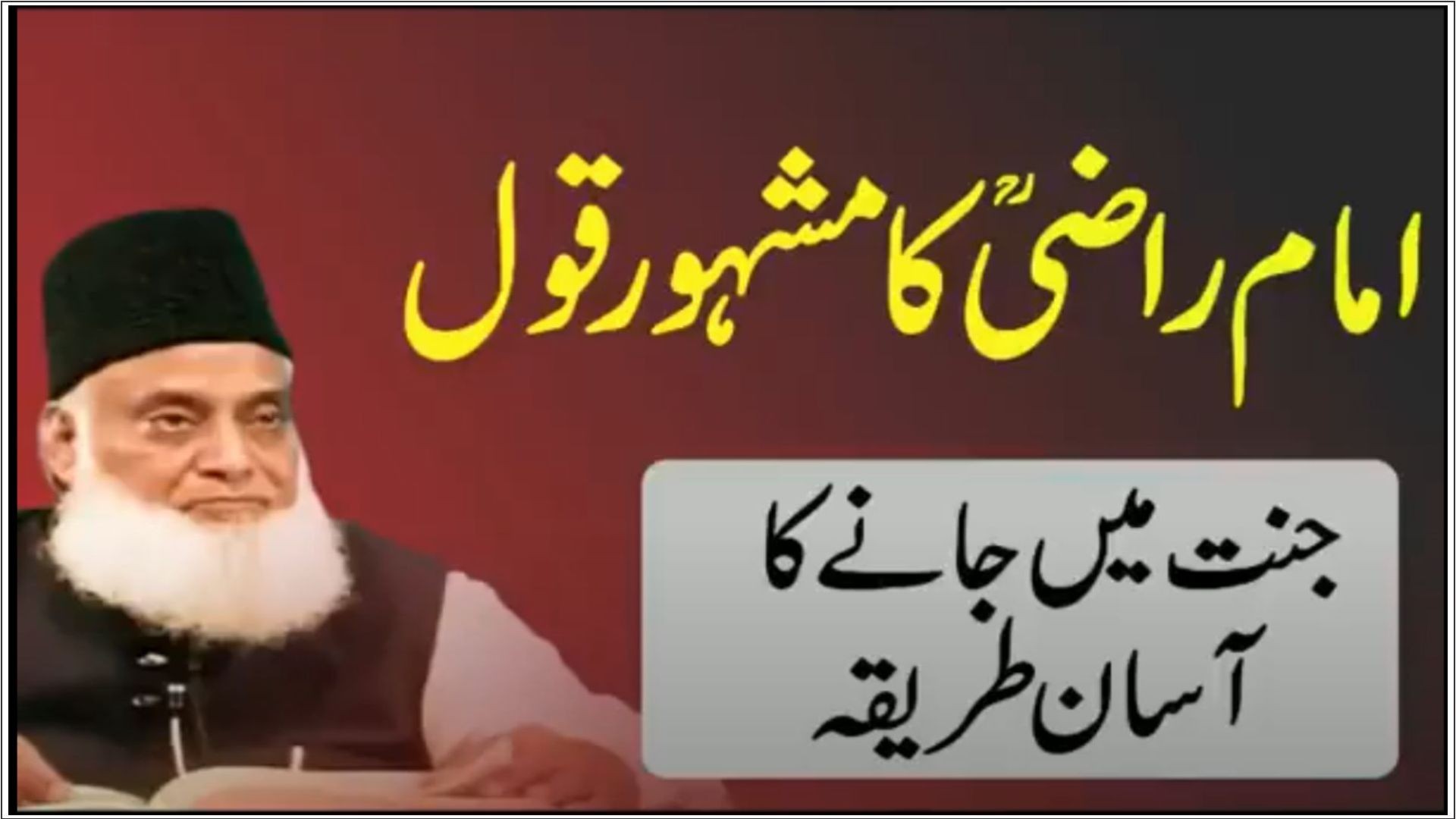
Imam Razi, in his commentary on Surah Asar, emphasizes the importance of hard work to earn paradise. He advises that attaining Jannah requires diligent effort. Imam Razi outlines four conditions: strong faith, righteous deeds, advising one another, and emphasizing patience. According to him, these conditions pave the way to Jannah and form the path to paradise.

In this clip Dr Israr Ahmed explains that Islam prescribes modesty and separation of genders in various aspects of life, such as schools and hospitals. Women should cover their bodies at home, showing only the face, hands, and feet, and wear a burqa or chador outside. Men bear the financial responsibilities for their families, including marriage expenses and overall care.

In this clip, Dr Israr Ahmed explains Surah Al-Infitar, highlighting the Day of Judgment's events and the importance of prioritizing the afterlife over worldly matters. He warns against Satan's distractions and emphasizes devotion, especially in night prayers. Ultimately, he underscores Allah's justice in rewarding the righteous and punishing wrongdoers.

In this clip Dr Israr Ahmed explains that the Quran advises against going near adultery because it is very sinful. According to Hadith, adultery isn't just physical; it includes looking at non-mahram women, listening to their voices, and touching them. Even the tone of a woman's voice can attract men, so women are advised to speak modestly.
In this video, Dr. Israr Ahmed says that according to the Quran, believers should always answer when Allah and His Messenger call them, even if it might lead to death. Martyrs are seen as spiritually alive, even if others don't see it that way.

In this clip, Dr. Israr Ahmed explains that on the Day of Judgment, Allah will question everyone, including the prophets, about their actions. The Quran mentions that Allah will ask both the people who received His messages and the prophets who delivered them. This shows that Allah's justice is fair and everyone will be accountable for what they did.

In this clip Dr Israr Ahmed examines why the caliphate system isn't present in 57 Islamic countries and globally. He attributes it to disbelief dominating global decisions, rather than the complexity of Islamic governance. Ahmed criticizes superficial adherence to Islam by some in power and urges Muslims to implement its teachings for justice and equality.