Top videos

Imam Bukhari Aur Imam Abu Hanifa امام بخاریؒ اورامام ابوحنیفہؒ Dr Israr Ahmed Beautiful Bayan

In this clip Dr Israr Ahmed discusses Quranic virtues, emphasizing kindness and charity as essential traits of righteousness. He stresses that genuine goodness entails empathy and generosity, prioritizing others' rights over personal devotion. The Quran underscores selfless giving and sincere concern for pleasing Allah above individual worship.

In this clip Dr Israr Ahmed explains that in the Quran, "shaheed" means those who bear witness to the message of Islam. He highlights the duty of spreading this message to others. He emphasizes the link between Allah, Prophet Muhammad (SAW) and humanity, stressing that everyone has a role in sharing Islam's teachings. Dr. Israr urges believers to take pride in this responsibility and ensure the message reaches everyone.

Quaid e Aazam, Allama Iqbal aur nazriya pakistan | Dr Israr Ahmed Official

In this clip Dr Israr Ahmed explains that Allah requires complete obedience, not just following some rules while ignoring others. He warns that partial obedience, like missing some prayers or breaking other commands, can lead to worship not being accepted. Muslims must follow all of Allah's teachings fully, just as earlier communities had to follow their scriptures. Without total obedience, prayers and good deeds may not be accepted.

In this clip, Dr Israr Ahmed explains about the Battle of Badr, a pivotal event in Islamic history where Prophet Muhammad and his followers faced the Quraysh tribe of Mecca. Despite being outnumbered, the Muslims achieved victory with divine assistance, showcasing the strength of faith. It also mentions divine punishment inflicted upon the Quraysh due to their opposition to Islam.

Predictions About Israel UAE, Saudi Arabia, USA, China, Pakistan, Afghanistan, Iran | Dr Israr Ahmed
Predictions About Israel UAE, Saudi Arabia, USA, China, Pakistan, Afghanistan, Iran | Dr Israr Ahmed

In this clip Dr Israr Ahmed explains that everyone makes mistakes, but the key is to repent and keep asking for forgiveness. Even if we make the same mistake again, we should repent again because Allah loves those who repent often. He warns against losing hope, saying hopelessness is a trait of Satan. Allah’s mercy is always available, and He loves to forgive those who turn back to Him. If people didn’t make mistakes, Allah would create others who would, just so they could seek His forgiveness and He could forgive them.

In this clip Dr Israr Ahmed discusses why there are differences in Islamic practices despite following the same Quran and Prophet's teachings. He explains that these differences are based on various interpretations and should not cause division. Practices like prayer rituals may vary, but they all have valid evidence. Muslims should respect these differences and focus on unity.

Dr. Israr Ahmed explains that true poverty isn't just about lacking wealth, but also about neglecting the rights of parents, siblings, and others. Such neglect can lead to loss of good deeds and ultimately, punishment in Hell.

In this clip Dr Israr Ahmed explains that the current banking system should be replaced with an interest-free system based on profit-sharing. He believes an Islamic revolution can only succeed with one strong leader, as past efforts with multiple parties failed due to leadership conflicts. He also mentions that Nawaz Sharif once tried to implement an interest-free banking system but faced challenges with legal changes.

Muhammad Ali Jinnah Quaid e Azam Kaise bne | Dr Israr Ahmed Official
In this clip Dr Israr Ahmed explains that elderly or sick people can pray at home if they can't go to the mosque. They can sit or even lie down to pray if standing is difficult. In any situation, whether due to necessity or illness, any form of prayer is acceptable.
In this clip, Dr. Israr Ahmed talks about how the companions of Prophet Muhammad (RA) sacrificed for Islam and loved him deeply. He says their main missions were spreading the Quran's message and establishing justice. Dr. Israr Ahmed explains that the companions' quick acceptance of Islam made them helpers of the Prophet (SAW) and promoters of justice. They supported Islam by joining battles and working for a fair system.
In this clip Dr Israr Ahmed explains that Sharia is meant to help us grow and improve as individuals. He mentions the Quran, saying that those who deny the afterlife mistreat orphans and neglect the needy. Sharia teaches us basic human values and morality, guiding us to become the people Allah intended us to be.

In this clip Dr Israr Ahmed emphasizes that Tanzeem-e-Islami's ideology is strong, but practical action is needed for real change. He suggests building a disciplined group that follows Islamic principles and spreads awareness. Once organized, this group can address societal issues like corruption and interest. Change requires preparation, not just protests or chaos.

In this video, Dr. Israr Ahmed shares Sheikh Abdul Qadir Jilani's advice to his son, emphasizing that nothing has power except Allah. He illustrates this with the story of Prophet Musa (A.S), where despite daunting circumstances, Musa relied on Allah's presence and protection.

In this clip Dr Israr Ahmed talks about being thankful and why it's important. He says if you're not thankful, you might hide good things and become selfish. Being thankful comes from feeling it in your heart, saying it out loud, and doing good things in return. He quotes a verse from the Quran to show what happens when you're thankful or not.

In this clip Dr Israr Ahmed describes the sacrifices of the Prophet Muhammad (PBUH) and his companions, who endured severe hardship and injuries while defending Islam. The Prophet suffered greatly, including severe wounds and blood loss. Despite extreme hunger and challenges, the companions remained committed to jihad and the cause of Islam, showing their deep dedication and perseverance.
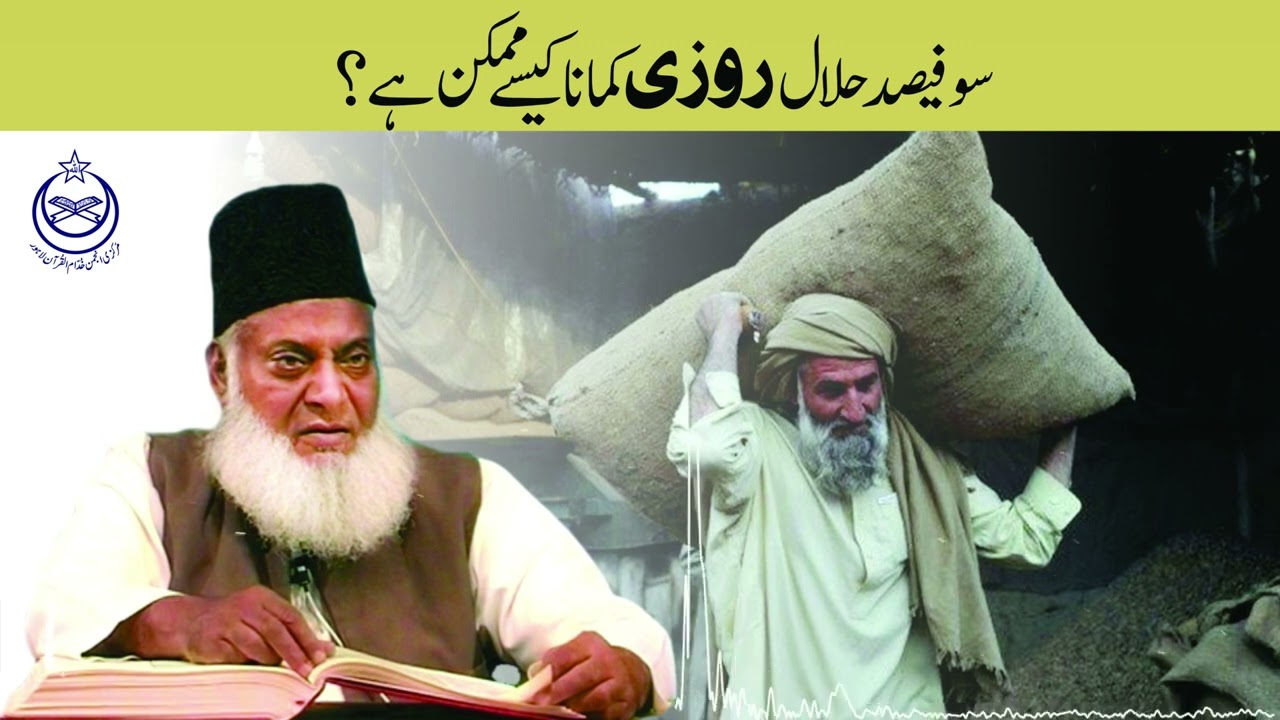
In this clip Dr Israr Ahmed advises that, despite high costs, we should try our best to earn a halal (lawful) income and avoid clear haram (forbidden) actions like bribery. God understands sincere efforts and may overlook minor issues if we’re genuinely trying. If a job pressures you toward haram practices, it’s better to switch to lawful work, even if it’s challenging.