Top videos

In this clip Dr Israr Ahmed explains that true remembrance of Allah (zikr) is keeping Allah in your heart. The best zikr is reciting the Quran and performing prayers. He shares how Fatima (RA) used to recite the Quran while doing chores. Other forms of zikr include daily duas (supplications) for various activities. Consistent zikr keeps the heart connected to Allah and protects against negative influences and hypocrisy.

ALLAH Ki Kasam Wo Shakhas Momin Nahi Ho Sakta | اللہ کی قسم وہ شخص مومن نہیں ہوسکتا | Dr Israr Ahmed
In this clip Dr Israr Ahmed discusses Prophet Muhammad's statement that a true believer wouldn't drink alcohol, He emphasizing how it contradicts faith and affects one's relationship with neighbors.

In this clip Dr Israr Ahmed explains how to make capitalism more Islamic by adding three key principles: no interest (riba), giving charity (zakat), and focusing on helping the poor. Private ownership and competition are allowed in Islam, but without exploitation or unfair practices like gambling. The Islamic system encourages fair business while keeping personal needs simple and helping those in need.

In this clip Dr Israr Ahmed explains that the concept of "Barat" and related customs are not part of Islam. Islamic weddings should be simple, ideally with the Nikah in a mosque, without elaborate functions or large gatherings. Traditions like dowry and "sahara bandi" are cultural influences, not from Islam. Islam promotes simplicity and avoids such unnecessary practices.

In this clip Dr Israr Ahmed explains that there's a difference between government and state. While Muslims may hold power, Islamic law isn’t enforced today. In the past, Islamic laws were applied, but now people understand that they can be loyal to the state while seeking to change the government. This can be done through elections or peaceful protests, as long as no harm or violence is caused.
In this video, Dr. Israr Ahmed talks about loving Prophet Muhammad more than anything else, even more than family. He says this love is important for growing spiritually and having a good society. Dr. Israr Ahmed tells a story about Hazrat Umar loving the Prophet very much. He also says it's crucial to follow the Prophet's teachings for society to be strong and peaceful.

In this clip Dr Israr Ahmed explains that collective repentance (ijtamai tauba) involves individuals sincerely repenting and removing haram from their lives. Despite societal restrictions, people can still follow Islamic teachings like avoiding interest and indecency. He emphasizes the power of sincere prayer and repentance to influence destiny. If enough people repent and work for Islam, they can bring meaningful change.

In this clip Dr Israr Ahmed explains that religious groups struggle to unite on implementing an Islamic system because of petty disagreements and lack of action. He shares his experience with the Mutahida Shari Muhaz, where efforts failed due to internal conflicts and lack of commitment to a common goal. He stresses that real progress needs unity, sincerity, and willingness to prioritize the greater good over personal interests.

In this clip Dr Israr Ahmed explains who the hypocrites (munafiqeen) are: those who claim Islam without true faith. Islam requires obedience to Allah and His Messenger without compromise. True believers distinguish themselves from hypocrites by their unwavering faith and belief in the Quran as Allah's word.

Dr Israr Ahmed explaining Shirk Fil Itat | شرک فی الاطاعت کیا ہے؟ | Types Of Shirk By Dr Israr Ahmed
In this clip Dr Israr Ahmed explains "shirk fil itat," associating partners with Allah in obedience. He clarifies that while respecting parents is important, ultimate obedience belongs solely to Allah. Any obedience conflicting with Allah's commands is considered shirk, He emphasizing that obedience is reserved for Allah alone.
In this video, Dr. Israr Ahmed discusses the significance of prayer (namaz) in Islam and explains its proper method and the power of dua (supplication). He emphasizes that prayer is a direct way to connect with Allah and assures that sincere requests are always met with Allah's love and mercy.

In this clip Dr Israr Ahmed advised a woman to try and convince her husband to let her care for her elderly parents without causing conflict. If the husband still refuses and strictly forbids it, she can consider divorce. He emphasized that serving parents is important and that divorce is not a sin in Islam, despite cultural stigma.

In this clip, Dr. Israr Ahmed explains that Islam hasn't fully come to Pakistan because religious parties turned it into a political issue. He believes Quaid-e-Azam gave the opportunity for Islamic laws through the creation of Pakistan, but religious groups focused on politics and democracy instead of real Islamic reforms, causing delays.
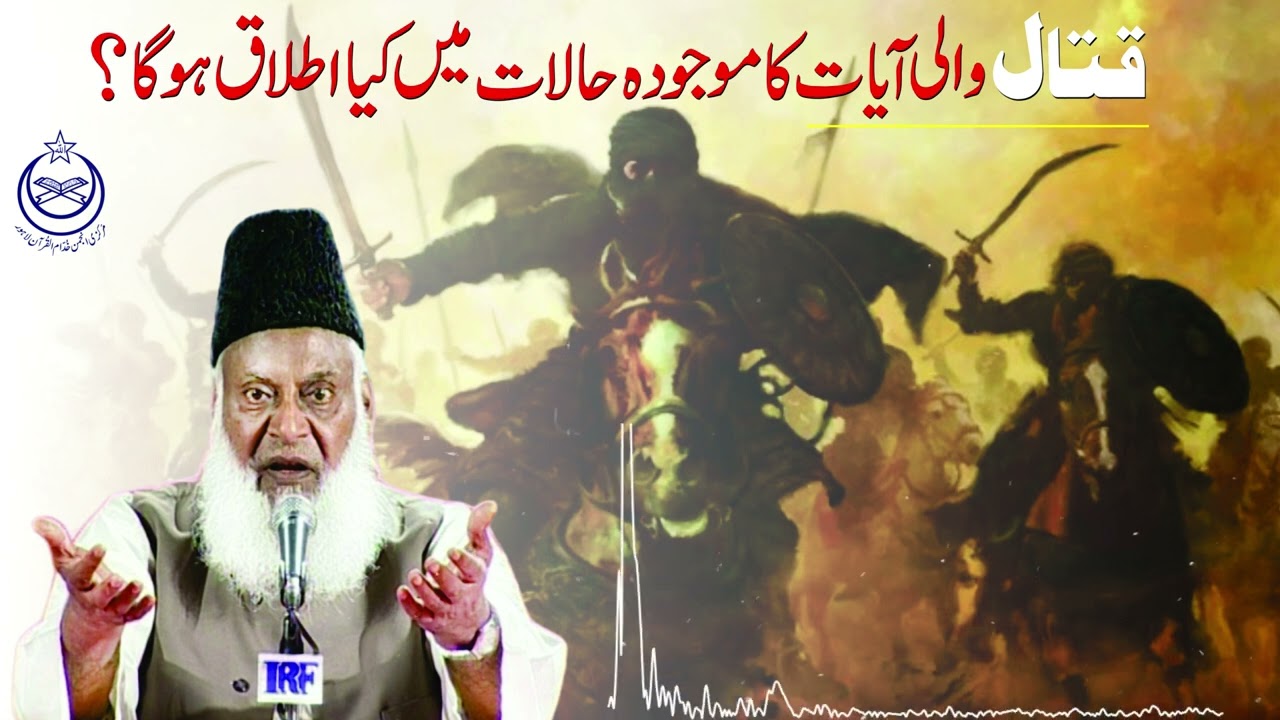
In this clip Dr Israr Ahmed explains that fighting for Allah’s sake (qital fisabilillah) can only happen under a true Islamic government or movement, which we don’t have right now. However, if attacked, defending ourselves is allowed and those who die are martyrs. He also says that peaceful efforts to spread Islam should continue, and the fight for freedom in Kashmir is justified.

In this clip Dr Israr Ahmed talks about what real goodness is. He says it's about being kind to others, helping them when they're in need, and feeling their pain. Without this kindness, even if someone knows a lot or prays, they're not truly good. So, being good means caring for others and helping them when we can.

In this clip Dr Israr Ahmed outlines Islam with two facets: "religion" and "way of life." The term "mazhab" is absent in the Quran, applied to sects like Hanafi, Maliki, etc. True religion aligns with Allah's law, Sharia. Those diverging are deemed misguided.
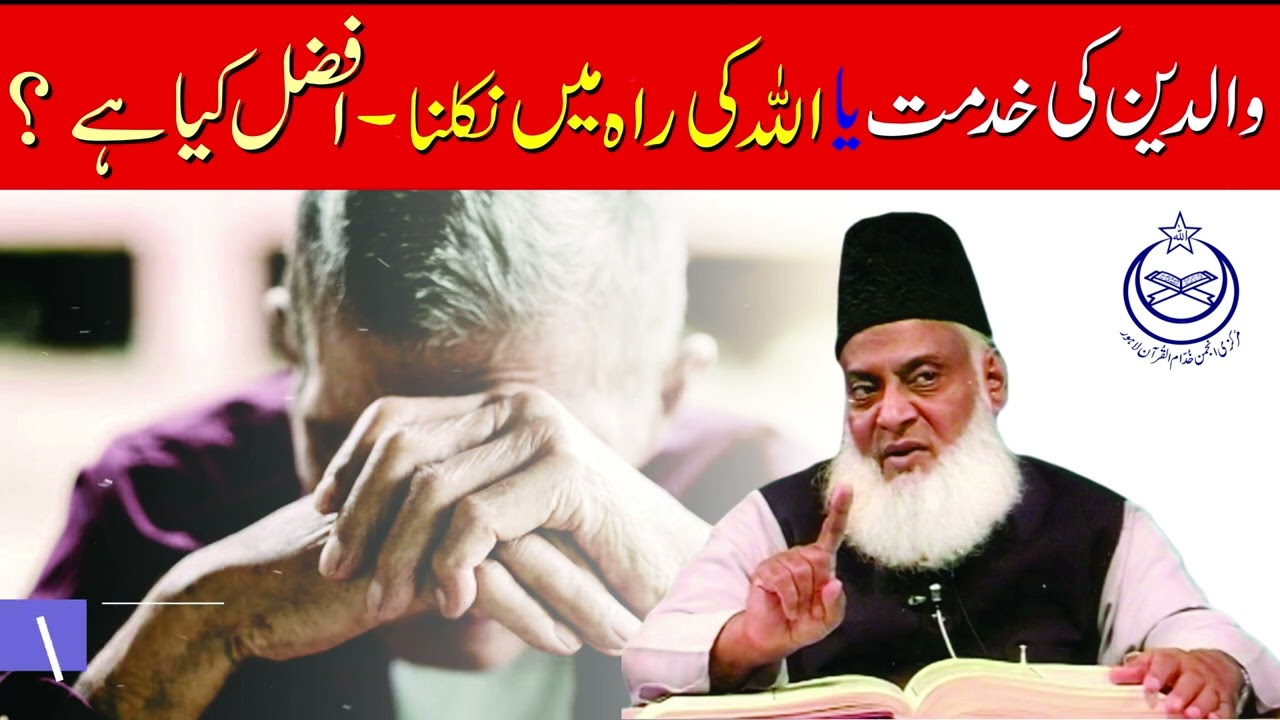
In this clip, Dr. Israr Ahmed talks about whether serving parents or working for Allah is more important. He says it depends on the situation. In critical times, serving parents may take priority. He stresses that decisions should consider community needs, and jihad can mean helping parents, spreading Islam, and guiding others. Serving parents is also a form of jihad.

In this clip Dr Israr Ahmed explains that in the final era of the Muslim community, there will be a debate about which part—early or late—is better. This idea, passed down through Hazrat Jafer Sadiq, suggests that later generations might surpass earlier ones in both quantity and quality, likened to different groups benefiting from rainfall in alternating years.

Dr. Israr Ahmed discusses the belief in preexistence and the creation of humanity from Hazrat Adam (A.S). He highlights the stages of human evolution and degradation. The Quran teaches that life on earth is a test, with the real life being in the hereafter. Ahmed emphasizes that the pinnacle of creation glorifies Allah
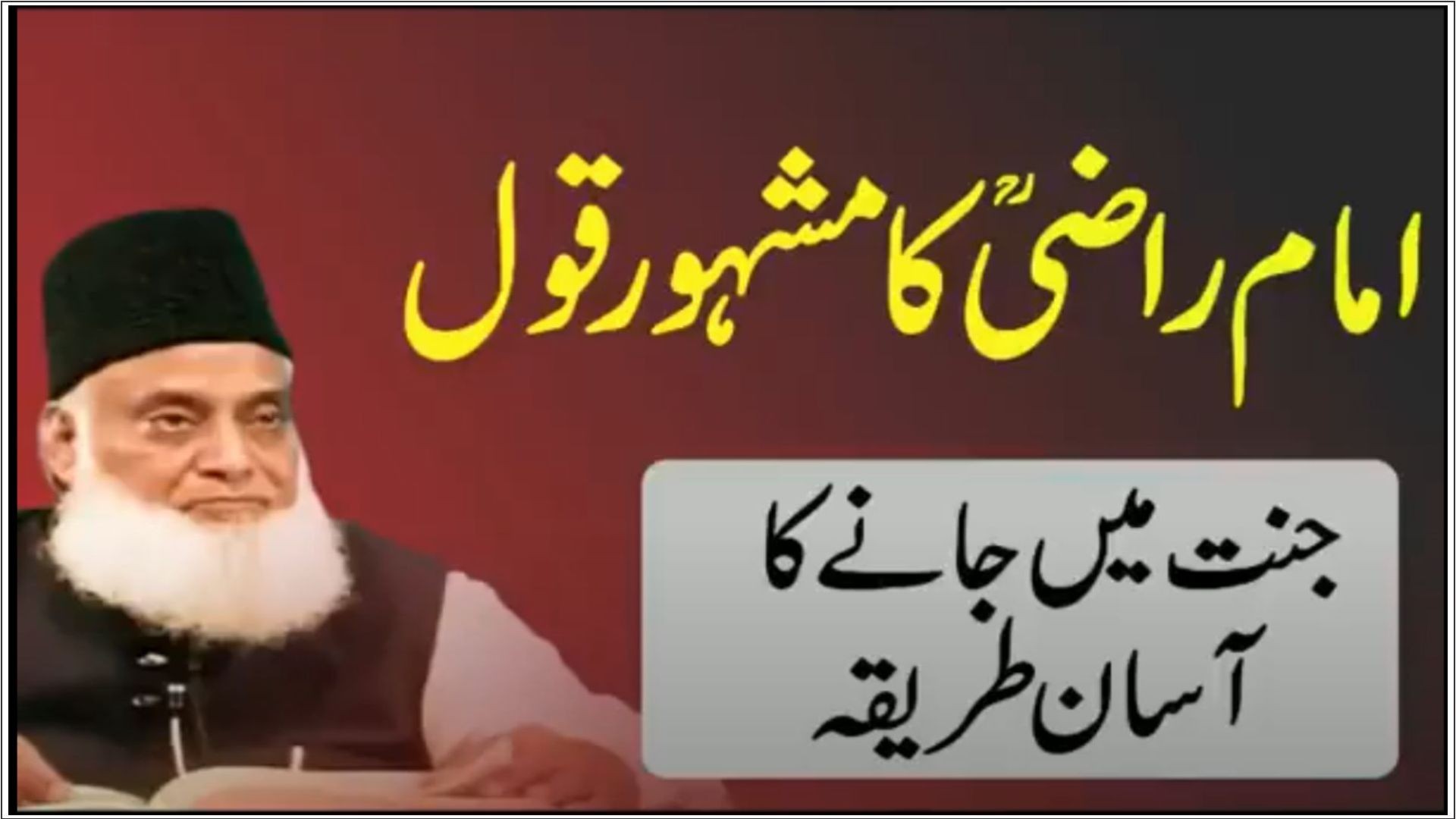
Imam Razi, in his commentary on Surah Asar, emphasizes the importance of hard work to earn paradise. He advises that attaining Jannah requires diligent effort. Imam Razi outlines four conditions: strong faith, righteous deeds, advising one another, and emphasizing patience. According to him, these conditions pave the way to Jannah and form the path to paradise.