Top videos

In this clip Dr Israr Ahmed explains that Nikah (marriage) in Islam is a contract between a man and a woman. The bride gives her consent through a guardian in front of witnesses, while the groom is present. He emphasizes that Nikah should be announced publicly, ideally in mosques. Dr. Israr also recited a Nikah in the video and prayed for blessings, love, and righteous children for the couple.
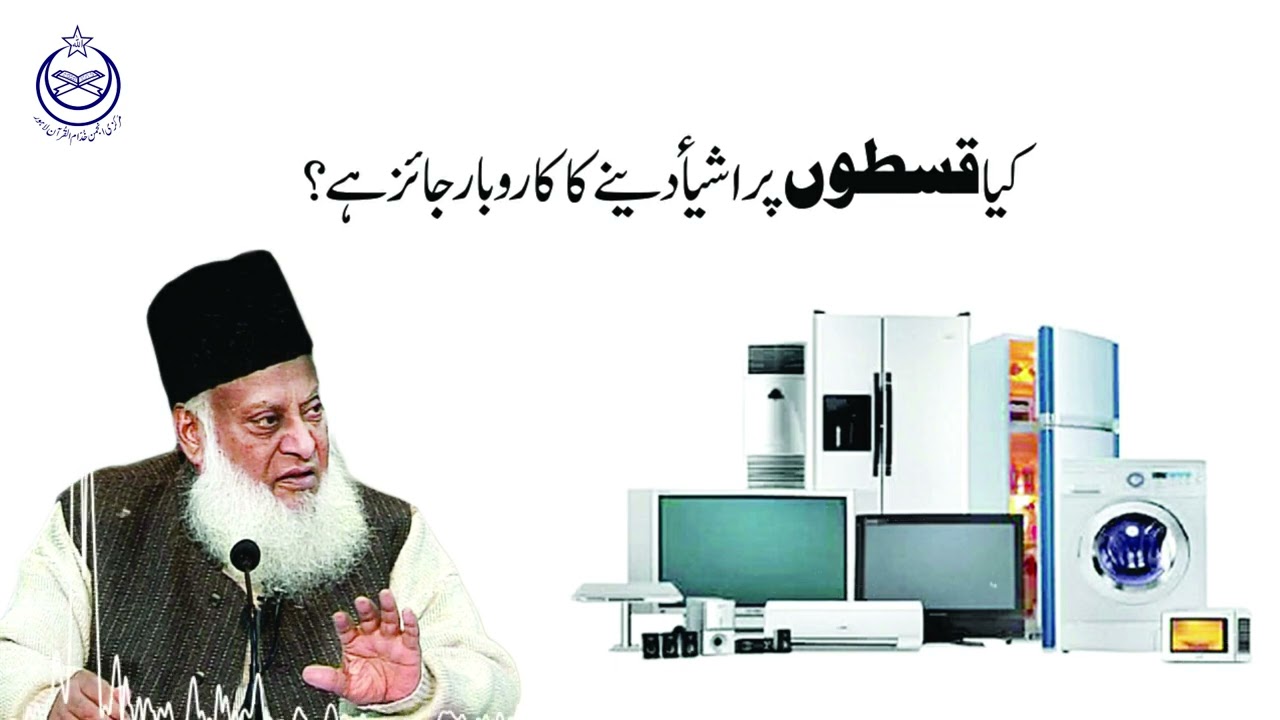
In this clip Dr Israr Ahmed explains whether installment-based transactions, like leasing, are permissible in Islam. In Hanafi Fiqh, selling an item at a higher price for deferred payment is allowed, but he criticizes this practice, arguing it resembles interest and lacks clear evidence from the Quran or Hadith. While some scholars permit it based on common practice, Dr. Israr questions the justification and views it as problematic.

In this video, Dr. Israr Ahmed highlights Allah's promises to believers from Surah Noor:
1. Those who fulfill their faith and do good deeds will inherit the earth.
2. Their religion will prevail on earth.
3. Allah will replace their fear with peace.

In this clip Dr Israr Ahmed explains that Imam Bukhari believes faith and actions are inseparable. True faith includes good deeds, and sinning shows a lack of true belief at that moment. Repentance restores faith, and Allah's mercy ensures that sincere obedience maintains the value of one's good deeds.

In this clip Dr Israr Ahmed says that interest (riba) is forbidden in Islam, and we should use fair banking systems like mudarabah and musharakah (profit-sharing). But first, we need to remove interest completely. He points out that societies have worked without interest before and calls for strong leadership ready to make sacrifices to free the country from systems like the IMF.

In this video, Dr. Israr Ahmed mentions Hazrat Hassan Ibni Talib, grandson of Prophet Muhammad (S.A.W), and shares a hadith he remembered from the Prophet: to avoid anything that creates doubt in the heart. He emphasizes the importance of listening to our conscience, as it guides us towards truth and faith.

In this clip Dr Israr Ahmed talks about how Allama Iqbal inspired Muslims through his poetry, giving them hope and a sense of identity during a time of despair after World War I. Unlike earlier poets who focused on the decline of Islam, Iqbal emphasized the revival of Muslim strength and predicted the rise of a separate Muslim state, which later led to the idea of Pakistan. His work played a crucial role in strengthening Muslim unity and identity.

In this clip Dr Israr Ahmed explains that a peaceful Islamic revolution requires addressing sectarian divides. While Muslims differ on minor issues, they agree on core principles like modesty and morality. He highlights past unity among sects on shared values, showing that collective change is possible if focus shifts from divisions to the essence of Islam.

In the clip, Dr. Israr Ahmed talks about loving Prophet Muhammad (PBUH). He says true believers don't just claim love but also honor him. Understanding this love is crucial. Dr. Israr emphasizes obeying Allah and the Prophet in Islam. He warns against sins like usury, stressing repentance. Obedience to Allah and the Prophet is essential in Islam.

In this clip, Dr. Israr Ahmed explores the essence of belief in Allah and true faith, illustrating with three stories: Sheikh Abdul Quddus Gangohi, Hazrat Nizamuddin Auliya, and Hazrat Abu Ali Qalandar. He emphasizes that true faith reflects in our actions and brings trust and fearlessness, knowing that Allah is our protector and beloved, and our ultimate pleasure lies in His satisfaction.

In this video Dr Israr Ahmed narrates the importance of qasam and the why as a principle Allah takes qasam. He also explains what 'Zamana' is and the fleeting nature of time.

shadi bayan ki taqreebat 01
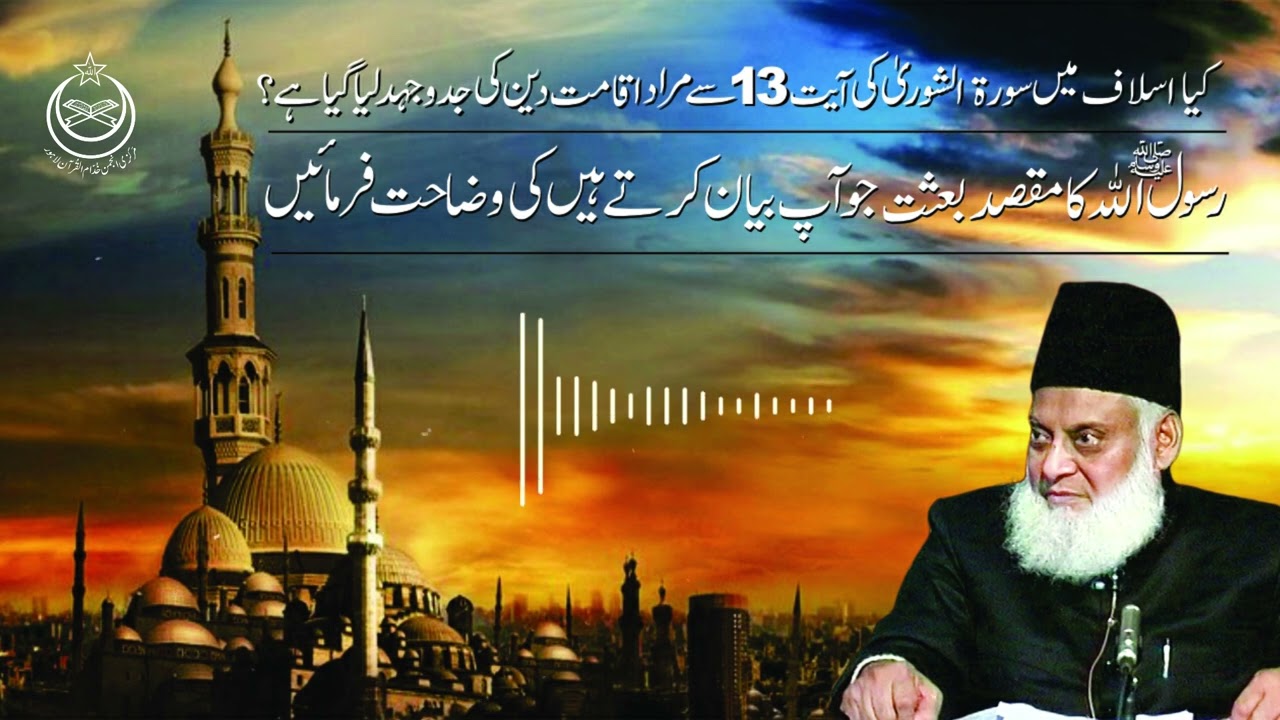
In this clip Dr Israr Ahmed explains that Surah Ash-Shura, Ayah 13 refers to the struggle to establish Tawheed (the oneness of Allah) in all areas of life. Some scholars, like Maulana Maududi, see this as including political dominance, while others focus on the Prophets' role in spreading Allah’s message and purifying souls. The main goal is to ensure people understand and follow Allah’s guidance in this world and the Hereafter.

In this clip Dr Israr Ahmed explains the prayer schedule during Hajj, particularly at Arafat and Muzdalifah. At Arafat, the Imam combines Zuhr and Asr prayers with two rak'ahs each before Maghrib. In Muzdalifah, Maghrib is prayed after sunset with three rak'ahs, and Isha with two. During Hajj, prayers are shortened (Qasar) for obligatory prayers only. Sunnah Mu'akkadah prayers are not mandatory while traveling, but can be performed for reward.

In this clip, Dr. Israr Ahmed discusses the greatness of Prophet Muhammad (peace be upon him), emphasizing his status as a prophet and messenger. He shares anecdotes showcasing the Prophet's humility and simplicity, as well as his care for his daughter, Fatima. Dr. Israr highlights the incomparable nature of praising the Prophet and compares it to recognizing the expertise of a qualified doctor.

In this clip Dr israr ahmed explaining that predictions of Dr.israr ahmed.unho ny kaha k jab 911 ka hadsa paash aya tu Pervez Musharraf america ki dhamki se dar gye.Pervez Musharraf was afraid of America's threat.At that time he made a delegation of journalists.Dr israr ahmed got angry for blaming Osama and Taliban.Dr israr ahmed ny kaha dhakhye sadar sahib bagair kisi juram k adal o insaaf keye bagair saza dena juram ha.it is a crime to punish without doing justice without any crime.Dr israr ahmed ny 3 batain kahi 1_ Adal -o- insaaf k asulion se baghawat 2_ gharat naam ki koi cheez nahi rah gye 3_ Islam aur deen k khilaaf baghawat .kio k aik ghair mulki mulk ki madad karna islam se baghawat ha.1-A rebellion against the principles of justice.2-There is no such thing as honor.3 - Rebellion against islam and religion.Dr israr ahmed ny kaha byshak apki teeno baatain theek hain 1- masla kashmir 2- atomic ahsaaso ki hifat 3- hum kisi khatry se dochaar nahi lakin ye sab arzi ha buhaat jald apki barri aye gi iski wajah ye ha k in sab waqiyat k pechay Israil ki saazish ha America ki nahi.Israil ka sab se badha target Pakistan ha.Israil ko ye twako thi k America chapty ga Afghanistan aur Afghanistan k supporter mulk Pakistan per.So wait your turn,you can't escape.

In this clip Dr Israr Ahmed discusses the worst type of shirk, which is believing that Allah has partners or children. This includes false beliefs like angels being Allah’s daughters or Jesus being His son. Such ideas are severe insults to Allah's greatness. These wrong beliefs have appeared in different historical communities. It’s important to understand and avoid these serious errors. Recognizing these mistakes helps maintain the purity of worship.
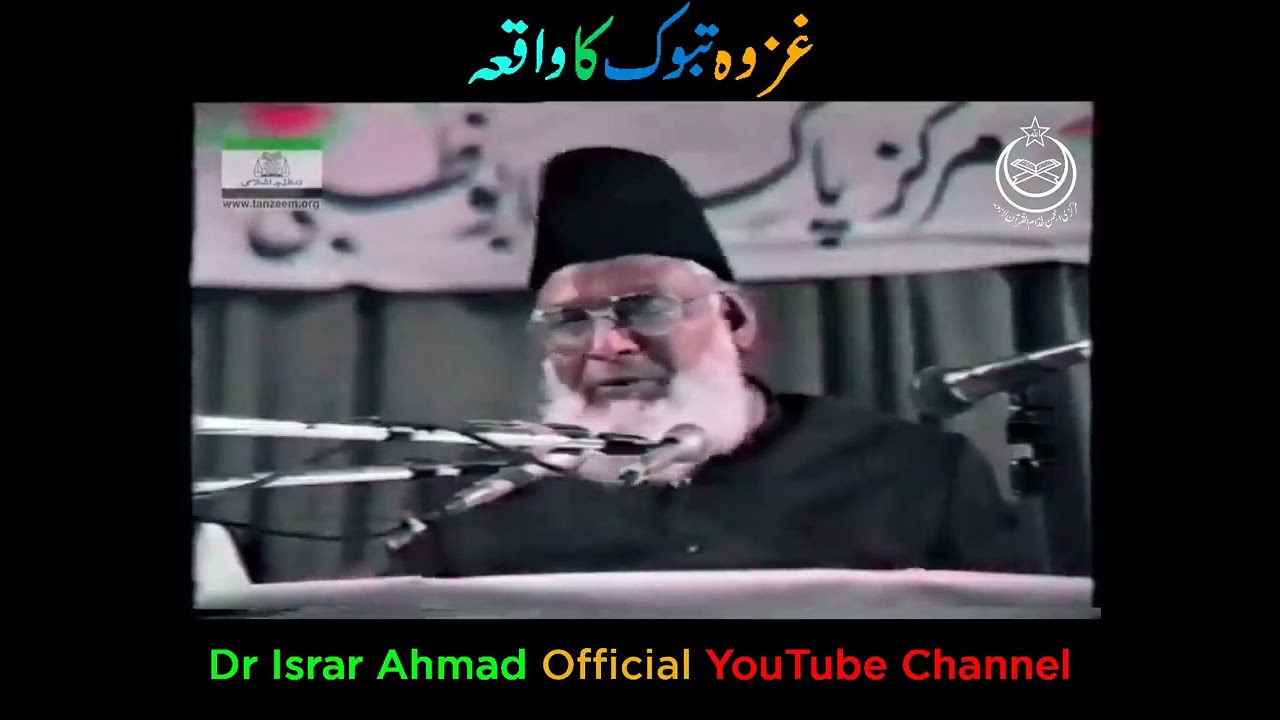
3 Sahaba (R A) Jo Shaitan Kay War Mein Aa Gaye | غزوہ تبوک کا واقعہ | Dr Israr Ahmad Emotional Bayan
This clip discusses an incident from the time of Prophet Muhammad (PBUH) known as the Battle of Tabuk, where three companions are mentioned who were affected by Shaitan's deception. Despite being true believers, they fell into a trap of lying due to temporary weakness. The Prophet (PBUH) ordered to avoid social interaction with them temporarily.

In this clip, Dr. Israr Ahmed explains Prophet Muhammad's experience of witnessing Allah during the Night Journey (Shab-e-Miraj). Using poetic imagery, he describes the ineffable encounter atop a celestial tree, highlighting the Prophet's unique connection with Allah and his witnessing of divine manifestations.

Allama Muhammad Iqbal Biography | Nationality of Pakistan | ہماری ملت وقومیت کی پہچان | Dr Israr Ahm
Allama Muhammad Iqbal Biography | Nationality of Pakistan | ہماری ملت وقومیت کی پہچان | Dr Israr Ahmed