Top videos

In this clip Dr Israr Ahmed discusses if commercial interest is haram in Islam. He refers to an article stating that commercial interest is not always forbidden, unlike usurious interest. He explains that profit from business involves risks, while interest seeks guaranteed profit. He encourages studying Islamic views on finance and being mindful of Western influences. He suggests reading scholars like Sheikh Abdul Mahboob Ahmad for better understanding.
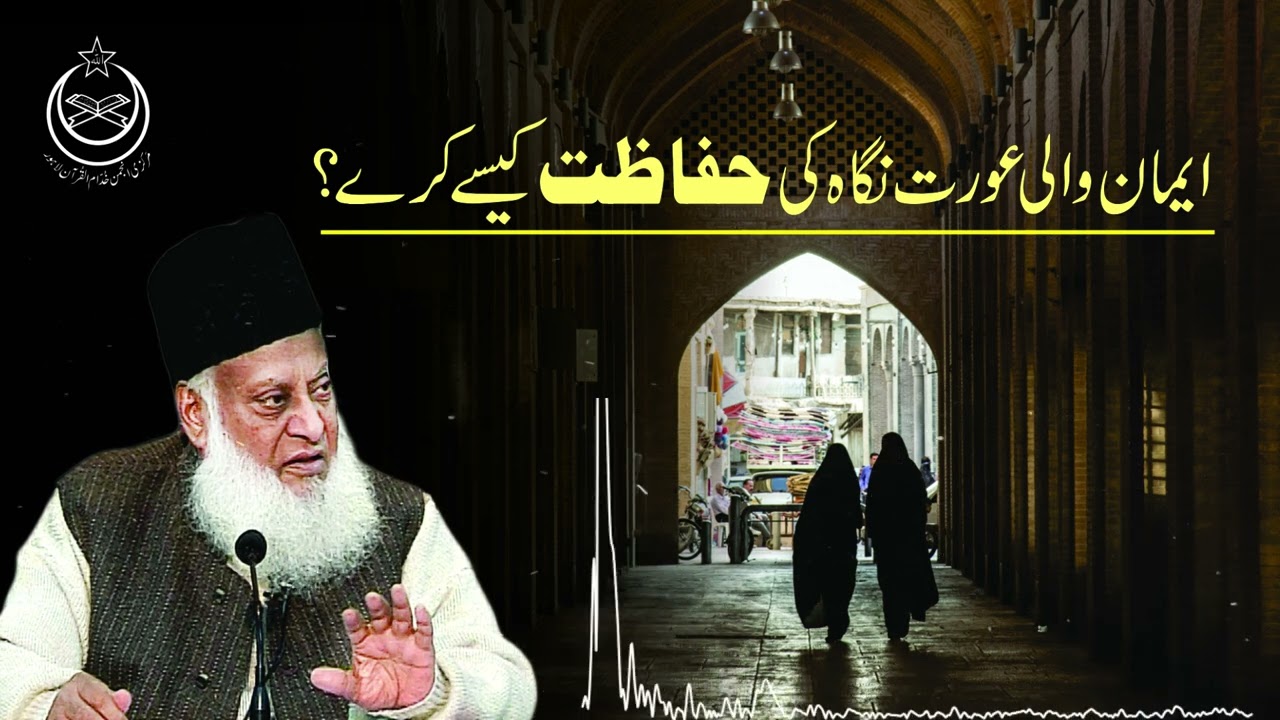
In this clip Dr Israr Ahmed explains that modesty rules in Islam are different for men and women. Women are instructed to cover themselves and also lower their gaze around men. Even if a woman wears full hijab, she still needs to be mindful of how she interacts with men. Men, on the other hand, are expected to control their desires, but the responsibility of veiling is greater on women. This difference is based on the natural instincts of both genders.
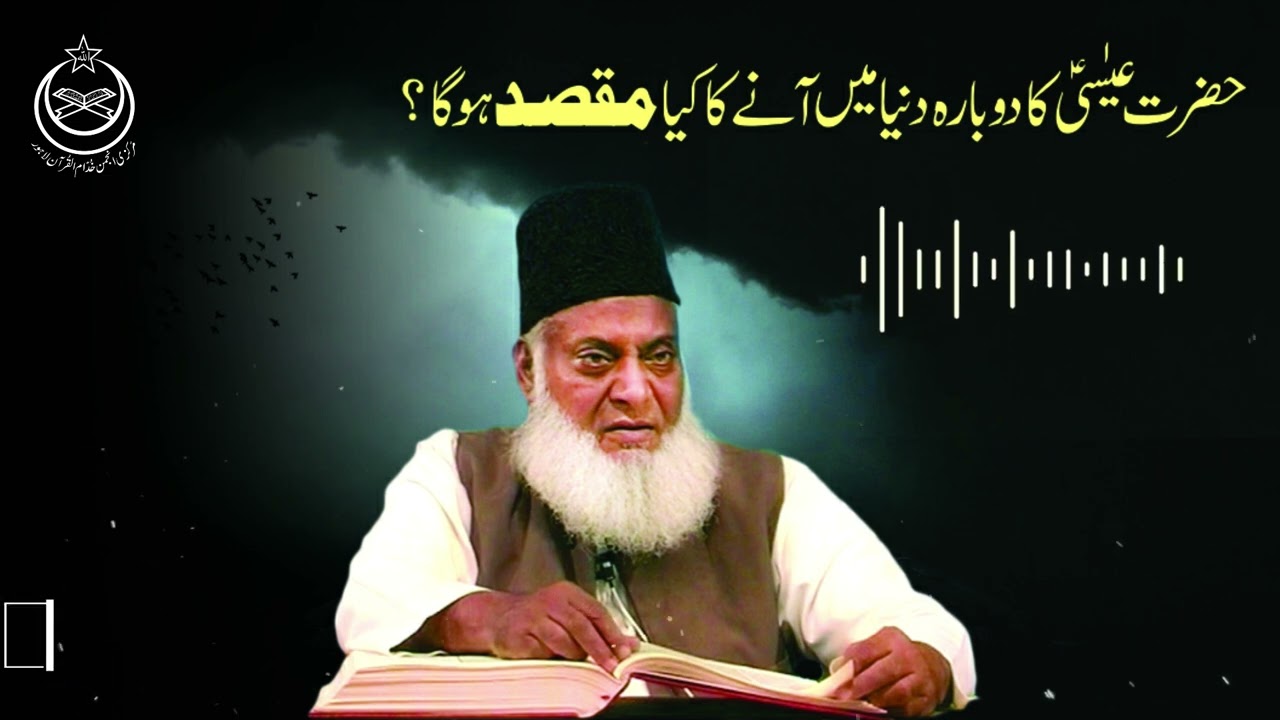
In this clip Dr Israr Ahmed says that when Hazrat Isa (AS) returns, he will join Muslims in prayer, showing respect for the Prophet Muhammad's (PBUH) followers. His main purpose will be to defeat those who opposed him, especially those with powerful weapons. Allah will give him special abilities so that his presence alone will weaken and defeat his enemies, helping to end falsehood and oppression.

In this clip Dr Israr Ahmed explains that a true Islamic revolution requires unity, and even a small dedicated group can make a big impact. The "silent majority" seems to support the system, but they are not actively involved. A Muslim leader must implement full Islamic law, or their claim of faith is false. Zia-ul-Haq, for instance, was expected to enforce Sharia law but didn't, which questioned his commitment to Islam.

In this clip, Dr. Israr Ahmed discusses if using "Khuda" instead of "Allah" is acceptable. He states that there is no evidence in the Quran or Hadith to support the use of "Khuda" and emphasizes that the Arabic names of Allah are important. Dr. Israr Ahmed suggests that it's better to use the names found in religious texts and not to make a big deal out of this issue.

In this clip Dr Israr Ahmed explains the ideology and goals of RSS, highlighting their aim to eliminate Islam from India, especially after partition. He draws a parallel with the decline of Islam in Spain and warns of a similar threat in India. He notes how movements like RSS intensified after partition, fueled by grievances over the division of India. With the separation of East and West Pakistan, their confidence grew, contrasting with the decline of Muslims in leadership and progress.

Khilafat Kya Hai | خلافت کیا ہے ؟ | Presidential System VS Parliamentary | Dr Israr Ahmad Bayan

In this clip Dr Israr Ahmed talks about debates between Muslim scholars and missionaries. In India, a German missionary named Paderi Fander troubled Muslims until locals stood up to him. He debated Islamic scholars but changed his tone when he lost. "Munazera" isn't in the Quran; it's about winning with wisdom and strength.

In this clip Dr Israr Ahmed explains that Prophet Muhammad (SAW) gave his message to everyone, not just the elite. He welcomed both the rich and powerful, like Abu Bakr (RA) and Umar (RA), as well as common people like Bilal (RA). Islam was open to all, but people like Bilal (RA) are often mentioned more because they suffered the most for their faith.

In this clip Dr Israr Ahmed explains that calling Islamic movements a "failure" is wrong. He compares it to the Prophet Muhammad’s struggles in Makkah, which seemed unsuccessful but were part of a bigger plan. Establishing Islam takes time and happens over generations. Every sincere effort counts, is rewarded by Allah, and contributes to the ongoing growth of Islam.

In this clip Dr Israr Ahmed explains that in Islam, a true bankrupt is someone who, despite performing many good deeds, has wronged others or taken their rights. The Prophet Muhammad (SAW) taught that such a person will face severe consequences in the Hereafter. Even devout appearances can’t save them from the punishment for their harmful actions.

In this clip, Dr. Israr Ahmed explains that for Allah to accept our actions, we need to truly love Him and the Prophet. Simply following religious rules isn’t enough; we must feel genuine love in our hearts. If we pray or make dua without this love, our efforts may not be accepted. He encourages people to understand their feelings and strengthen their love for Allah while continuing to practice their faith. True devotion is about sincere love, not just actions.

In this clip Dr Israr Ahmed explains that women are not forbidden from going to mosques. In the Prophet’s (PBUH) time, women attended Eid and Jumu'ah prayers for learning through the Khutbah. Today, with many ways to access knowledge, attending these prayers is less necessary. Though Caliph Umar (RA) restricted it later, it is still allowed and not sinful, but the need for it has reduced over time.

In this clip Dr Israr Ahmed explains that bringing Islamic rule in just a village is not practical today because the world is too connected. Unlike in the past, global powers now watch everything closely. He says change needs to happen at the national level, not in small areas, and the global system will resist any effort to establish Islam.

In this clip Dr Israr Ahmed explains that the perfect Islamic community, like in the Prophet's time, is not present today. This unity will be restored with Imam Mahdi and Jesus (AS). Until then, Muslims should join any sincere Islamic group to maintain a sense of community. Living without such a connection is discouraged, even if current groups aren't ideal.
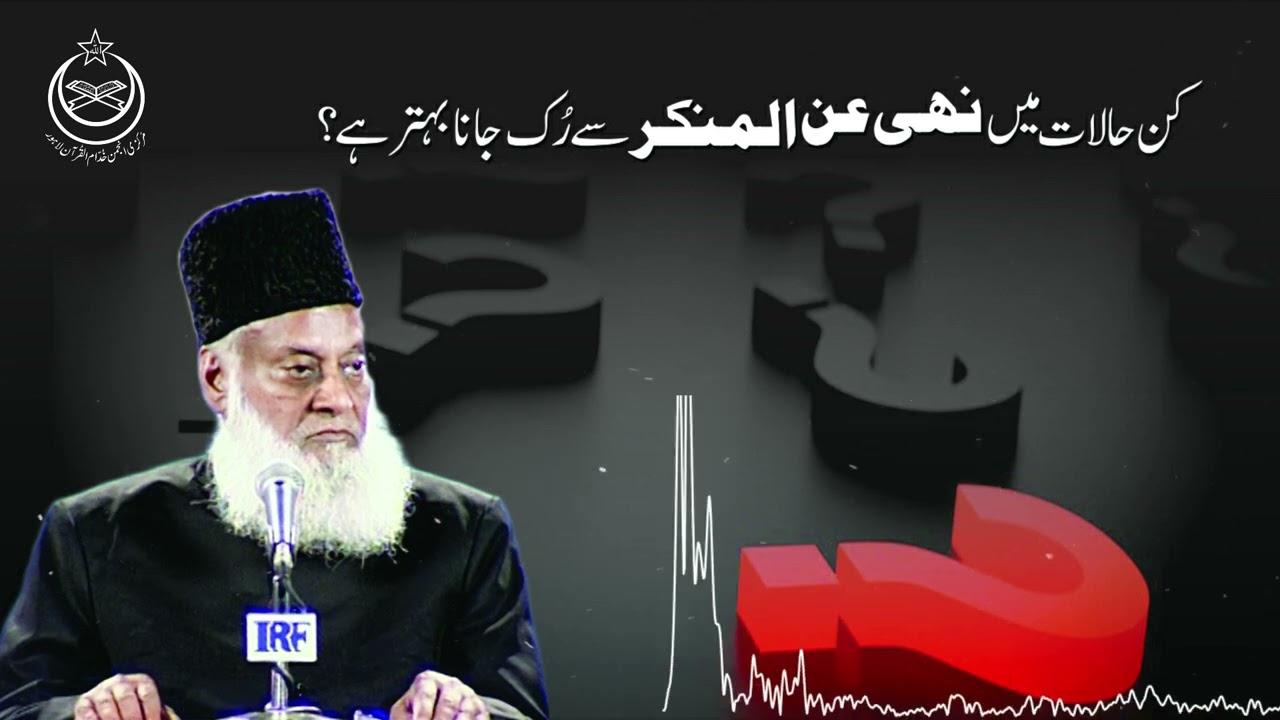
In this clip Dr Israr Ahmed explains that stopping wrongdoing should only be done when there's a chance to make a positive change. If confronting it could cause harm or conflict, it's better to avoid it. He stresses the importance of focusing on personal improvement rather than trying to fix everything. The outcome is ultimately in Allah’s hands. The key is to act wisely, without creating unnecessary problems.

In this clip Dr Israr Ahmed talks about why some people aren't guided by Allah and how to control desires and thoughts. He says people today often idolize power and material things instead of focusing on Allah. He also says that true love should be for Allah above all else, as mentioned in Surah At-Tawbah, verse 24.

In this clip Dr Israr Ahmed explains that "mazhab" (religion) covers beliefs, worship practices, and customs, and there can be many religions in one place. However, "deen" is a complete way of life, including social, economic, and political systems. He says only one "deen" can dominate in a society at a time, like how two swords can't fit in one sheath. Today, he believes democracy is the prevailing "deen."

In this clip Dr Israr Ahmed explains that Muslims should support oppressed people, especially in places like Kashmir and India. He warns that if Pakistan doesn’t follow Islamic principles, it could face serious problems and even break apart. Pakistan was made for Islam, and ignoring this purpose could lead to worse situations than Bosnia. He urges immediate action to bring an Islamic system to the country.

In this clip, Dr. Israr Ahmed explains that Islam hasn't fully come to Pakistan because religious parties turned it into a political issue. He believes Quaid-e-Azam gave the opportunity for Islamic laws through the creation of Pakistan, but religious groups focused on politics and democracy instead of real Islamic reforms, causing delays.