Top videos
In this clip, Dr. Israr Ahmed talks about the importance of remembering Allah (Zikr) to protect oneself from hypocrisy. He explains that constant remembrance, through prayer and Quran recitation, keeps a person spiritually strong. Dr. Israr Ahmed emphasizes that Salah (prayer) is a powerful form of Zikr, involving both the body and soul. He highlights how Sajdah (prostration) represents the ultimate humility before Allah, and encourages regular prayer throughout the day to stay connected with Him.

In this clip Dr Israr Ahmed describes Islam as submission to Allah's will. Ita'at involves obeying Allah with love and sincerity. Taqwa is about avoiding sins and staying within the boundaries set by Allah. These three elements together form Ibadah, which is the act of worshiping Allah. This understanding of worship has been emphasized by all prophets.

In this clip Dr Israr Ahmed explains that renouncing worldly pleasures means giving up material comforts to focus on fighting injustice and falsehood. He emphasizes that by enduring hardships and simplifying life, people can better dedicate themselves to addressing social inequalities and working for a just cause.

In this clip Dr Israr Ahmed explains that Muslims in non-Islamic countries face challenges because Islamic laws aren't enforced, and interest-based systems dominate. While Muslims can pray and follow rituals, they can't establish a complete Islamic system, as the world, especially the West, resists it. There's frustration that no country fully follows Islamic law, and Muslims are only allowed to practice their religion on a personal level, not in the larger social or economic system.

In this clip Dr Israr Ahmed explains that walking with pride is a form of arrogance, which is disliked in Islam. He mentions that even the smallest amount of pride can prevent a person from entering paradise. Instead, we should be humble, especially when blessed with knowledge or good deeds, and treat others with respect.

In this clip Dr Israr Ahmed talks about the struggle to avoid sins and the guilt that comes with them. He advises reading and understanding the Quran in Arabic for a stronger faith. True repentance means sincerely deciding not to repeat the sin, and it's essential to seek forgiveness for wrongs done to others, as Allah cannot compensate for those.

In this clip, Dr. Israr Ahmed discusses whether buying items on installments is permissible in Islam. He argues that paying a higher price than the cash price is a form of interest (riba), despite some scholars allowing it. He also critiques prize bonds as a form of gambling, where winnings depend on chance. In his view, both practices involve earning interest, which he considers haram.
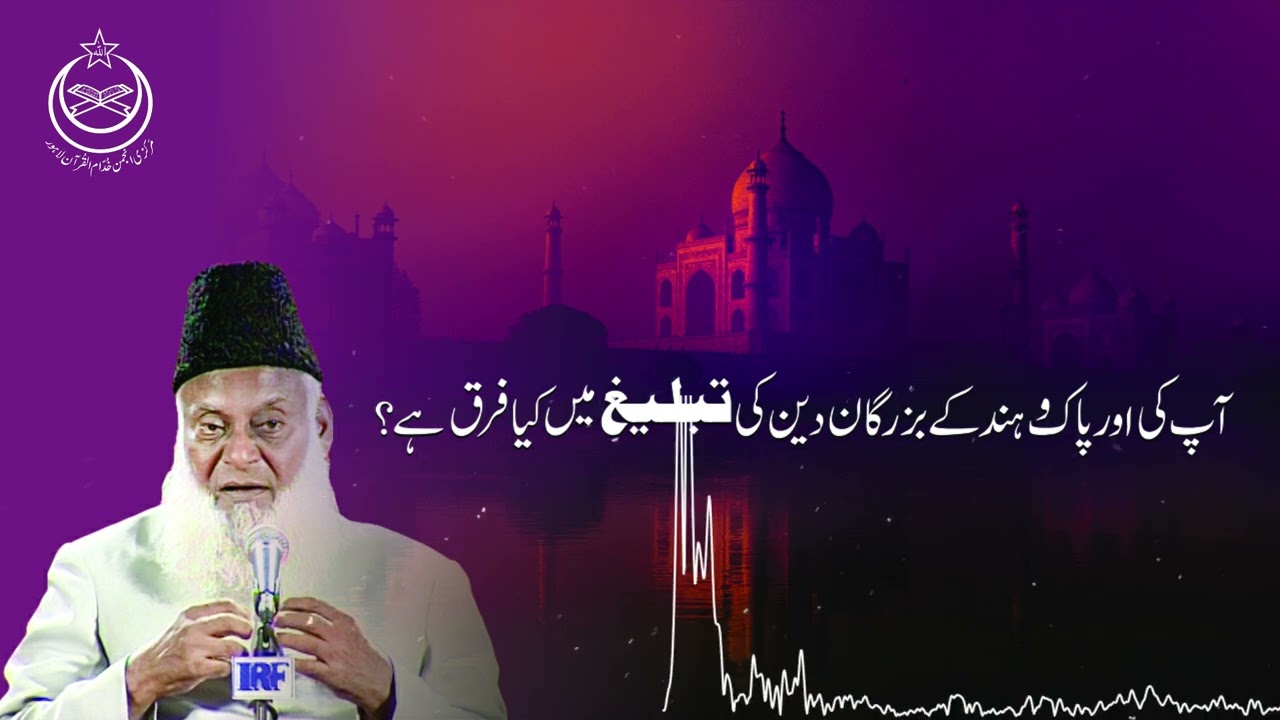
In this clip Dr Israr Ahmed explains that earlier religious elders (Buzurgan-e-Deen) focused on spreading Islam spiritually, while rulers like the Mughals worked on governance and conquests. However, he believes the current challenges require following the Quran, Sunnah, and the Prophet’s (SAW) example to bring a complete Islamic revolution. Preaching is important, but it must be combined with efforts to reform society and leadership.

In this clip, he mentioned about the routine of three sahaba (R.A) who decided to do different Ibadaat extraordinarily. The Prophet (S.A.W) did not like this type of extremist attitude in Ibadat. He also explaind about retribution and forgiveness.

In this clip, Dr. Israr Ahmed explores the essence of belief in Allah and true faith, illustrating with three stories: Sheikh Abdul Quddus Gangohi, Hazrat Nizamuddin Auliya, and Hazrat Abu Ali Qalandar. He emphasizes that true faith reflects in our actions and brings trust and fearlessness, knowing that Allah is our protector and beloved, and our ultimate pleasure lies in His satisfaction.

In this video, Dr. Israr Ahmed talks about Allah's displeasure with those who deny the Quran. He distinguishes between denial through actions and denial through words. Dr. Israr also discusses the things forbidden by Allah that His servants should avoid.

In this clip, Dr Israr Ahmed highlighted the significance of Prophet Muhammad's (peace be upon him) pivotal role in our hearts. He illustrated an incident from the Quran where the Prophet faced a sword attack, emphasizing that guidance ultimately lies in Allah's hands, not the Prophet's. Despite the Prophet's wish for his uncle, Abu Talib, to accept Islam, guidance is solely Allah's decision, as seen in Abu Talib's support without embracing faith.

In this clip, Dr Israr Ahmed explores how straying from true Islamic teachings can lead to using black magic and talismans for worldly benefits, contrary to Islamic principles. By referencing historical examples like Prophet Soloman (A.S) he warns of the spiritual pitfalls of such practices. His message: stick to genuine Islamic teachings and shun harmful practices.

In this clip Dr Israr Ahmed talks about signs of a true believer. He says a person can't be a true believer until they prioritize Allah over their desires and love others selflessly. He warns against putting personal desires above Allah's commandments and stresses the importance of sincere faith and submission.

How To Control Your Anger | Dr Israr Ahmed | How To Control Your Mind & Thoughts | Be Patience
In this clip Dr Israr Ahmed explains that elderly or sick people can pray at home if they can't go to the mosque. They can sit or even lie down to pray if standing is difficult. In any situation, whether due to necessity or illness, any form of prayer is acceptable.

In this clip Dr Israr Ahmed says real success isn't just about being rich or powerful. It's about believing in the right things, doing good, being patient, and seeking truth. Without these, even successful-looking people might feel empty. Success comes from faith, goodness, patience, and truth, not just money or status.

In this clip Dr Israr Ahmed talks about how Saitan challenged Allah because he thought he was better than Adam. Even though Allah commanded him to bow, Saitan refused and promised to lead people astray. He challenges Allah's authority and tries to lead people away from believing in one God.

Hazrat Umar Farooq رضی اللہ عنہ Biography Complete | Khilafat, Qabool Islam, Wafat | Dr Israr Ahmed

In this clip Dr Israr Ahmed explain that Hazrat Sumayya and Hazrat Yasir were brave. They didn't give up their beliefs, even when people hurt them. Sumayya was tied up and hurt in front of her son. Yasir also suffered, but they stayed strong. Their story teaches us to stay true to what we believe, even when it's hard.