Video teratas

In this clip, Dr. Israr Ahmad elucidates the unwavering resilience of Prophet Muhammad (SAW) against the coercive tactics employed by the leaders of Makkah. Despite facing intense pressure and tempting offers, including promises of kingdom, immense wealth, and prestigious marriages, Muhammad (SAW) remained steadfast. The leaders, led by Abu Talib, attempted to lure him away from his mission, but the Muslims stood firm in their commitment to monotheism and their allegiance to Muhammad (SAW). Dr. Israr Ahmad emphasizes the concept of "saber" or patience, describing it as the ability to persist in one's journey without yielding to greed, objection, pressure, or temptation. The Muslims' dedication to jihad and their unwavering loyalty to Prophet Muhammad (SAW) endured until their last breath.

In this clip, Dr. Israr Ahmad highlights that Muslims face punishment in this world due to their deviation from Islamic teachings, not practicing what Islam demands. He emphasizes that until Muslims establish a model Muslim state and adhere to Islam's principles, the punishment will persist.

In this video, Dr. Israr Ahmed explains how to ask Allah for help correctly. He emphasizes that we should only pray to Allah and not to anyone else. Dr. Israr also discusses some of the conditions Allah expects from His servants.

In this clip, Dr Israr Ahmed explains about the Battle of Badr, a pivotal event in Islamic history where Prophet Muhammad and his followers faced the Quraysh tribe of Mecca. Despite being outnumbered, the Muslims achieved victory with divine assistance, showcasing the strength of faith. It also mentions divine punishment inflicted upon the Quraysh due to their opposition to Islam.

In this clip Dr Israr Ahmed talks about being thankful and why it's important. He says if you're not thankful, you might hide good things and become selfish. Being thankful comes from feeling it in your heart, saying it out loud, and doing good things in return. He quotes a verse from the Quran to show what happens when you're thankful or not.

3 Types Of Shirk Part 1 | شرک کی 3 بڑی اقسام | Shirk Kya Hai | Dr Israr Ahmed Bayan

What Is Shirk Part 2 | Types of Shirk In Islam | Lecture In Chicago USA | Dr Israr Ahmed Official

In the video Dr Israr Ahmed talks about the need for Islamic principles in Pakistan. He suggests two approaches: striving for an Islamic government and uniting religious groups for political influence. He emphasizes closing legal loopholes contradicting Islamic values and rejecting morally corrupt leaders. Dr Israr Ahmed urges personal transformation and upholding Islamic teachings to enact positive change.

In the video Dr Israr Ahmed highlights Pakistan's requirement for laws based on Islamic principles, underlining Allah's authority and following the Quran and Sunnah. He cautions against deceiving the public with laws that go against these teachings, advocating for judicial supervision to implement Islamic law. Dr Israr Ahmed asserts that any laws conflicting with Islamic values should be dismissed, with the judiciary ensuring obedience.

In this clip, Dr. Israr Ahmed talks about whether women should work and stresses the importance of gender segregation in Islam. He believes Muslim women should stay modest and at home to raise good children. He recalls advising Zia-ul-Haq to stop serving alcohol on PIA flights and criticizes female air hostesses traveling for work, as he thinks it's against Islamic principles. Despite facing protests for his views, he urges Muslims to stay true to their values.

In this clip Dr Israr Ahmed explains that in the Quran, spending in the way of Allah despite loving one's wealth is emphasized. It is not about giving out of love for Allah, but rather giving despite the love for wealth. Wealth and possessions are naturally beloved to humans, but true sacrifice is spending in the way of Allah against this love. This act of spending despite loving wealth is a form of striving and self-discipline in Islam.

In this clip Dr Israr Ahmed explains that the British suppressed Muslims and supported Hindus in India because Muslims were the previous rulers and posed a threat of rebellion. The British used a "divide and rule" strategy to create divisions between Hindus and Muslims. Hindus, who had resented Muslim rule for centuries, embraced Western education, while Muslims were kept down.

In this clip Dr Israr Ahmed explains that prostration (sajdah) and acts of respect like standing with hands folded or bowing are exclusively for Allah and are forms of worship. These actions should never be performed for anyone else, including prophets. Doing so is strictly forbidden, as these are expressions of devotion meant only for Allah.

rahe nijat hd 08

In this clip Dr Israr Ahmed says that after Friday prayers, it’s fine to return to work. Islam teaches that our earnings are blessings from Allah, not just from our own efforts. Just as a worker might get extra money as a favor, our sustenance is a gift from Allah. It’s important to see it as a blessing, not something we solely earn through work.

In this clip, Dr. Israr Ahmed reveals the Quranic injunctions, where Allah issues three divine decrees for those who stray from His commands, guiding listeners on the path of righteousness

Dr. Israr Ahmed emphasizes the significance of dua, stating it as the essence of worship and the solution to all problems. He distinguishes between Tawheed-fid-Dua and Shirk, and elucidates on how Allah accepts our prayers. Additionally, he discusses the qualities of people favored by Allah and the proper methodology for dua.

In this clip, Dr Israr Ahmed talks about predictions for the Muslim community's final era using Quranic verses and Hadiths. He likens it to a garden, hinting at a brighter future. This era, preceding the Day of Judgment, is viewed optimistically with efforts to rejuvenate Islam. Despite obstacles, the belief is that Islam will triumph, with its teachings enduring even if its original name fades.

In this clip Dr Israr Ahmed talks about how the companions of Prophet Muhammad (peace be upon him) showed amazing patience and sacrifice for the sake of Allah. They endured hunger and hardship during tough times, like the blockade of Banu Hashim and the Battle of the Trench. Their patience wasn't for personal gain or nationalism, but for truth and righteousness.
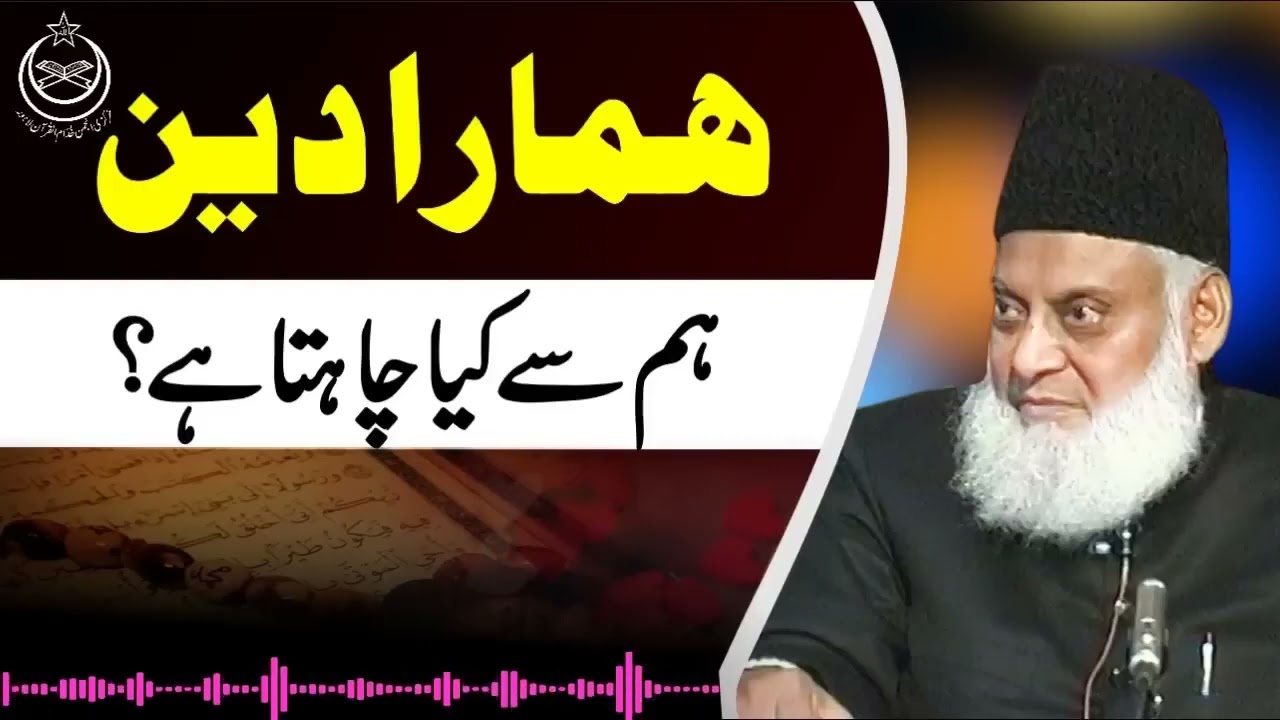
Responsibilities Of A Muslim | Hamara Deen Hm Se Kya Chahta Hai | Dr Israr Ahmed Full Bayan