Top videos
In this clip Dr Israr Ahmed explains that in Islam, concubines (londiyan) are war captives considered property with no marriage contracts or inheritance rights. Wives, however, have marriage contracts, legal rights, and can seek separation. The Quran encourages freeing slaves, and Prophet Muhammad (SAW) taught to treat them well and free them as an act of kindness and repentance.
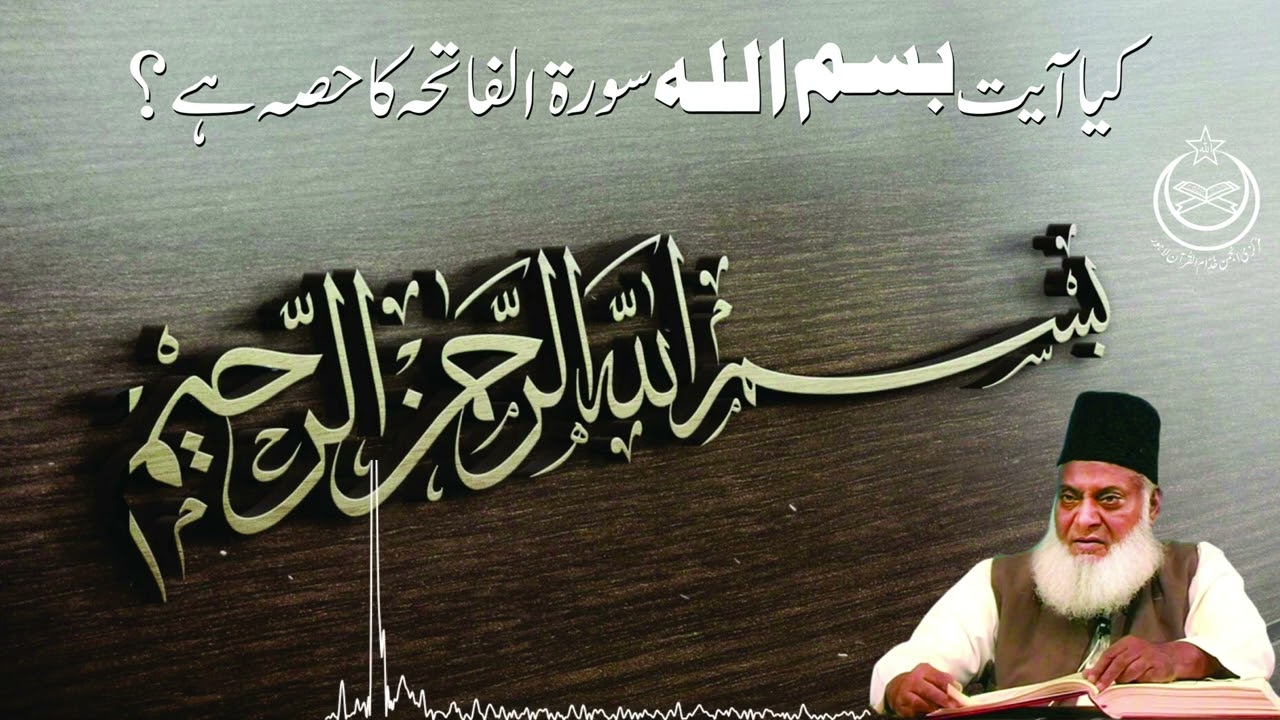
In this clip Dr Israr Ahmed explains that there is a difference of opinion on whether "Bismillah" is part of Surah Al-Fatiha. Imam Shafi believes it is, so it's recited aloud in their prayers, while Imam Abu Hanifa holds that "Bismillah" is not part of Surah Al-Fatiha or other Surahs, except Surah An-Naml. Dr. Israr Ahmed supports Imam Abu Hanifa's view and suggests not debating this issue, as scholars have differing opinions.
In this clip Dr Israr Ahmed discusses the harmful effects of interest, or 'sood', particularly in the context of IMF and World Bank loans. Interest, according to him, leads to economic exploitation and concentration of wealth in the hands of a few. He highlights how interest-based banking systems, controlled by a minority, perpetuate inequality and undermine democracy.

In this clip Dr Israr Ahmed explains how the Quran teaches about good ("khair") and bad ("sher") with simple ideas. Goodness means helpful actions, while badness is about harm. These concepts are innate, guiding our sense of right and wrong. Our conscience confirms this, bringing joy after good deeds and regret after bad ones. It highlights our ability to discern right from wrong.

Shia Sunni Ikhtilaf | Reality Behind Shia Sunni Riots | Dr Israr Ahmed Prediction About Muslim World
Shia Sunni Ikhtilaf | Reality Behind Shia Sunni Riots | Dr Israr Ahmed Prediction About Muslim World
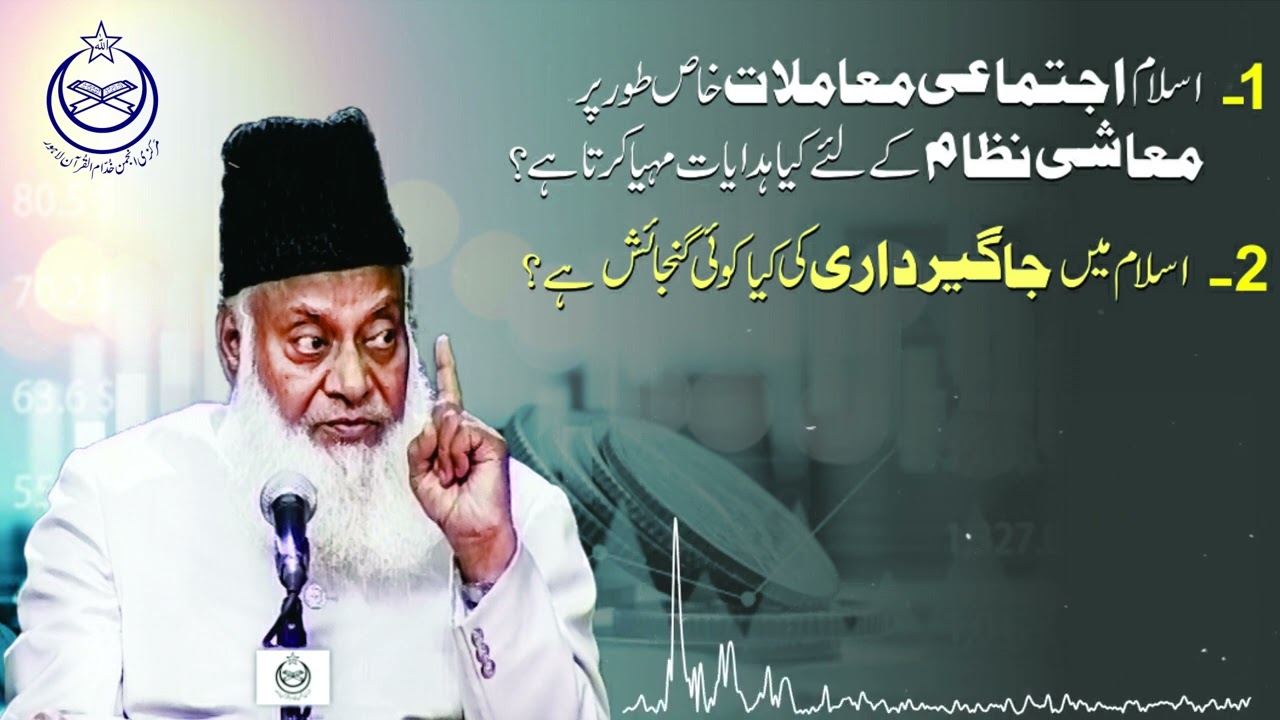
In this clip Dr Israr Ahmed explains that Islam’s economic system is based on two models: Shirakat (shared work and investment) and Mudarabat (one invests, the other works). Islam opposes feudalism and considers all conquered land as communal property. He critiques modern capitalist systems for concentrating wealth and power in a few hands. These systems, influenced by Western and Jewish ideas, are un-Islamic. Dr. Israr emphasizes that true economic reform requires a complete revolution, not gradual changes.

In this clip, Dr. Israr Ahmad elucidates the unwavering resilience of Prophet Muhammad (SAW) against the coercive tactics employed by the leaders of Makkah. Despite facing intense pressure and tempting offers, including promises of kingdom, immense wealth, and prestigious marriages, Muhammad (SAW) remained steadfast. The leaders, led by Abu Talib, attempted to lure him away from his mission, but the Muslims stood firm in their commitment to monotheism and their allegiance to Muhammad (SAW). Dr. Israr Ahmad emphasizes the concept of "saber" or patience, describing it as the ability to persist in one's journey without yielding to greed, objection, pressure, or temptation. The Muslims' dedication to jihad and their unwavering loyalty to Prophet Muhammad (SAW) endured until their last breath.

In this clip Dr Israr Ahmed says that Pakistanis' failure to uphold Allah's law after gaining independence has led to hypocrisy, affecting future generations. He explains that, like the Israelites in the Quran, later generations are responsible for following the same wrong path. He urges youth to dedicate themselves to their religious rights, just as they do for worldly causes.

Muhammad Ali Jinnah Quaid e Azam Kaise bne | Dr Israr Ahmed Official

In this clip Dr Israr Ahmed explains that time always moves from the future to the present and then the past, like melting ice. He emphasizes that time is precious and should be used wisely. Wasting time leads to loss and failure. This idea aligns with a Quranic verse, which says that people are at a loss unless they use their time effectively.

In this clip, Dr Israr Ahmed talks about predictions for the Muslim community's final era using Quranic verses and Hadiths. He likens it to a garden, hinting at a brighter future. This era, preceding the Day of Judgment, is viewed optimistically with efforts to rejuvenate Islam. Despite obstacles, the belief is that Islam will triumph, with its teachings enduring even if its original name fades.

In this clip Dr Israr Ahmed explains why a grandchild (pota) does not inherit from a deceased grandparent if their own parent (the son or daughter of the deceased) is still alive. If the son is alive, the grandchild does not receive inheritance. However, if the son is deceased, the grandchild can inherit, as the inheritance would pass to the next line. He also explains that while the grandchild may not inherit, they can receive a gift or will from the grandparent during their lifetime, within legal limits.

In this clip Dr Israr Ahmed addresses grave worship and shirk, highlighting practices like prostration at Hazrat Ali Hujwiri’s shrine. While some scholars believe pious souls assist Allah’s tasks, Islam forbids calling upon anyone but Allah. Such acts of invoking souls or angels are considered shirk. He emphasizes that all worship and prayers must be directed solely to Allah.

Types Of Shirk Series Part 3 | Shirk Fis Sifaat Kya Hai | شرک فی الصفات کیا ہے؟ | Dr Israr Ahmad

shadi bayan ki taqreebat 01