Top videos

In this clip Dr Israr Ahmed highlights the significance of poetry in all eras, including in Islam. While prophets were sometimes wrongly labeled as poets, poetry itself has the power to convey wisdom. He notes that wise poetry, when free from exaggeration, can deeply influence people. A prime example is Allama Iqbal, whose poetry helped spread important messages effectively.
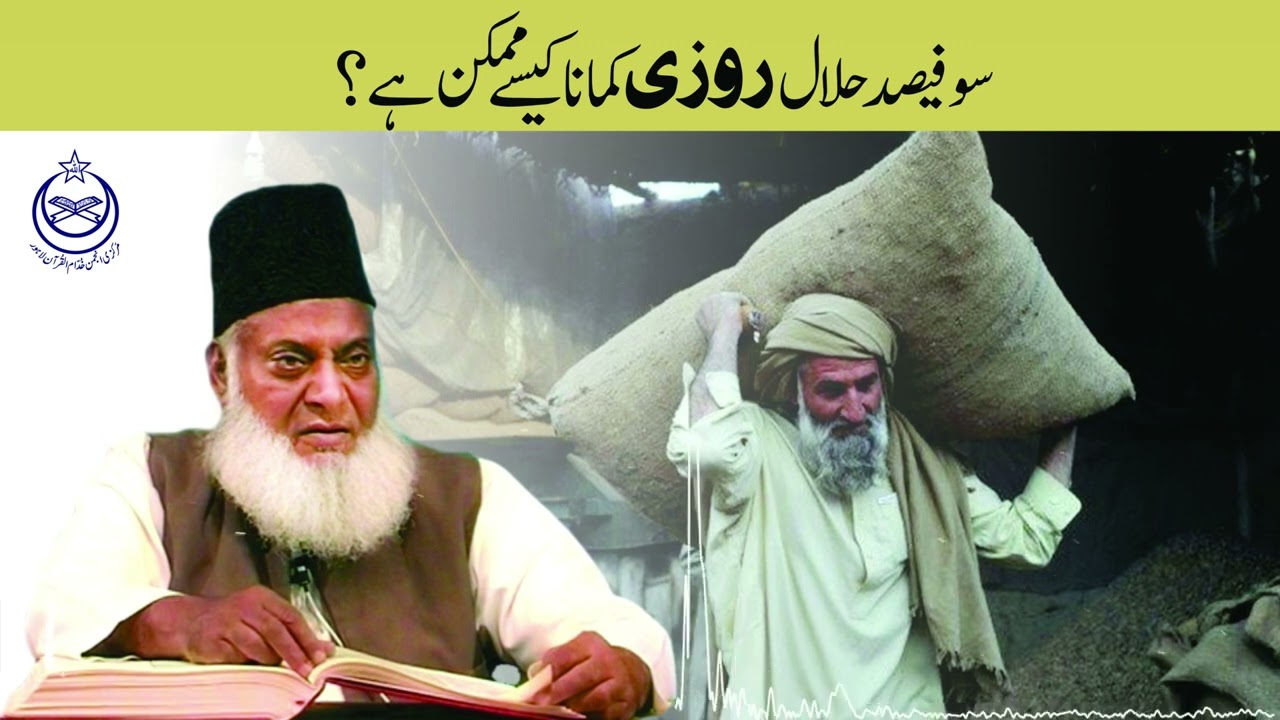
In this clip Dr Israr Ahmed advises that, despite high costs, we should try our best to earn a halal (lawful) income and avoid clear haram (forbidden) actions like bribery. God understands sincere efforts and may overlook minor issues if we’re genuinely trying. If a job pressures you toward haram practices, it’s better to switch to lawful work, even if it’s challenging.

Dr. Israr Ahmed explains three ways the Quran is protected. Firstly, Allah ensures its preservation, making it universally accessible for guidance. Secondly, Mujaddids emerge in every century to revive true religious teachings. Finally, a group within the ummah remains steadfast in truth, ensuring its preservation until Allah's decree.
In this video, Dr. Israr Ahmed explains the true meaning and proper method of performing istikhara, emphasizing its importance. He advises entrusting matters to Allah, and if there's good in it, Allah will make it easy. Dr. Israr also discusses whether a sign in a dream at night is necessary for istikhara.
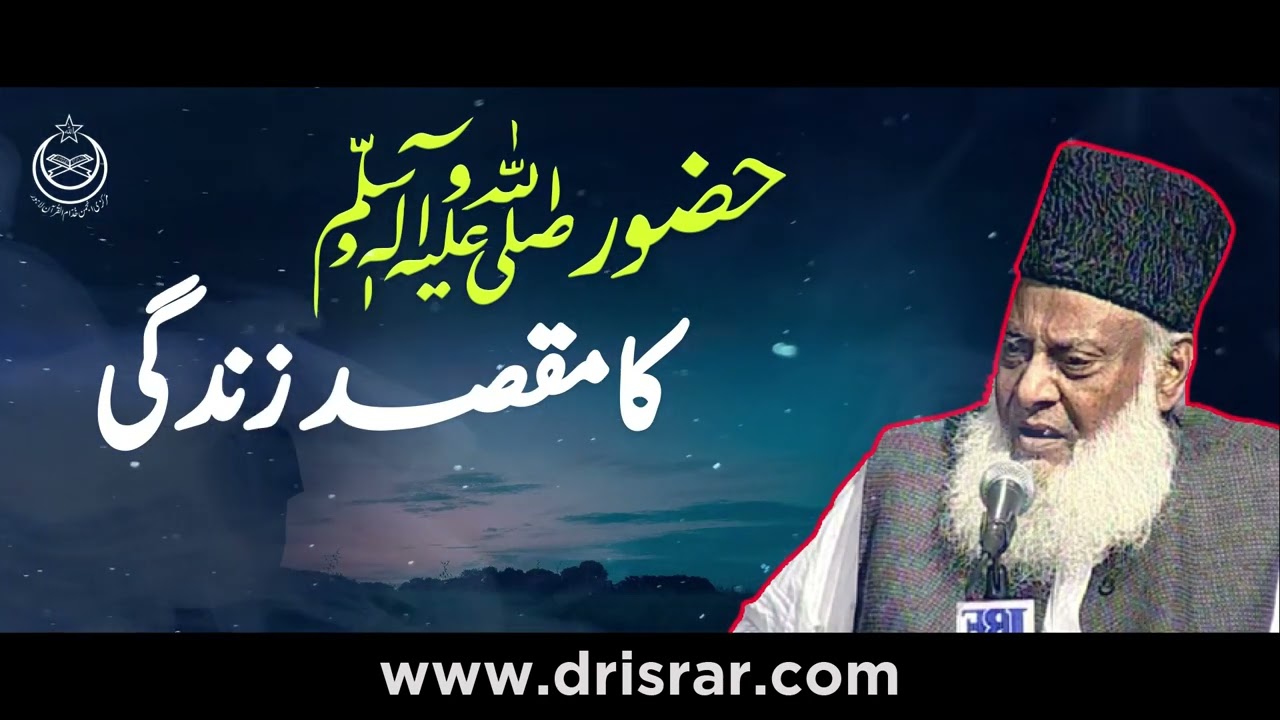
In this clip, Dr Israr Ahmed explains that Prophet Muhammad's (peace be upon him) purpose was to establish Islam as the final and complete religion. He emphasizes that Prophet Muhammad (peace be upon him) was the last messenger, concluding the line of prophethood. This signifies the fulfillment and superiority of Islam over other religions.

In this clip, Dr. Israr Ahmed explains Prophet Muhammad's experience of witnessing Allah during the Night Journey (Shab-e-Miraj). Using poetic imagery, he describes the ineffable encounter atop a celestial tree, highlighting the Prophet's unique connection with Allah and his witnessing of divine manifestations.

In this clip Dr Israr Ahmed stressed two sides of Prophet Muhammad: his spiritual connection with God and his excellence in dealing with people. Understanding both aspects helps us recognize his greatness. He also pointed out that Prophet Muhammad's greatness comes from his complete devotion to Allah, showing respect for his esteemed status.

In this clip Dr Israr Ahmed says revolutions come in two types: internal ones last, external ones don't. Internal changes deeply change people and societies, affecting the world. He talks about Prophet Muhammad's (PBUH) revolution, saying it was driven by divine help and quickly changed Arabian society.

In this clip Dr Israr Ahmed explains that in the final era of the Muslim community, there will be a debate about which part—early or late—is better. This idea, passed down through Hazrat Jafer Sadiq, suggests that later generations might surpass earlier ones in both quantity and quality, likened to different groups benefiting from rainfall in alternating years.
In this clip Dr Israr Ahmed says good deeds depend on intentions, and Allah values sincerity. He explains that even small acts of kindness, like sharing food, matter greatly. Goodness is not just what we do outwardly but also why we do it. This idea is backed by a saying of Hazrat Umar (RA), emphasizing the importance of intentions in our actions.

In this clip, Dr. Israr Ahmed explains how people view success and poverty differently. Some think their blessings come from God when they face challenges, while others blame God for their troubles. He says our possessions are tests from God, and facing difficulties is part of the test too. Dr. Israr Ahmed emphasizes that true respect comes from enduring tough times with patience and faith, not just from having money.

In this clip Dr Israr Ahmed discusses how Muslims face tests from Allah through trials and blessings. He talks about Prophet Muhammad's desire for martyrdom and explains the difference between prophets who can be killed but not defeated, and those who can be accepted or martyred. He mentions historical examples and ends by expressing uncertainty about future trials.

In this clip Dr Israr Ahmed shares a story from Surah Al-Baqarah about Hazrat Khizr and Hazrat Musa. He highlights that what we dislike might be good for us, and what we like might harm us. Allah knows best, even when we don't understand.

In this clip Dr Israr Ahmed stresses trusting in Allah for sustenance through "taqwah" or God-consciousness. True taqwah involves following Allah's path, leading to unexpected blessings. Although challenging, trusting in Allah strengthens faith, and helping others brings divine support.

Hazrat Yousuf (A.S) Ka Waqia | Surah Yousuf Full With Urdu Hindi Translation | Dr Israr Ahmed Offici
Hazrat Yousuf (A.S) Ka Waqia | Surah Yousuf Full With Urdu Hindi Translation | Dr Israr Ahmed Official
The Day of Judgement | Eye Opening Bayan | Surah Qiyamah with Urdu Translation | Dr Israr Ahmed Baya
The Day of Judgement | Eye Opening Bayan | Surah Qiyamah with Urdu Translation | Dr Israr Ahmed Bayan

Biography Of QUAID E AZAM Muhammad Ali Jinnahؒ | Dr Israr Ahmed Official

In this clip Dr Israr Ahmed explains that on the Day of Judgment, people's body parts—ears, eyes, skin, hands, and feet—will testify against them about their sins. The body parts will speak because Allah gave them the ability to do so, showing that everyone will be accountable for their actions.

In this clip Dr Israr Ahmed explains that our world has much injustice and falsehood, with wrongdoers often in power. To prevent this, people should remember that they will be held accountable on the Day of Judgment. Belief in this accountability and love for Allah can help ensure that people act justly and truthfully in their lives.

Prediction About Last World War | دنیا کی سب سے بڑی جنگ | THE MALHAMA FINAL BATTLE ARMAGEDDON