Top Videos

In this clip Dr Israr Ahmed explains that true faith (Iman) is a belief that settles deeply in the heart, which we can't judge in others. He shares a story where the Prophet Muhammad (PBUH) rebukes Usama ibn Zaid for doubting a man's declaration of faith during battle, teaching that we should accept people's outward faith without questioning their inner belief.

In this clip Dr Israr Ahmed explains that true faith requires actively fighting against oppressive systems (taghoot). Simply doing religious acts like praying and fasting isn't enough; you must work to oppose injustice. He stresses the importance of attending Friday prayers (Jumaat) and warns against making excuses. Muslims should look for genuine communities committed to establishing Islamic principles.

In this clip Dr Israr Ahmed explained that Hazrat Luqman focused on recognizing Allah’s oneness and staying connected to Him, even without formal prayers like we have today. Different people had their own ways of praying, but the purpose was always to maintain a relationship with Allah. Hazrat Luqman also knew about things like reward and punishment without needing a prophet to tell him.
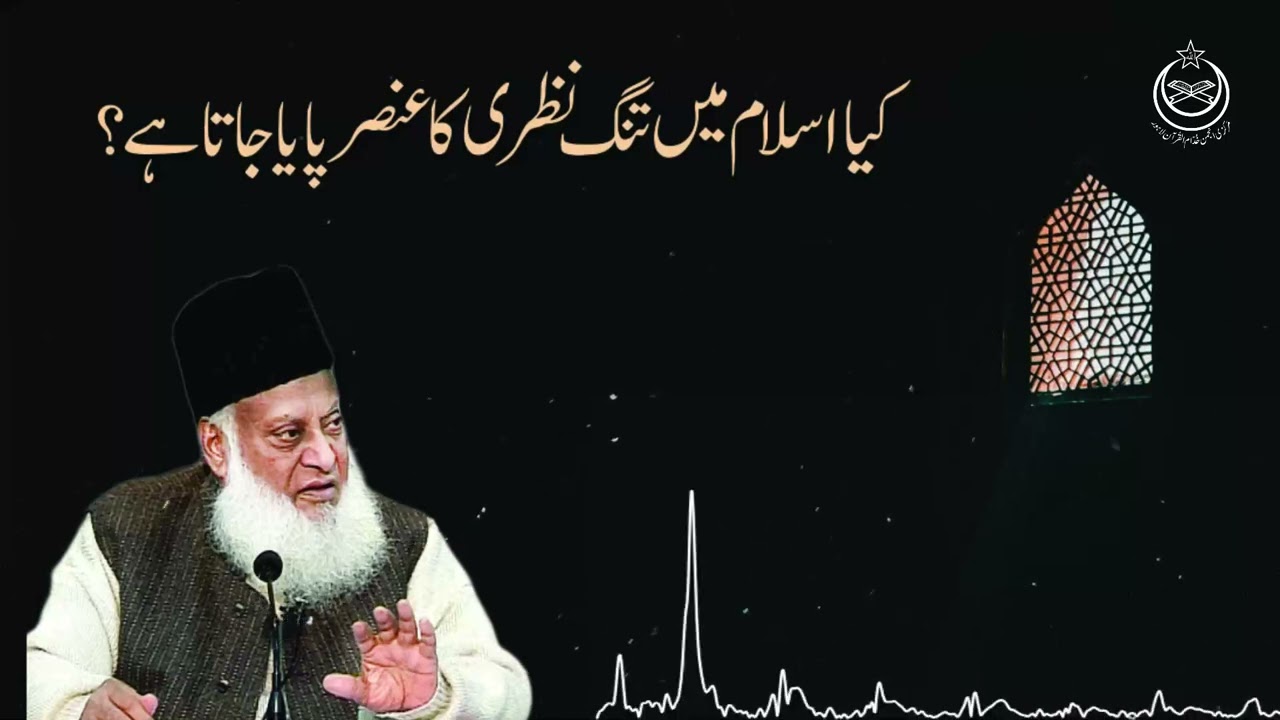
In this clip Dr Israr Ahmed explains that Islam’s practices, such as modesty and gender segregation, are ethical measures to preserve morality, not signs of narrow-mindedness. While Western culture may view them as restrictive, they align with Islamic values. These principles should be understood within Islam’s framework rather than judged by external standards. Misinterpretations arise when viewed through a Western lens.

In this clip Dr Israr Ahmed discusses a crucial hadith about Muslims' future, outlining five phases: Prophet Muhammad's (SAW) kind leadership, fair rule, corruption, harsh governance, and a return to fairness for peace. This hadith reflects Islam's cyclical history, emphasizing the importance of following the Prophet's teachings for a positive outcome.

Predictions About NRC + CAB, Kashmir RSS + BJP 🔥🔥 | Dr Israr Ahmed Message For Indian Muslims
In this clip, Dr. Israr Ahmed explains true righteousness in Islam. It's not just about facing a certain direction in prayer. It includes having faith in Allah, the Last Day, angels, divine books, and all prophets. It means giving to those in need, praying consistently, paying zakat, keeping promises, and showing patience in hardships. These actions define a truly righteous person according to the Quran.

In this clip Dr Israr Ahmed talks about the importance of freeing people from debt and slavery, as mentioned in the Quran. He shares how Hazrat Abu Bakr (RA) used to buy and free mistreated slaves. In today's context, Dr. Israr suggests that helping someone by paying off their large debt so they can become independent is better than giving small, regular donations.

In this clip Dr Israr Ahmed highlights that the Quran is fully preserved and must be completely believed without any doubt. In contrast, Hadith varies in authenticity, with classifications like Sahih (authentic) and Da'if (weak). Applying Hadith requires careful study, context, and analysis due to possible contradictions. Scholars have resolved such issues through detailed principles and prioritization. While the Quran is an absolute authority, Hadith needs thoughtful understanding and interpretation.

Dr. Israr Ahmed explains how Earth's axis and cycle around the sun mirror human psychological patterns, sometimes leading to depression. He highlights how this depression can tragically lead to suicide.

Dr. Israr Ahmed highlights the issue of people seeking fame through deceptive actions. Drawing from a hadith by the Holy Prophet (PBUH), he mentions the first three individuals destined for Hell on Judgment Day: a martyr seeking recognition, a knowledgeable person sharing for self-promotion, and a philanthropist seeking personal acclaim through good deeds.
Khilafat Ka Matlab Kya Hai Dr Israr Ahmad

DUTY OF A TRUE MUSLIM 2

In this clip Dr Israr Ahmed talks about the conflict between Islam and capitalism, saying that Islam seeks to establish its system above others. He compares this to modern Western leaders who insist their system will dominate. Dr. Israr points out that many Muslims are unaware of this because teachings about establishing Islam’s system aren't widely shared.