Top videos
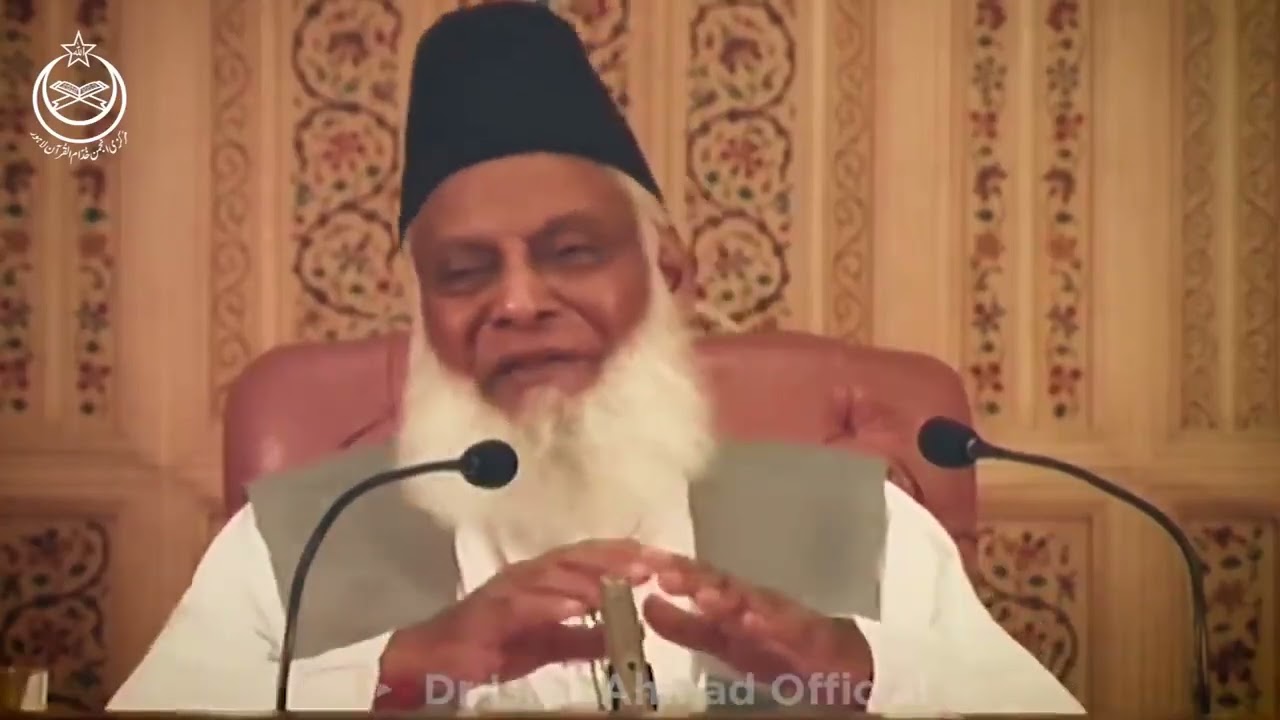
In this clip Dr Israr Ahmed says to control desires by avoiding tempting situations, like being alone with someone you're not related to. Looking with desire at someone is wrong. Always have a family member around when meeting with unrelated people to avoid temptation. These rules help keep you modest and prevent wrongdoing.

Roze Ka Maqsad Kya Hai | Purpose Of Fasting | Taqwa Kya Hai | Dr Israr Ahmed Very Beautiful Bayan

In the clip Israr Dr Ahmed explains that milk-e-yameen (concubines) is only allowed during true jihad fisabilillah and does not require nikah, but freeing and marrying them is a noble act. Such captives should be treated justly and integrated into society. Muslim men can marry Christian or Jewish women (Ahl-e-Kitab), but Muslim women cannot marry non-Muslim men. This is because children follow the father’s religion, and the family is led by the man in Islamic law.

In this clip, Dr Israr Ahmed tells the story of Prophet Ibrahim's sacrifice. Allah turned the fire meant for Ibrahim into a garden. Ibrahim left his home, faced a major test at 100, and was commanded to sacrifice his son, Ishmael, in a dream. Ishmael agreed, showing great faith. This story teaches about trials in life and the importance of faith.

In this clip Dr Israr Ahmed explains that while looking at a woman inappropriately is not a legal crime, it is an ethical sin in Islam, known as "zina of the eyes." The first glance is allowed, but staring or further actions are sinful. Zina includes not just physical acts but also thoughts and intentions. Unintentional thoughts are not punishable, but deliberate actions are.

In this clip Dr Israr Ahmed discusses whether Arabs are aware of the destruction that might befall them and if there’s a wise leader among them to warn against it. He shares three hadiths highlighting future challenges for Arabs, mentioning that some ignore such warnings. He emphasizes his views are based on Quran and Hadith, even if some nations dislike his statements about Arabs' future and its potential impact on Pakistan.

Dr. Israr Ahmed explains salvation in two types. He emphasizes that it's not just about worshiping and doing good deeds, but also about meeting four key requirements from the Quran: 1. Faith (Emaan), 2. Righteous deeds (Ammal-e-saleh), 3. Encouraging truth (Tawasul-bil-haaq), and 4. Encouraging patience (Tawasul-bil-saber). These conditions, he says, are unchangeable and necessary for entering heaven and achieving salvation.

In this clip Dr Israr Ahmed explains that Tanzeem-e-Islami does not ask for public donations but is supported by members who give part of their income voluntarily. This giving is a personal choice, unlike the required Zakat. He says that Islam has both mandatory practices, like fasting, and optional acts, like extra prayers. He also points out that, along with the five pillars, the Prophet (PBUH) taught other practices that are important for a complete understanding of Islam but are often overlooked.

In this clip Dr Israr Ahmed explained that Jihad means struggle or effort. It can be through words, like teaching or advising others (Jihad bil-lisan), or through actions, like stopping wrongdoings. The most important jihad is through the Quran (Jihad bil-Quran). Physical fighting (Jihad fi-sabil) is a specific form of jihad, which became important after the Prophet’s migration to Madinah. The main difference is between striving with knowledge and words versus fighting.
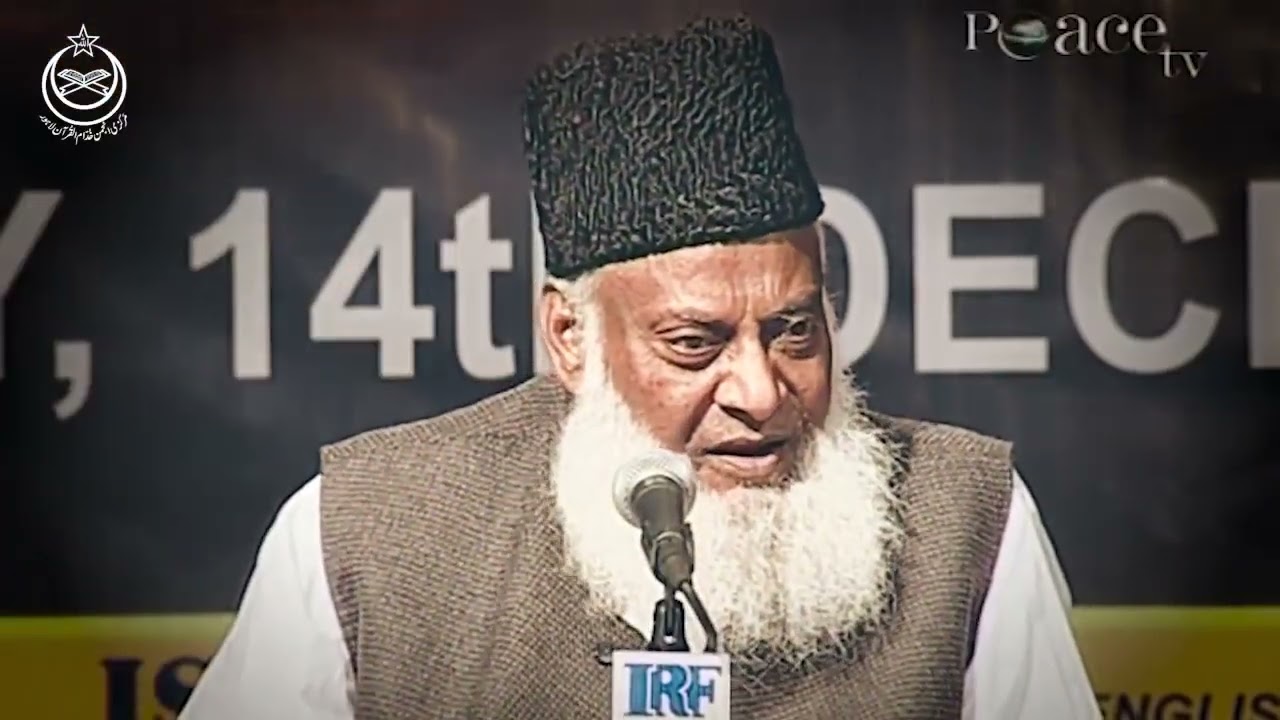
In this passage Dr Israr Ahmed recounts a story about Hazrat Umar's profound love for Prophet Muhammad. It emphasizes the importance of loving the Prophet more than oneself and being willing to obey his commands. It concludes by highlighting Allah's forgiveness for any mistakes made out of intense emotions, as long as there is sincere love for Him and His Messenger.

In this clip Dr Israr Ahmed explains that after Prophet Muhammad (SAW), Allah ensured Islam’s teachings would stay pure by protecting the Quran, sending people to revive the faith, and keeping a group of true believers within the ummah. This way, those seeking guidance can always find the right path, as shown by the story of Salman Farsi (RA), who searched far and wide for the truth, proving that finding true guidance often requires sincere effort.

In this clip Dr Israr Ahmed explains that Prophet Muhammad (SAW) emphasized the importance of following the true teachings of Islam without adding or changing anything. Over time, some people strayed from these teachings by creating their own practices. True believers are those who stay committed to the original teachings and struggle against these changes. Success in faith is for those who remain on the right path.

In this clip Dr Israr Ahmed discusses Hazrat Umar's refusal to let the Prophet ﷺ write a will, an incident often criticized by some Shia groups. He highlights the importance of verifying such narrations. The refusal can be understood given the Prophet's weak condition at the time. Dr. Israr Ahmed concludes that Hazrat Umar's decision was wise and accepted by others.

In this clip Dr Israr Ahmed believes prayer should prevent us from wrongdoing. However, if we don't grasp its essence, we might recite mechanically. Real prayer involves feeling close to Allah and being humble. This connection transforms us from within.

In this video, Dr. Israr Ahmed talks about the importance of ethics in Islam, stating that a good Muslim is one with good morals, successful in this life and the next. He mentions a Quranic verse highlighting the importance of pleasing others.

The video talks about how some people, called hypocrites, caused problems for Prophet Muhammad (SAW) by lying and making false promises. It shows that Allah was not happy with what they did. Even though Prophet Muhammad (SAW) knew they were lying, he still tried to be kind to them. But then Allah asked him why he believed their lies. In the end, the hypocrites got punished for what they did.

In this clip Dr Israr Ahmed emphasizes that true faith (Emaan) requires sincere personal conviction, not just outward declarations. He references Surah Al-Munafiqun, which warns about hypocrites who profess belief but lack genuine faith. Dr. Israr urges believers to reflect on their own faith to ensure it is authentic and not merely inherited. He stresses that true believers prioritize Allah's commands over their own desires.

Dr. Israr Ahmed highlights the significance of Surah Asar, the Quran's shortest and earliest chapter, serving as a comprehensive index of its themes. The companions would listen to it before parting ways, emphasizing reflection. Dr. Israr suggests that focusing on Surah Asar is sufficient for guidance, even if it were the only revelation. The surah encapsulates principles of good deeds, adherence to Shariah, and basic human morality.

In this clip Dr Israr Ahmed explains that Bai'ah is a pledge to support Allah’s deen, where both men and women commit to following His commands. Men pledge to obey their leader as long as it aligns with Shariah, while women vow to avoid actions displeasing to Allah. Both pledge to sacrifice wealth and life for the cause of Islam. The commitment involves striving for the religion, even in difficult times. Ultimately, the goal is to raise Allah’s deen and make His name supreme.

Allama Muhammad Iqbal Biography | Nationality of Pakistan | ہماری ملت وقومیت کی پہچان | Dr Israr Ahm
Allama Muhammad Iqbal Biography | Nationality of Pakistan | ہماری ملت وقومیت کی پہچان | Dr Israr Ahmed