أهم مقاطع الفيديو
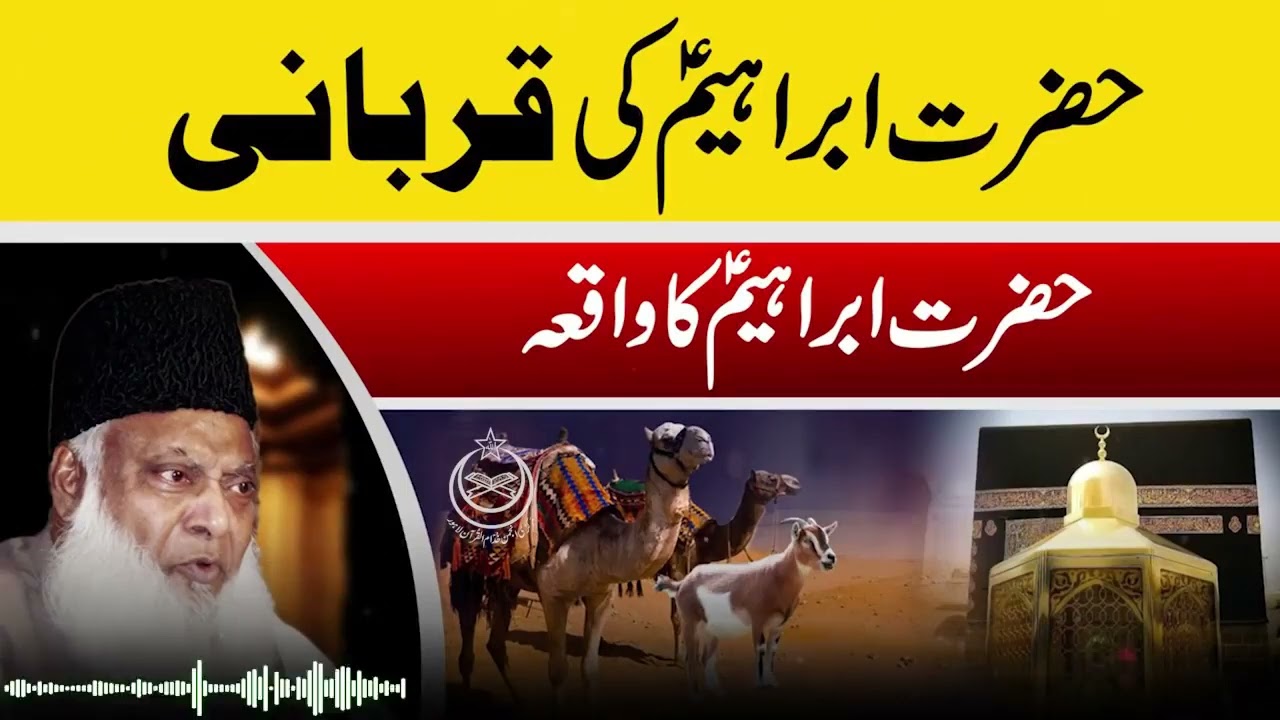
In this clip, Hazrat Ibrahim (A.S) faced tests from society and family, including being thrown into a fire and asked to sacrifice his son. He passed each test with unwavering faith, leading Allah to grant him leadership over humanity.

In this captivating clip, Dr. Israr Ahmed delves into the profound and instructive narrative of a worshiping scholar from the Bani Israel. With eloquence and insight, he unfolds the tale, drawing timeless lessons from its depths. Through his narrative, Dr. Ahmed illuminates the path of belief and devotion, offering a glimpse into the transformative power of faith.

In this video, Dr. Israr Ahmed discusses Dr. Zakir Naik's personality and speaking style. He mentions that Dr. Naik was inspired by his religious teachings and Quranic lectures, often watching and sharing them enthusiastically at his IRF institute.

In this clip Dr Israr Ahmed emphasizes relying solely on Allah for help, advising not to lose hope in His mercy and love. He encourages asking only from Allah, maintaining self-respect while seeking help. The message underscores refraining from judging or being harsh to those seeking assistance. Additionally, it advocates giving to those in need, even if it's just a small gesture, and apologizing politely if unable to help.

In this clip Dr Israr Ahmed says until Islam is everywhere, Prophet Muhammad's job isn't done. He wants Islam to help everyone. That means sharing Islam's teachings all over the world. While some places follow Islam, it's not everywhere yet. The goal is to make sure everyone benefits from Prophet Muhammad's message.

Islami Nizam Kaisay Qaim Hoga | Islam Mein Jang Ki Ahmiyat | Dr Israr Ahmed Powerful Eye Opening Bay
In this clip Dr Israr Ahmed discusses how Islam can establish its system and the role of war in it. He questions the notion that preaching alone can establish an Islamic system, citing Prophet Muhammad's (PBUH) actions when a peace treaty was broken. He emphasizes the need for a gradual approach in achieving goals, likening it to advancing step by step toward a target.

In this clip, Dr Israr Ahmed is explaining that "Laylatul Qadr is a powerful night in Islam, better than a thousand months, filled with blessings, forgiveness, and mercy. Muslims pray fervently during the last ten days of Ramadan to seek its rewards, as its exact date is hidden, making it a time of great spiritual significance."

In this video Dr Israr Ahmed explains and emphasizes the fleeting nature of time with examples and references from different walks of life.
In this clip Dr Israr Ahmed talks about being good, using a story about Aurangzeb Alamgir to show that even bad people can do good things and feel better inside. He explains "nafs-e-lawama" as a sort of inner voice that tells us when we're doing right or wrong. He says it's important to help others and be truthful, especially by keeping promises.

In this clip Dr Israr Ahmad talks about "sadaqa jariyah," which means giving in a way that keeps helping even after you're gone. It could be building mosques, teaching about religion, doing missionary work, or giving water. He says raising good children is a big way to keep doing good, even after you've passed away.

In this clip, Dr. Israr Ahmed talks about Iran's Islamic revolution and why it's important. He says that America, Israel, and Europe see Iran and Pakistan as their main targets. Iran is targeted because of its successful religious revolution and oil resources. Pakistan is targeted because of its history in Islamic reform. Both countries are very important in the Muslim world.
In this clip Dr Israr Ahmed explains that Sharia is meant to help us grow and improve as individuals. He mentions the Quran, saying that those who deny the afterlife mistreat orphans and neglect the needy. Sharia teaches us basic human values and morality, guiding us to become the people Allah intended us to be.

In this clip Dr Israr Ahmed explains that in Islam, a true bankrupt is someone who, despite performing many good deeds, has wronged others or taken their rights. The Prophet Muhammad (SAW) taught that such a person will face severe consequences in the Hereafter. Even devout appearances can’t save them from the punishment for their harmful actions.

In this clip Dr Israr Ahmed explains that in Islam, bowing or prostrating to anyone other than Allah is strictly forbidden. While it was once allowed as a sign of respect in earlier times, Islam's teachings have since made it clear that such acts should be reserved only for Allah. He also criticizes practices like bowing deeply in respect to leaders, as these actions can resemble worship and are considered shirk, meaning associating others with Allah. True submission and devotion should be directed to Allah alone.

In this clip Dr Israr Ahmed explains that the highest right in Islam is to uphold truth and justice. This includes correcting minor wrongs and challenging unjust systems. He cites a story where the Prophet Muhammad (PBUH) insisted on justice even when faced with resistance, illustrating that upholding truth involves confronting and challenging any form of injustice or false system.

In this clip Dr Israr Ahmed explains that a true Muslim must understand and perform all their duties, not just some of them. He compares it to a building with a strong foundation—this foundation is *true faith (Emaan)*, which must be deeply felt, not just spoken. The four pillars of Islam—prayer, charity, fasting, and pilgrimage—stand on this foundation. Without strong faith and fulfilling all duties, a Muslim cannot be truly successful.

In this clip Dr Israr Ahmed explains that Islam is based on both the Quran and the Sunnah (teachings of Prophet Muhammad SAW). The Quran provides guidance, but it is the Sunnah that explains how to put that guidance into practice, such as how to perform prayers. Both are necessary to establish Islam as a complete way of life, including its social, political, and economic systems. The purpose of Prophet Muhammad's mission was to implement and make this complete system of life, known as Deen-e-Haq, supreme over all other systems.
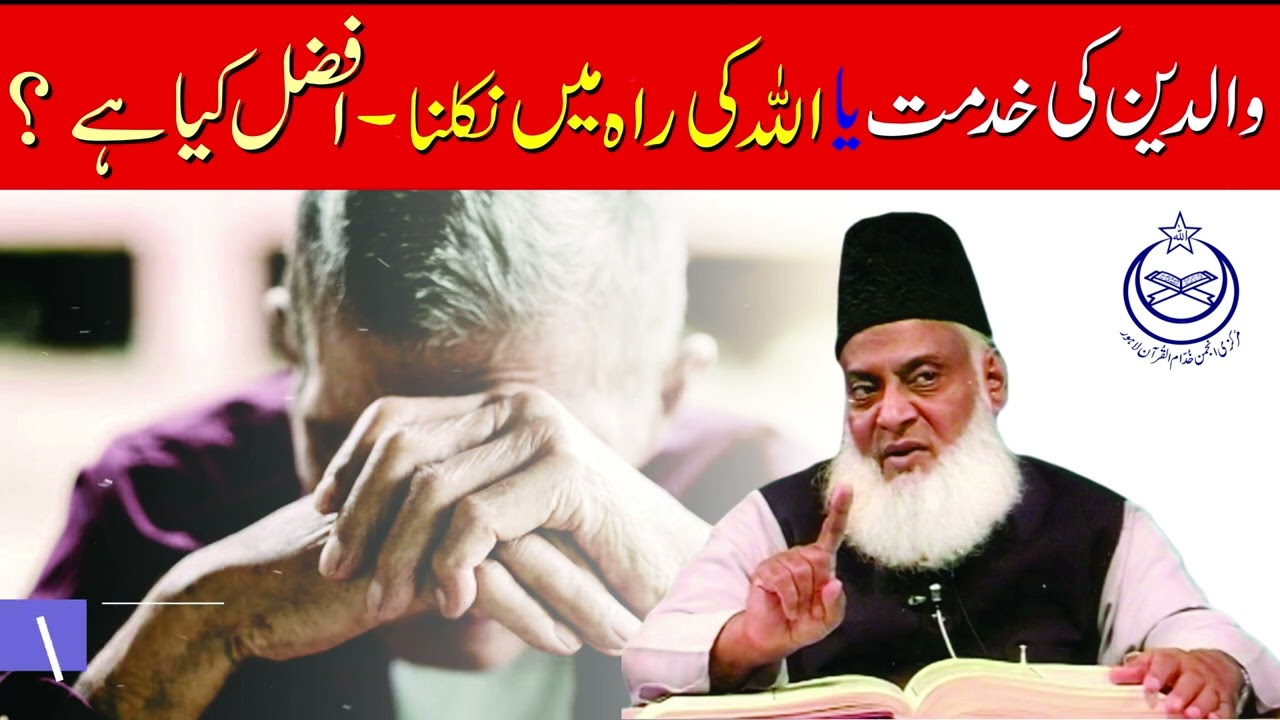
In this clip, Dr. Israr Ahmed talks about whether serving parents or working for Allah is more important. He says it depends on the situation. In critical times, serving parents may take priority. He stresses that decisions should consider community needs, and jihad can mean helping parents, spreading Islam, and guiding others. Serving parents is also a form of jihad.

In this clip Dr Israr Ahmed explains that shahadat means giving testimony to the truth of Islam through one’s actions. The highest shahadat is dying for Allah’s cause, but it also includes dying from a plague or while defending one’s wealth or freedom. Even someone living by Allah’s commands is a "living martyr."

In this clip Dr Israr Ahmed explains that Pakistan, created in the name of Islam, failed to become an Islamic model due to moral decline, corruption, and hypocrisy. He says these problems won't be solved by political changes or anti-corruption efforts until we repent and improve our morals. Only a respected Islamic scholar can lead the way for real change through full implementation of Islamic principles.