Top videos

In this clip Dr Israr Ahmed explains that "ikhtilaf" means disagreement, which is normal and can happen respectfully, like the differences between scholars. However, when these disagreements lead to division and hostility within the community, it's called "tafarruq," which is harmful. He emphasizes that while disagreements are natural, they should not break the unity of the Muslim community.

In this clip Dr Israr Ahmed explains that the greatest injustice is shirk (associating partners with Allah). Other major forms of oppression occur socially, through inequality based on birth; economically, through unfair distribution of wealth; and politically, through rulers exploiting people's rights and freedoms. To combat these issues, people must seek justice and balance by submitting to their Creator.

This video covers the life of Hazrat Umar bin Abdul Aziz, the Fifth Rightly Guided Caliph, who ruled briefly from 99 to 101 Hijri. He implemented three significant reforms in the system of governance, correcting the malpractices that by then had become commonplace practices in the Muslim world. Despite facing opposition, he made decisions based on the Quran. After embracing Caliphhood his life became an epitome of simplicity.

This clip tells the story of Hazrat Salman Farsi's conversion to Islam and an incident involving Hazrat Sulaiman (RA). It highlights Hazrat Salman Farsi's quest for truth, compares it to Hazrat Ibrahim's journey, and recounts his encounter with thieves on his way to Madinah, where he offered dates to Prophet Muhammad (peace be upon him), who refused, stating that charity is for the poor.

In this clip Dr Israr Ahmed talks about why the character of Prophet Muhammad (SAW) is not seen in many people today, including scholars. He says Muslims try to follow his teachings but often find it hard to show his qualities. He gives an example of the Prophet comforting Hazrat Umar, who was sad about others having luxuries, reminding him that true rewards are in the afterlife. Dr. Israr Ahmed believes today’s leaders should reflect the Prophet's character.
In this clip Dr Israr Ahmed explains that the spiritual energy felt during Quran study or religious gatherings often fades over time. To sustain it, he advises joining an Islamic group (jamaat) that works for deen. Being part of collective efforts and staying connected with such a community helps keep faith strong. Consistent engagement in Quranic recitation and religious work is key to maintaining spirituality.

In this clip Dr Israr Ahmed explains that time always moves from the future to the present and then the past, like melting ice. He emphasizes that time is precious and should be used wisely. Wasting time leads to loss and failure. This idea aligns with a Quranic verse, which says that people are at a loss unless they use their time effectively.

In this clip Dr Israr Ahmed explains that Western society’s freedom from boundaries between relatives and non-relatives comes from a materialistic view that denies the soul and focuses only on the body. This view reduces humans to animals, ignoring their spiritual essence. Islam, however, teaches that humans are spiritual beings connected to God, and this loss of spirituality in the West is the root cause of moral and social problems.

In this clip Dr Israr Ahmed explains whether installment-based transactions, like leasing, are permissible in Islam. In Hanafi Fiqh, selling an item at a higher price for deferred payment is allowed, but he criticizes this practice, arguing it resembles interest and lacks clear evidence from the Quran or Hadith. While some scholars permit it based on common practice, Dr. Israr questions the justification and views it as problematic.

In this clip Dr Israr Ahmed addresses grave worship and shirk, highlighting practices like prostration at Hazrat Ali Hujwiri’s shrine. While some scholars believe pious souls assist Allah’s tasks, Islam forbids calling upon anyone but Allah. Such acts of invoking souls or angels are considered shirk. He emphasizes that all worship and prayers must be directed solely to Allah.
In this clip Dr Israr Ahmed emphasizes that we shouldn't argue about whether the deceased can hear us. The key is to greet them with "As-salamu alaykum" at the grave, as instructed by the Prophet. Instead of getting into debates about the afterlife, we should focus on good deeds like charity and prayers for the deceased. This approach helps avoid division and keeps the focus on beneficial actions.

The video discusses the differences between Hazrat Ali (RA) and Hazrat Ameer Muawiya's leadership after the death of Prophet Muhammad (SAW). Hazrat Ali initially hesitated to accept the caliphate but eventually did. However, conflicts arose, leading to the Battle of Siffin, where thousands of Muslims lost their lives. Hazrat Ali's capital shifted from Medina to Kufa, signaling the expansion of Islamic governance.

In this clip Dr Israr Ahmed emphasizes that to establish a just system, a disciplined and organized group is essential. While personal efforts to improve oneself and spreading the message can be done individually or with loose support, overthrowing an unjust system and creating a just one demands a highly structured and united group, much like a military force that follows orders without question. Without such discipline and organization, the goal of establishing justice cannot be achieved.

Hazrat Adam AS Se Pehle Dunya Mein Kya Tha | Creation Of Human By Dr Israr Ahmed | Purpose Of Life
In this clip Dr Israr Ahmed explains that in matters where Islamic scholars (Imams) differ, only knowledgeable individuals with a deep understanding of the Qur'an, Sunnah, and Shariah should decide. The opinion closest to the Qur'an and the Prophet's teachings is preferred. However, an easier option may be accepted if it stays within Shariah guidelines.

Dr. Israr Ahmed highlights the contrast between a philosopher and a Prophet. Prophets assert the absolute truth of their message, while philosophers don't claim certainty. The Quran shows how Prophet Muhammad (S.A.W) refused to alter its words, and Hazrat Ibrahim (A.S) urged his father to follow his guidance, rooted in unique knowledge.

Valentine's Day | Dr Israr Ahmed Very Emotional Bayan | Reality Behind Valentine's Day
In this clip Dr Israr Ahmed explains how humans were created and what the realm of souls is. He says humans are the most important creation of Allah and that our souls existed before our bodies. He also talks about how Muhammad (PBUH) became a prophet from the time of Adam, showing that our souls existed before the physical world.

In the video Dr Israr Ahmed says nationalism, or extreme love for one's country, is like modern idolatry. He argues that while societies need common values to stay united, putting the nation above everything else leads people away from true spiritual devotion. He praises Allama Iqbal for recognizing this issue and warns that nationalism often divides people by ethnicity or region, making the country an idol in political terms.
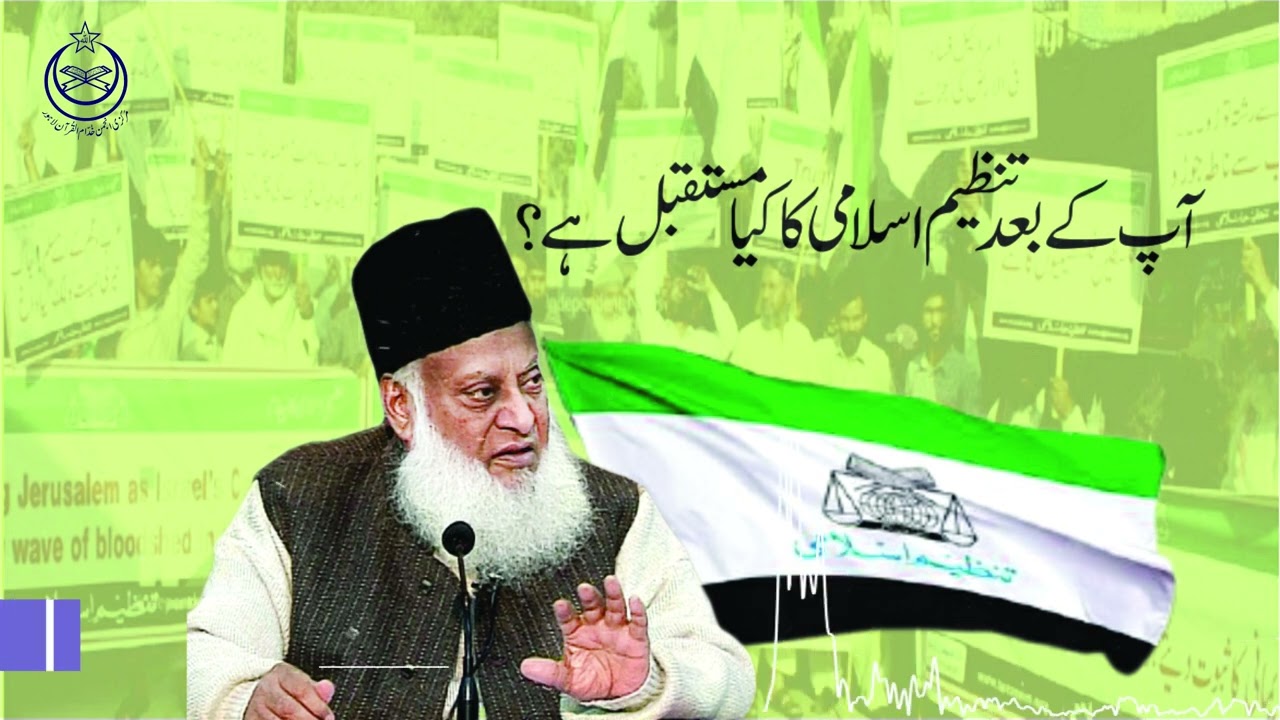
In the clip Dr Israr Ahmed discusses the decline of movements after their founder's death, citing historical examples like Jamaat-e-Islami post-Maududi. However, he stresses this pattern shouldn't discourage efforts. He highlights that strong foundations can help movements endure. Even non-Islamic examples, like the Qadiani Jamaat, show continuity is possible. Islamic movements, therefore, can also sustain and thrive with proper planning and vision.