Top videos


Dr. Israr Ahmed urges full submission to Islam, not partial obedience. Allah rejects selective acceptance of His teachings. Such behavior leads to humiliation and severe punishment. Love and obey Allah and His Messenger; follow Prophet Muhammad (S.A.W) to demonstrate love for Allah. Allah is forgiving and merciful, ready to pardon mistakes.
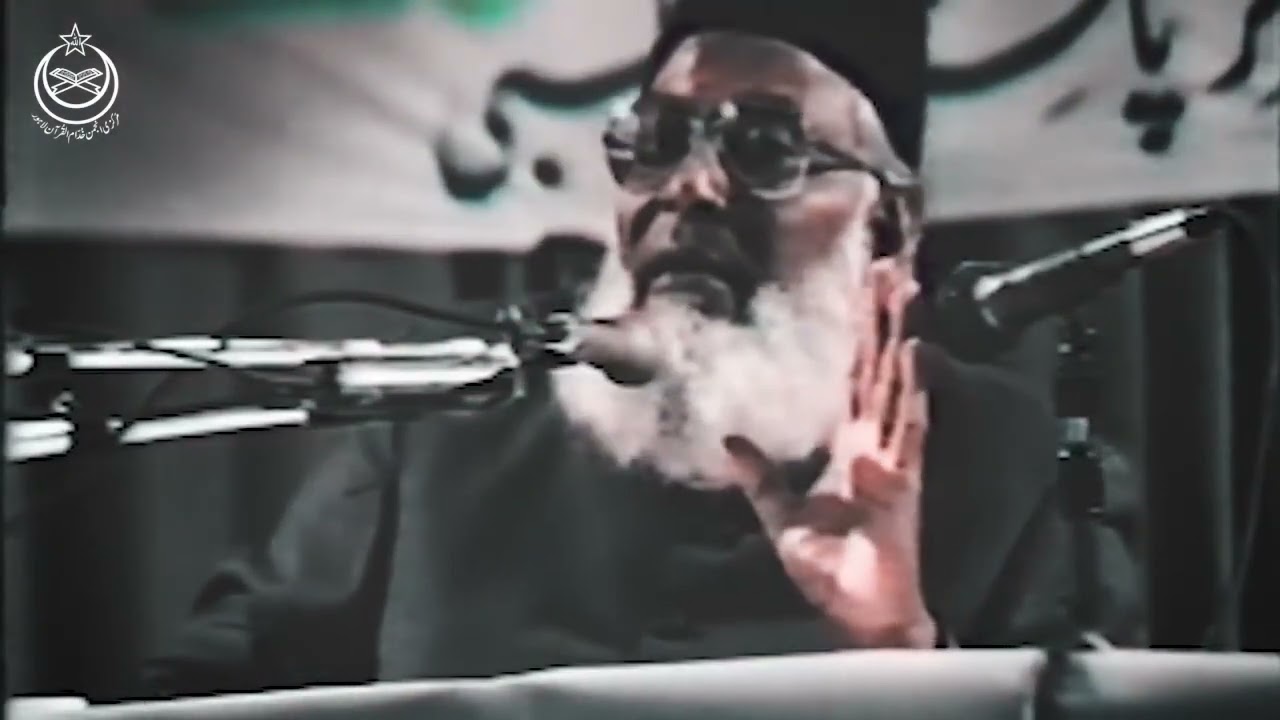
Dr. Israr Ahmed discusses the connection between faith and good deeds, highlighting legal faith versus true faith, and their significance according to the Quran.

In 1985, Dr. Israr Ahmed organized a six-day event discussing a religious vision derived from the Quran with 100 scholars. Among them, Maulana Waheed-ul-Deen Khan remained silent when questioned about the importance of peace versus war, simply replying, "No Comments" in English. This exchange highlighted differing perspectives on conflict resolution within the religious community.

In this clip, Dr Israr Ahmed briefly covers Hazrat Umar's (AS) life, including his biography, caliphate era, justice, and martyrdom. He notes the significance of 25th Zulhijjah, Hzrat Umar's (AS) assassination day, and his prayer for strength during Hajj. Hazrat Umar's (AS) role as a diplomat and warrior, his conversion to Islam, and his qualities of bravery and intellect are highlighted, along with his eventual recognition by Prophet Muhammad (PBUH).

In this clip, Dr Israr Ahmed emphasizes never losing hope in Allah's love and mercy. He stresses that true assistance comes from Allah alone, urging loyalty to His cause even in the face of worldly rebellion. Quoting Surah Ar-Rum, he highlights the need for patience, assurance, and proving steadfastness to deserve divine help.

In this clip, Dr Israr Ahmed discusses the importance of Friday sermons, following the tradition of Prophet Muhammad. In the past, sermons were vital for education, but now many struggle to understand them. Sermons should include teachings and explanations. The Prophet's sermons were in Arabic and typically had two parts, sometimes with a brief break, later expanded to three parts by scholars.

In this clip Dr Israr Ahmed talks about not judging people just by how they look. He says what really matters is how we behave. He warns against thinking we're always good, because only God knows our true intentions. He also says we should be kind to others and pray for their guidance, like Prophet Muhammad (PBUH) taught.

In this clip Dr Israr Ahmed talks about how the Quran mentions instant heavenly rewards using the term "nuzul" in Arabic. He compares it to serving guests right away, saying in paradise, amazing delights will be ready instantly. These blessings are only for believers and are too great for us to understand. Dr Israr Ahmed says real happiness comes from these gifts, not from worldly things.

In this clip Dr Israr Ahmed explains how the Quran teaches about good ("khair") and bad ("sher") with simple ideas. Goodness means helpful actions, while badness is about harm. These concepts are innate, guiding our sense of right and wrong. Our conscience confirms this, bringing joy after good deeds and regret after bad ones. It highlights our ability to discern right from wrong.

In this clip Dr Israr Ahmed warns against working in banks and dealing with interest, which is forbidden in Islam. Even though multinational companies may engage in interest-based transactions, it's best to avoid such activities, especially in underdeveloped countries where the impact can be severe.

Hazrat Ali (R A) Ki Shahadat | Reality & Proof By The Real History | 21st Ramadan | Dr Israr Ahmed

In this clip Dr Israr Ahmed explains that on the Day of Judgment, humans will be resurrected and questioned about their actions. Unlike animals and plants, humans will be judged for their efforts to seek truth and their deeds. Every action will be examined, and people will be rewarded or punished accordingly. This highlights the serious responsibility of being human.

Shia Sunni Ikhtilaf | Reality Behind Shia Sunni Riots | Dr Israr Ahmed Prediction About Muslim World
Shia Sunni Ikhtilaf | Reality Behind Shia Sunni Riots | Dr Israr Ahmed Prediction About Muslim World

In this clip Dr Israr Ahmed explains that Allah forgives all sins if a person sincerely repents, except for shirk (associating partners with Allah). Lesser sins done unintentionally can be forgiven if one repents sincerely. Deliberate sins require genuine repentance for Allah's forgiveness.

In this clip Dr Israr Ahmed shares the story of Hazrat Bilal (RA), who was freed by Hazrat Abu Bakr (RA) to end his suffering. Despite his father's objections, Abu Bakr paid a high price for Bilal's freedom. Hazrat Umar (RA) praised this act, recognizing Bilal's significance. The clip emphasizes the importance of striving for Allah, encouraging both perseverance and correcting mistakes with firm but kind guidance.

In this clip Dr Israr Ahmed explains that when you speak the full truth, it will always face resistance. He gives an example of telling kids not to play cricket in the street due to potential harm, and how this can cause resentment. He emphasizes that true righteousness involves promoting Allah's commands, which often leads to opposition, especially if it challenges existing beliefs or systems.

In this clip Dr Israr Ahmed explains that followers of prophets should adhere to their teachings. Over time, some acted against these teachings. True believers oppose such actions and work to spread the truth. This is essential for upholding faith and integrity.

In this clip Dr Israr Ahmed explains four key principles from Surah Al-Asr: faith, good deeds, promoting truth, and promoting patience. He says these should be balanced. Even very pious acts are ineffective without truth and patience. He urges Muslims to be active and face challenges, not just focus on spiritual retreats. He prays for people to truly embody these principles.

In this clip Dr Israr Ahmed explains that shirk, or associating partners with Allah, is a severe wrongdoing with three main types: shirk in belief (misconceptions about Allah), shirk in actions (acting as though others share in Allah's authority), and shirk in attributes (attributing divine qualities to others). He highlights that shirk is the opposite of Tawhid (pure monotheism) and is an unforgivable sin according to the Quran. This concept is fundamental in understanding the gravity of placing anything or anyone in Allah's divine position.